Kobayashi Yuki, Sano Yoshitake, Vannoni Elisabetta, Goto Hiromichi, Suzuki Hitomi, Oba Atsuko, Kawasaki Hiroaki, Kanba Shigenobu, Lipp Hans-Peter, Murphy Niall P, Wolfer David P, Itohara Shigeyoshi
Laboratory for Behavioral Genetics, RIKEN Brain Science Institute Saitama, Japan.
Front Behav Neurosci. 2013 Mar 12;7:17. doi: 10.3389/fnbeh.2013.00017. eCollection 2013.
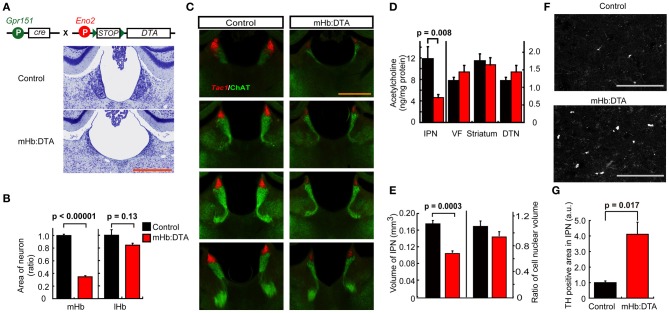
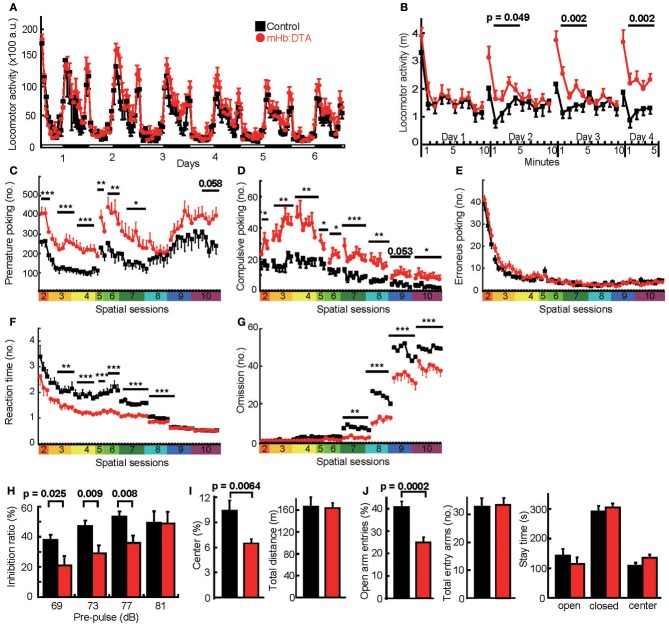
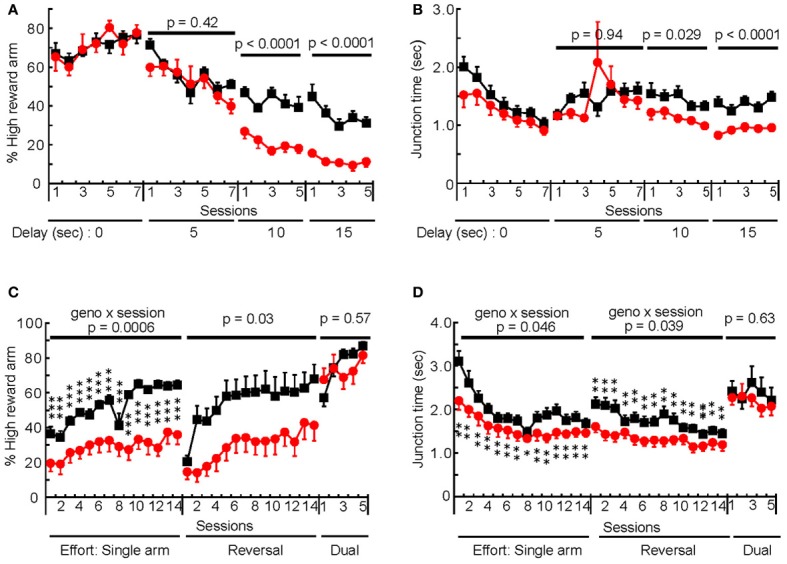
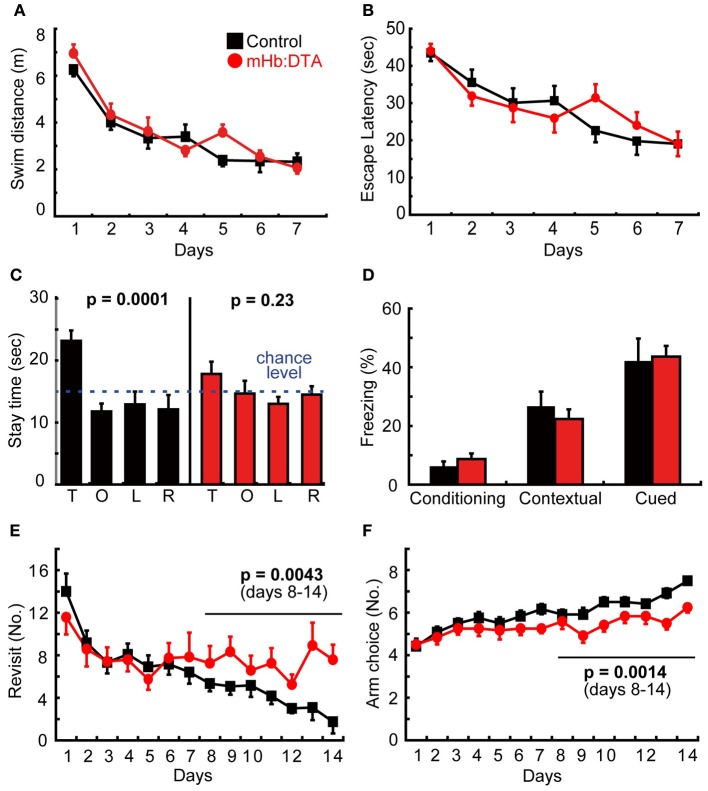
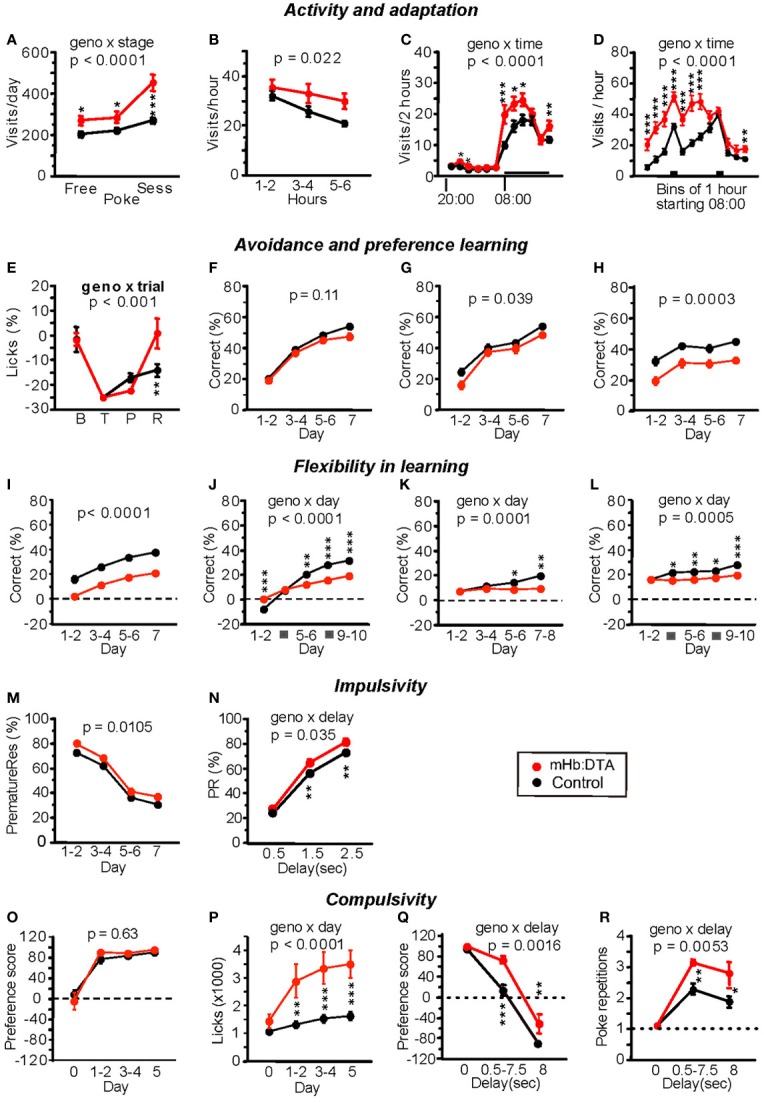
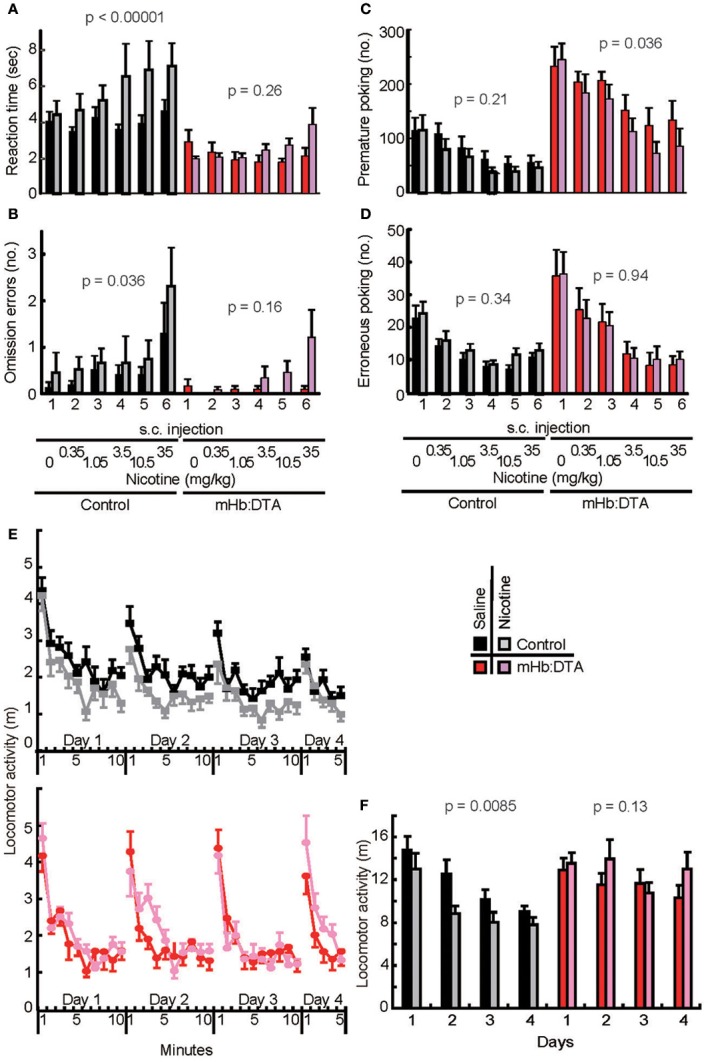
The habenular complex linking forebrain and midbrain structures is subdivided into the medial (mHb) and the lateral nuclei (lHb). The mHb is characterized by the expression of specific nicotinic acetylcholine receptor isoforms and the release of acetylcholine to the interpeduncular nucleus (IPN), the sole output region of the mHb. The specific function of this circuit, however, is poorly understood. Here we generated transgenic mice in which mHb cells were selectively ablated postnatally. These lesions led to large reductions in acetylcholine levels within the IPN. The mutant mice exhibited abnormalities in a wide range of behavioral domains. They tended to be hyperactive during the early night period and were maladapted when repeatedly exposed to new environments. Mutant mice also showed a high rate of premature responses in the 5-choice serial reaction time task (5-CSRTT), indicating impulsive and compulsive behavior. Additionally, mice also exhibited delay and effort aversion in a decision-making test, deficits in spatial memory, a subtle increase in anxiety levels, and attenuated sensorimotor gating. IntelliCage studies under social housing conditions confirmed hyperactivity, environmental maladaptation, and impulsive/compulsive behavior, delay discounting, deficits in long-term spatial memory, and reduced flexibility in complex learning paradigms. In 5-CSRTT and adaptation tasks, systemic administration of nicotine slowed down nose-poke reaction and enhanced adaptation in control but not mutant mice. These findings demonstrate that the mHb-IPN pathway plays a crucial role in inhibitory control and cognition-dependent executive functions.
连接前脑和中脑结构的缰核复合体可细分为内侧缰核(mHb)和外侧缰核(lHb)。mHb的特征在于特定烟碱型乙酰胆碱受体亚型的表达以及向脚间核(IPN)释放乙酰胆碱,IPN是mHb的唯一输出区域。然而,该神经回路的具体功能尚不清楚。在此,我们构建了转基因小鼠,其中mHb细胞在出生后被选择性消融。这些损伤导致IPN内乙酰胆碱水平大幅降低。突变小鼠在广泛的行为领域表现出异常。它们在傍晚时分往往多动,并且在反复暴露于新环境时适应不良。突变小鼠在5选串行反应时任务(5-CSRTT)中也表现出较高的过早反应率,表明存在冲动和强迫行为。此外,小鼠在决策测试中还表现出延迟和努力厌恶、空间记忆缺陷、焦虑水平略有增加以及感觉运动门控减弱。在群居条件下进行的智能笼研究证实了多动、环境适应不良和冲动/强迫行为、延迟折扣、长期空间记忆缺陷以及复杂学习范式中的灵活性降低。在5-CSRTT和适应任务中,全身性给予尼古丁可减缓野生型小鼠的戳鼻反应并增强其适应性,但对突变小鼠无效。这些发现表明,mHb-IPN通路在抑制控制和认知依赖的执行功能中起关键作用。