Bural Gonca G, Muthukrishnan Ashok, Oborski Matthew J, Mountz James M
University of Pittsburgh Medical Center, Department of Radiology, Pittsburgh, PA, USA.
Mol Imaging Radionucl Ther. 2012 Dec;21(3):91-6. doi: 10.4274/Mirt.80299. Epub 2012 Dec 20.
To assess the clinical utility of SPECT/ CT in subjects with endocrine and neuroendocrine tumors compared to SPECT alone.
48 subjects (31 women;17 men; mean age 54±11) with clinical suspicion or diagnosis of endocrine and neuroendocrine tumor had 50 SPECT/CT scans (32 Tc-99m MIBI, 5 post treatment I-131, 8 In-111 Pentetreotide, and 5 I-123 MIBG). SPECT alone findings were compared to SPECT/CT and to pathology or radiological follow up.
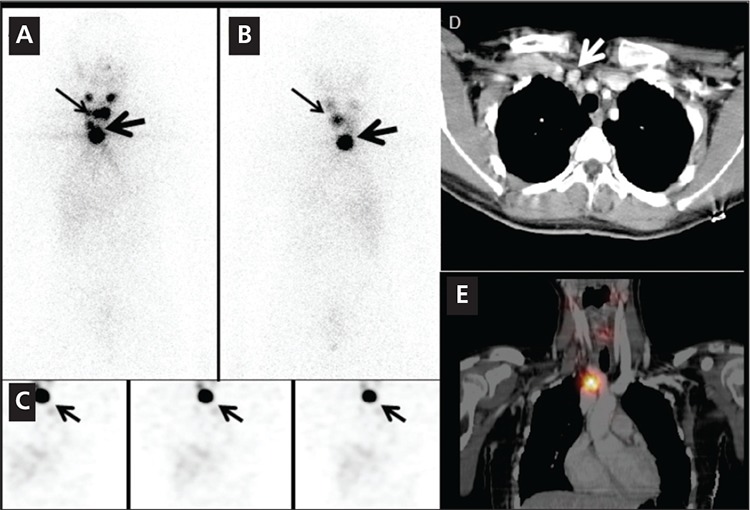
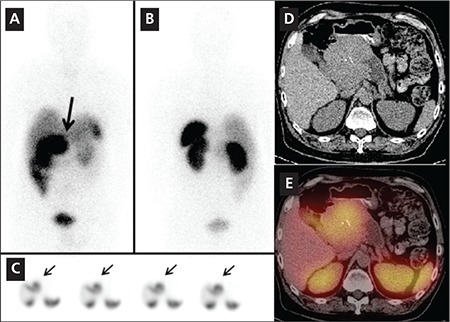
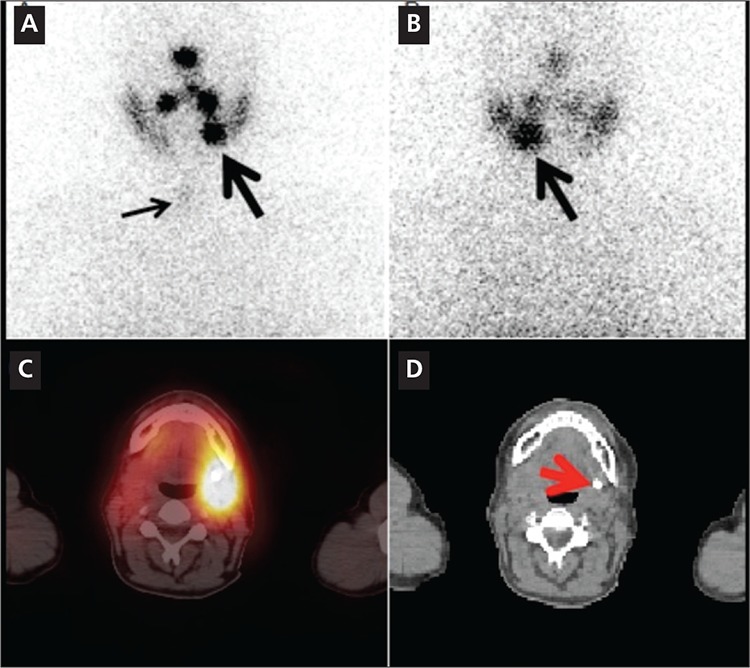
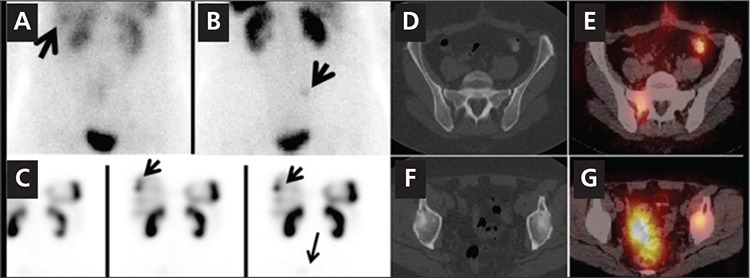
From the 32 Tc-99m MIBI scans, SPECT accurately localized the lesion in 22 positive subjects while SPECT/CT did in 31 subjects. Parathyroid lesions not seen on SPECT alone were smaller than 10 mm. In five post treatment I-131 scans, SPECT alone neither characterized, nor localized any lesions accurately. SPECT/CT revealed 3 benign etiologies, a metastatic lymph node, and one equivocal lesion. In 8 In-111 Pentetreotide scans, SPECT alone could not localize primary or metastatic lesions in 6 subjects all of which were localized with SPECT/CT. In five I-123 MIBG scans, SPECT alone could not detect a 1.1 cm adrenal lesion or correctly characterize normal physiologic adrenal uptake in consecutive scans of the same patient with prior history of adrenelectomy, all of which were correctly localized and characterized with SPECT/CT.
SPECT/CT is superior to SPECT alone in the assessment of endocrine and neuroendocrine tumors. It is better in lesion localization and lesion characterization leading to a decrease in the number of equivocal findings. SPECT/CT should be included in the clinical work up of all patients with diagnosis or suspicion of endocrine and neuroendocrine tumors.
None declared.
与单独的单光子发射计算机断层扫描(SPECT)相比,评估SPECT/计算机断层扫描(CT)在患有内分泌和神经内分泌肿瘤的受试者中的临床应用价值。
48例临床怀疑或诊断为内分泌和神经内分泌肿瘤的受试者(31名女性;17名男性;平均年龄54±11岁)接受了50次SPECT/CT扫描(32次锝-99m甲氧基异丁基异腈(Tc-99m MIBI),5次治疗后碘-131(I-131),8次铟-111奥曲肽(In-111 Pentetreotide),以及5次碘-123间碘苄胍(I-123 MIBG))。将单独SPECT的检查结果与SPECT/CT以及病理或影像学随访结果进行比较。
在32次Tc-99m MIBI扫描中,SPECT在22例阳性受试者中准确地定位了病变,而SPECT/CT在31例受试者中做到了这一点。单独SPECT未发现的甲状旁腺病变小于10毫米。在5次治疗后I-131扫描中,单独SPECT既未准确地对任何病变进行特征描述,也未对其进行定位。SPECT/CT显示了3种良性病因、1个转移性淋巴结和1个可疑病变。在8次In-111 Pentetreotide扫描中,单独SPECT无法在6例受试者中定位原发性或转移性病变,而这些病变通过SPECT/CT均得以定位。在5次I-123 MIBG扫描中,对于一名有肾上腺切除术病史的患者在连续扫描中,单独SPECT无法检测到一个1.1厘米的肾上腺病变,也无法正确地对正常生理性肾上腺摄取进行特征描述,而这些均通过SPECT/CT得以正确定位和特征描述。
在评估内分泌和神经内分泌肿瘤方面,SPECT/CT优于单独的SPECT。它在病变定位和病变特征描述方面表现更好,从而减少了可疑发现的数量。对于所有诊断或怀疑患有内分泌和神经内分泌肿瘤的患者,临床检查中均应包括SPECT/CT。
未声明。