Department of Clinical Experimental Research, Glostrup Research Institute, Glostrup University Hospital, Nordre Ringvej 69, Glostrup DK 2600, Denmark.
BMC Neurosci. 2013 Mar 15;14:34. doi: 10.1186/1471-2202-14-34.
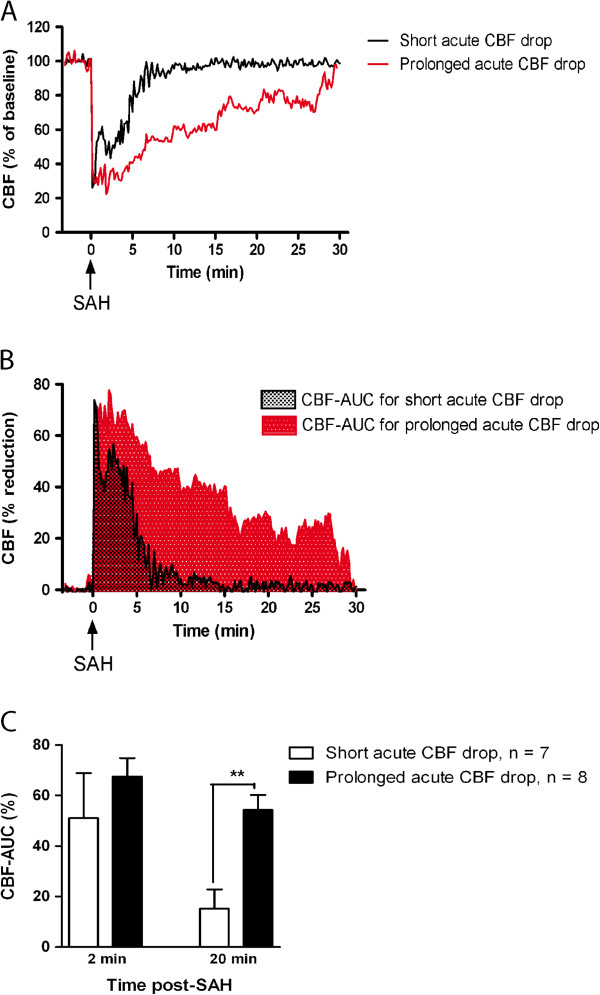
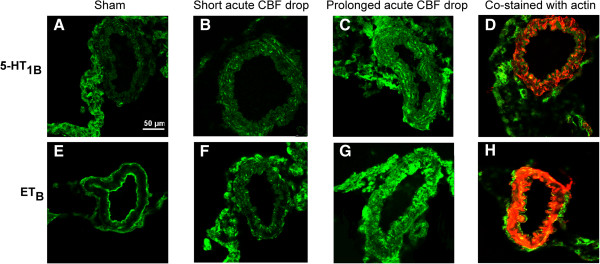
Upregulation of vasoconstrictor receptors in cerebral arteries, including endothelin B (ETB) and 5-hydroxytryptamine 1B (5-HT(1B)) receptors, has been suggested to contribute to delayed cerebral ischemia, a feared complication after subarachnoid hemorrhage (SAH). This receptor upregulation has been shown to be mediated by intracellular signalling via the mitogen activated protein kinase kinase (MEK1/2)--extracellular regulated kinase 1/2 (ERK1/2) pathway. However, it is not known what event(s) that trigger MEK-ERK1/2 activation and vasoconstrictor receptor upregulation after SAH.We hypothesise that the drop in cerebral blood flow (CBF) and wall tension experienced by cerebral arteries in acute SAH is a key triggering event. We here investigate the importance of the duration of this acute CBF drop in a rat SAH model in which a fixed amount of blood is injected into the prechiasmatic cistern either at a high rate resulting in a short acute CBF drop or at a slower rate resulting in a prolonged acute CBF drop.
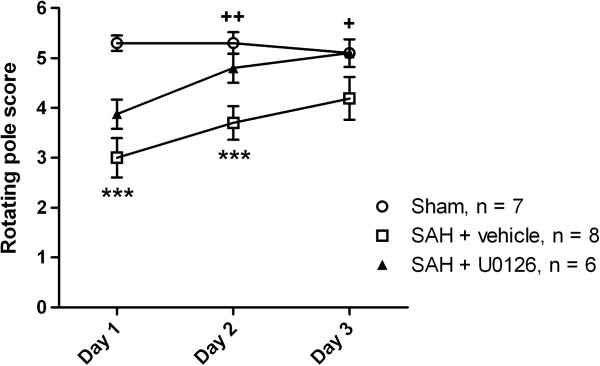
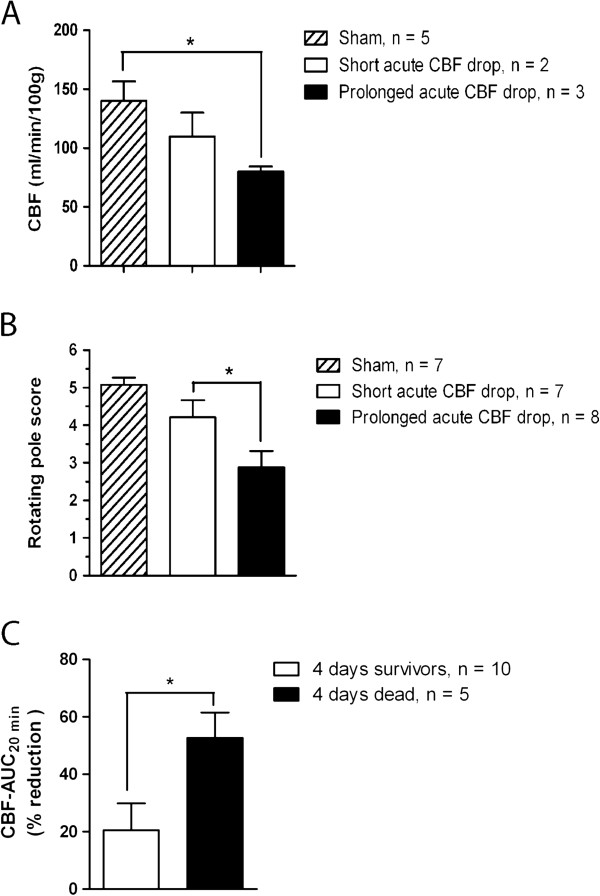
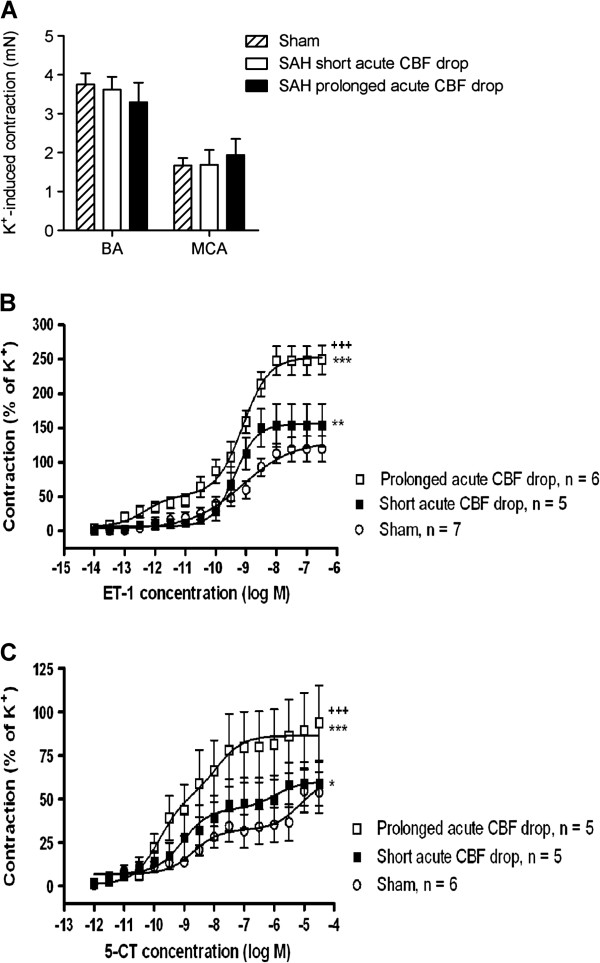
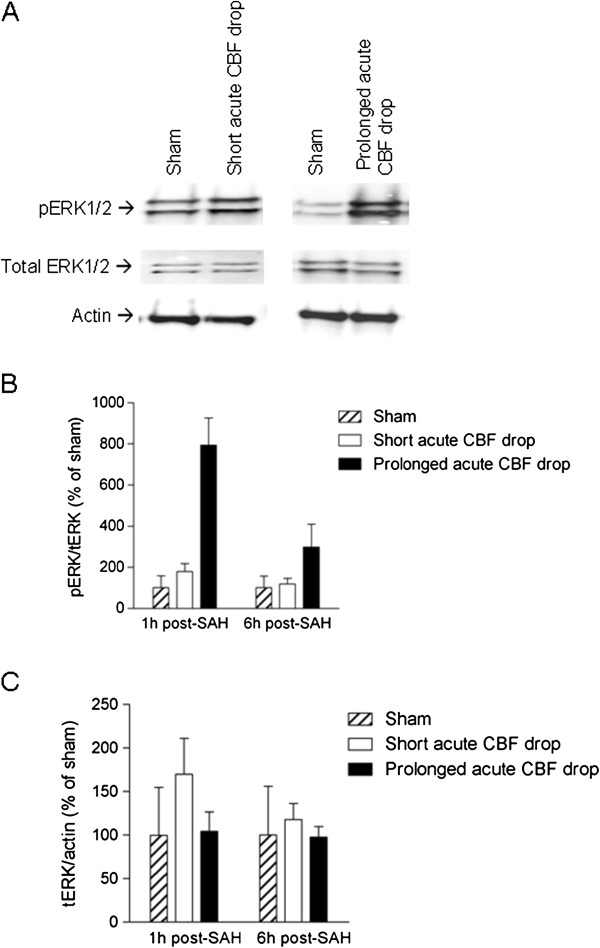
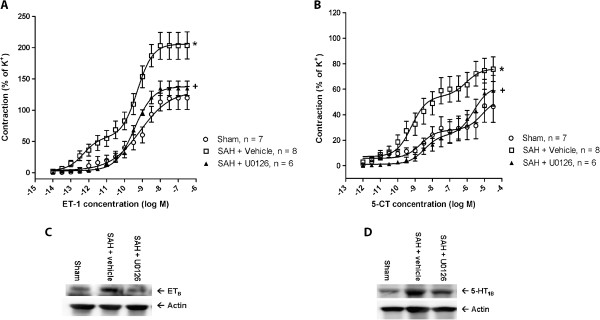
We demonstrate that the duration of the acute CBF drop is determining for a) degree of early ERK1/2 activation in cerebral arteries, b) delayed upregulation of vasoconstrictor receptors in cerebral arteries and c) delayed CBF reduction, neurological deficits and mortality. Moreover, treatment with an inhibitor of MEK-ERK1/2 signalling during an early time window from 6 to 24 h after SAH was sufficient to completely prevent delayed vasoconstrictor receptor upregulation and improve neurological outcome several days after the SAH.
Our findings suggest a series of events where 1) the acute CBF drop triggers early MEK-ERK1/2 activation, which 2) triggers the transcriptional upregulation of vasoconstrictor receptors in cerebral arteries during the following days, where 3) the resulting enhanced cerebrovascular contractility contribute to delayed cerebral ischemia.
脑动脉血管收缩受体(包括内皮素 B [ETB]和 5-羟色胺 1B [5-HT(1B)]受体)的上调被认为是蛛网膜下腔出血(SAH)后迟发性脑缺血这一可怕并发症的原因。这种受体上调已被证明是通过丝裂原激活的蛋白激酶激酶(MEK1/2)-细胞外调节激酶 1/2(ERK1/2)途径的细胞内信号转导介导的。然而,尚不清楚触发 SAH 后 MEK-ERK1/2 激活和血管收缩受体上调的事件是什么。我们假设,SAH 时大脑动脉经历的脑血流(CBF)下降和壁张力下降是一个关键触发事件。在这里,我们在一个大鼠 SAH 模型中研究了这种急性 CBF 下降的持续时间的重要性,在该模型中,以较高的速度向视交叉前池内快速注入一定量的血液,导致急性 CBF 下降持续时间短,或以较慢的速度注入导致急性 CBF 下降持续时间长。
我们证明,急性 CBF 下降的持续时间决定了 a)早期 ERK1/2 在脑动脉中的激活程度,b)脑动脉中血管收缩受体的延迟上调,以及 c)延迟的 CBF 减少、神经功能缺损和死亡率。此外,在 SAH 后 6 至 24 小时的早期时间窗内用 MEK-ERK1/2 信号通路抑制剂进行治疗足以完全防止延迟性血管收缩受体上调,并在 SAH 后数天改善神经功能预后。
我们的研究结果提示了一系列事件,其中 1)急性 CBF 下降触发早期 MEK-ERK1/2 激活,2)在随后的几天中触发脑动脉中血管收缩受体的转录上调,3)由此产生的增强的脑血管收缩性导致迟发性脑缺血。