Model Animal Research Center of Nanjing University and MOE Key Laboratory of Model Animals for Disease Study, 12 Xuefu Road, Pukou High-Tech Zone, Nanjing, 210061, China.
Cell Biosci. 2013 Mar 11;3(1):15. doi: 10.1186/2045-3701-3-15.
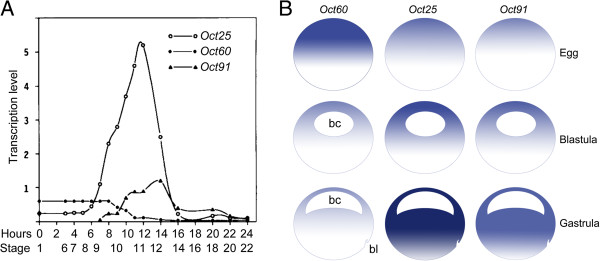
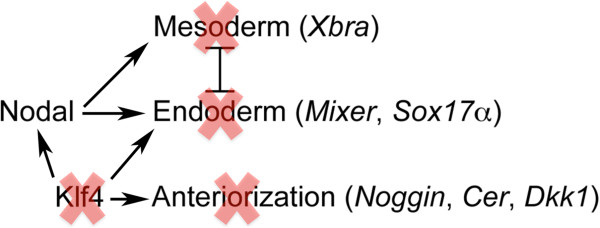
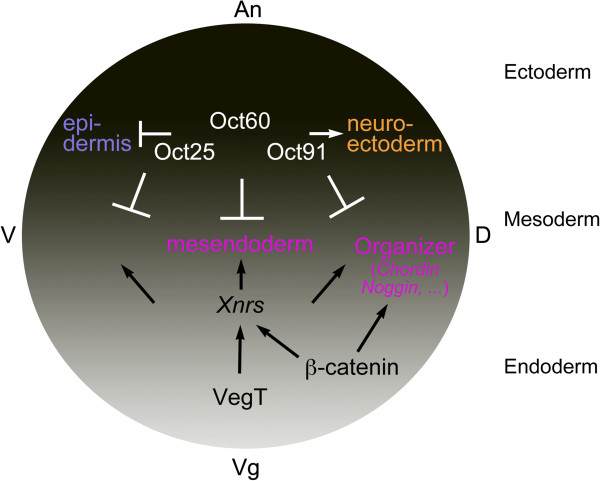
The classical pluripotency factors Oct4, Klf4, Sox2, and Nanog are required for the maintenance of pluripotency and self-renewal of embryonic stem (ES) cells and can reprogram terminally differentiated cells into a pluripotent state. Alteration in the levels of these factors in ES cells will cause differentiation into different lineages, suggesting that they are critical determinants of cell fates. These factors show dynamic expression patterns during embryogenesis, in particular in the pluripotent or multipotent cells of an early stage embryo, implying that they are involved in the cell fate decision during early embryonic development. Functions and the underlying molecular mechanisms have been extensively studied for these factors in ES cells under cultured conditions. However, this does not mean that the results also hold true for intact embryos. In the review, I have summarized and discussed the findings on the functions and the underlying mechanisms of the classical pluripotency factors during early embryogenesis, in particular during germ layer formation.
经典多能性因子 Oct4、Klf4、Sox2 和 Nanog 对于维持胚胎干细胞的多能性和自我更新是必需的,并且可以将终末分化细胞重编程为多能状态。ES 细胞中这些因子水平的改变会导致不同谱系的分化,这表明它们是细胞命运的关键决定因素。这些因子在胚胎发生过程中表现出动态的表达模式,特别是在早期胚胎的多能或多潜能细胞中,这意味着它们参与了早期胚胎发育过程中的细胞命运决定。在培养条件下,已经对这些因子在 ES 细胞中的功能和潜在的分子机制进行了广泛的研究。然而,这并不意味着这些结果对于完整的胚胎也同样适用。在这篇综述中,我总结和讨论了经典多能性因子在早期胚胎发生过程中的功能和潜在机制,特别是在胚层形成过程中的功能和潜在机制。