1. Neuroscience Research Center, Baqyiatallah (a.s.) University of Medical Sciences, Tehran, Iran.
Cell J. 2012 Summer;14(2):122-9. Epub 2012 Aug 31.
In previous studies it has been emphasized that the site of morphine action may be either in the embryo or the placenta. In the present study, we attempt to identify the site of morphine action on the fetal section of Wistar rat placenta by using C(14)-morphine.
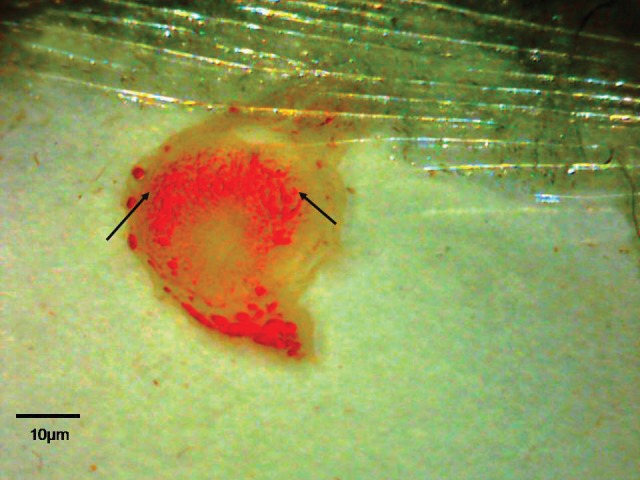
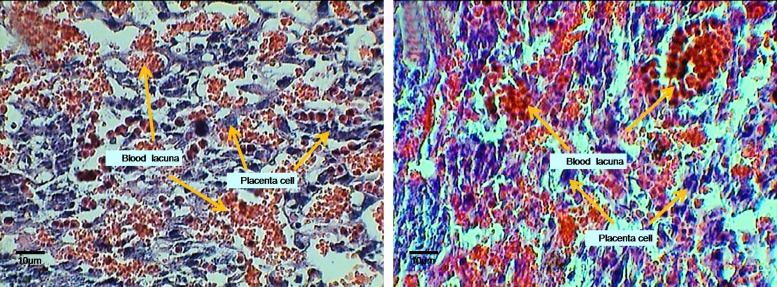
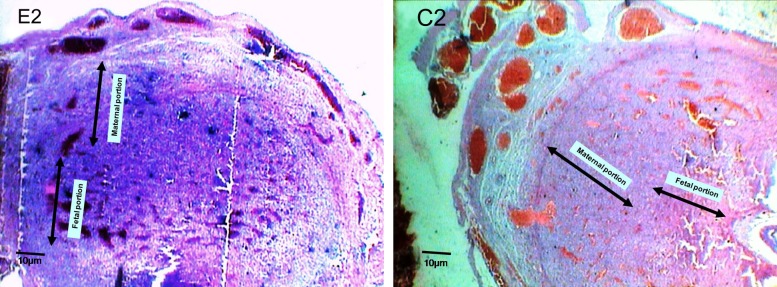
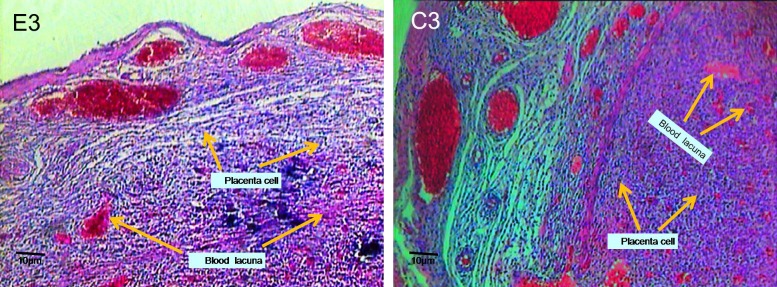
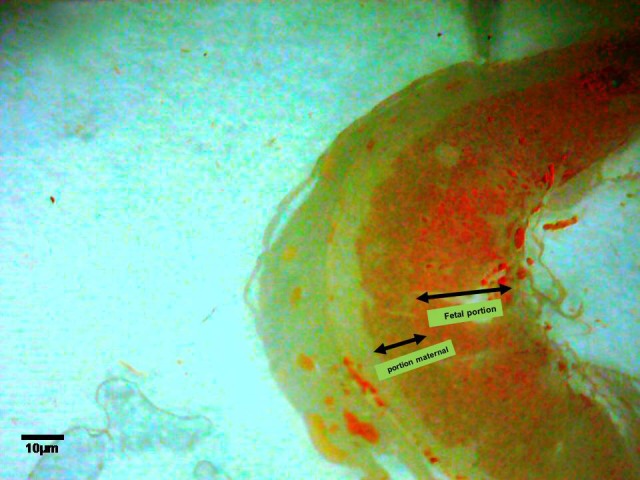
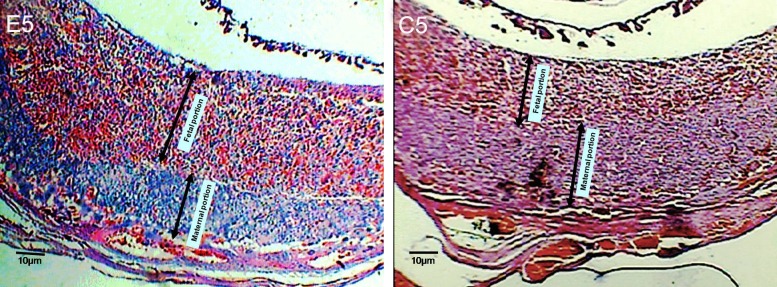
IN THIS STUDY (EXPERIMENTAL), FEMALE WISTAR RATS (WEIGHTS: 170-200 g) were mated with male rats and their coupling times recorded. Experimental groups received daily doses of 0.05 mg/ml of C(14)-morphine in their drinking water. On the 9(th) and14(th) embryonic days, the pregnant rats were anesthetized and the placenta and uterus surgically removed. Placentas were fixed in 10% formalin for two weeks, then processed, sectioned in 5 µm and 25 µm thicknesses, and fixed on glass slides for further evaluation. The 25 µm sections were delivered to black and white film for three days. Films were processed and evaluated with a digital inverse microscope for possible radiological impression. The 5 µm sections were processed for hematoxylin and eosin (H&E) staining, and evaluated by light microscope and MOTIC software.
Our results indicated that the site of action of C(14)-morphine was possibly located on the blood plexus of the fetal portion of the placenta. In addition, oral morphine consumption was shown to inhibit fetal and maternal placental development in the experimental groups.
We conclude that morphine's effectiveness on the reduction of embryo growth and development may be via its effects on the blood plexus of the fetal section of the placenta.
在之前的研究中强调了吗啡作用的部位可能在胚胎或胎盘。在本研究中,我们试图通过使用 C(14)-吗啡来确定吗啡在 Wistar 大鼠胎盘胎儿段的作用部位。
在这项研究(实验)中,雌性 Wistar 大鼠(体重:170-200 克)与雄性大鼠交配,并记录它们的交配时间。实验组每天在饮用水中接受 0.05 毫克/毫升的 C(14)-吗啡剂量。在第 9 天和第 14 天,怀孕的大鼠被麻醉,然后进行手术取出胎盘和子宫。胎盘用 10%甲醛固定两周,然后进行处理,切成 5 µm 和 25 µm 厚的切片,并固定在载玻片上进行进一步评估。25 µm 切片在黑白胶片上曝光三天。胶片经过处理并用数字倒置显微镜评估可能的放射学印象。5 µm 切片进行苏木精和伊红(H&E)染色,并通过光学显微镜和 MOTIC 软件进行评估。
我们的结果表明,C(14)-吗啡的作用部位可能位于胎盘胎儿部分的血液丛。此外,口服吗啡消耗显示在实验组中抑制了胎儿和母体胎盘的发育。
我们得出结论,吗啡对胚胎生长和发育的减少的有效性可能是通过其对胎盘胎儿段血液丛的作用。