Institute of Biomedical Engineering, College of Medicine and College of Engineering, National Taiwan University, Taipei 10002, Taiwan.
Biomed Res Int. 2013;2013:930281. doi: 10.1155/2013/930281. Epub 2012 Dec 27.
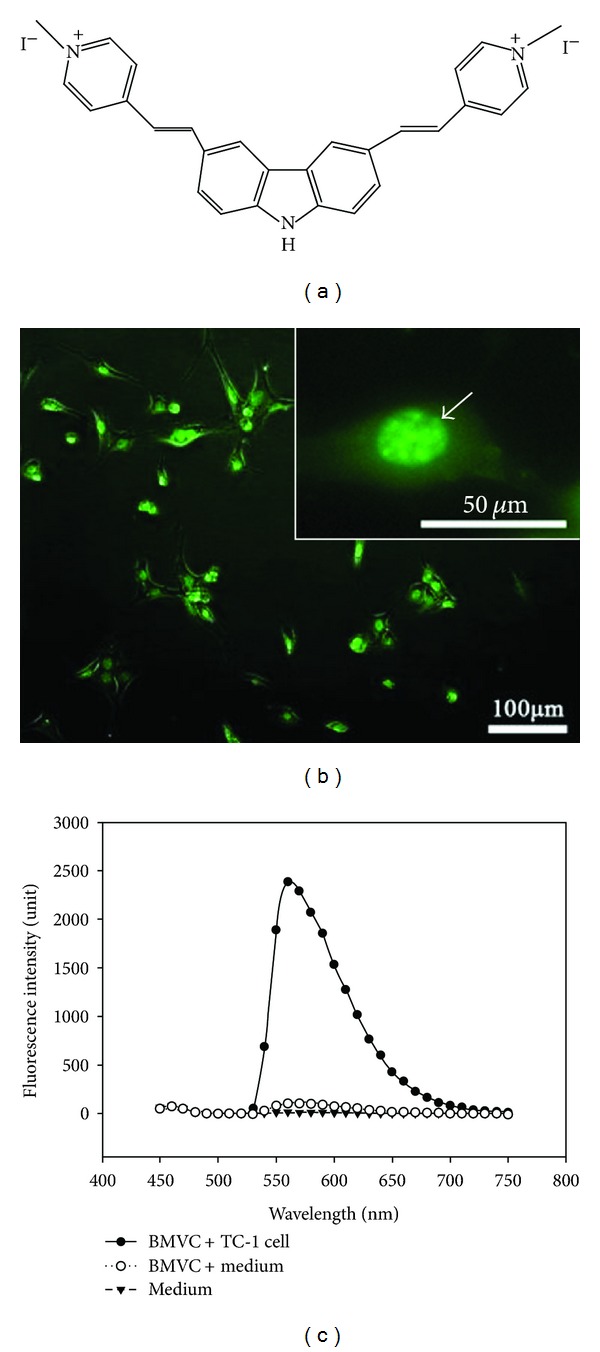
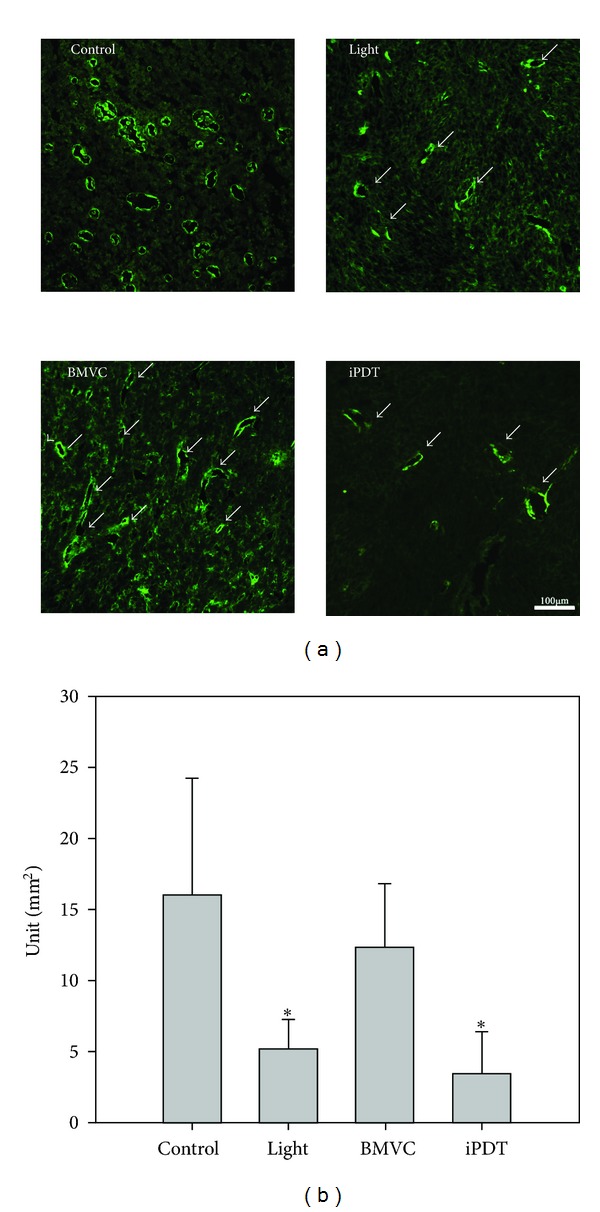
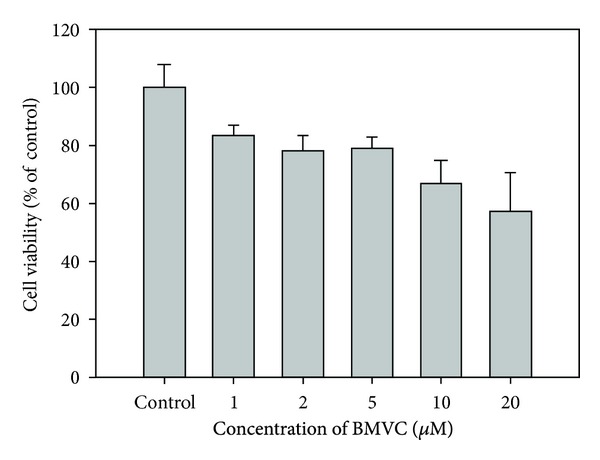
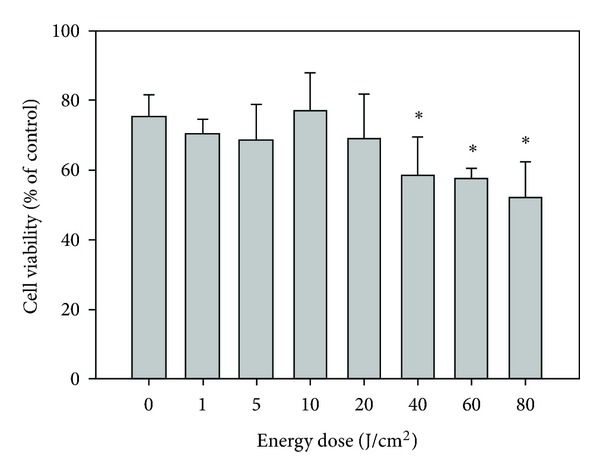
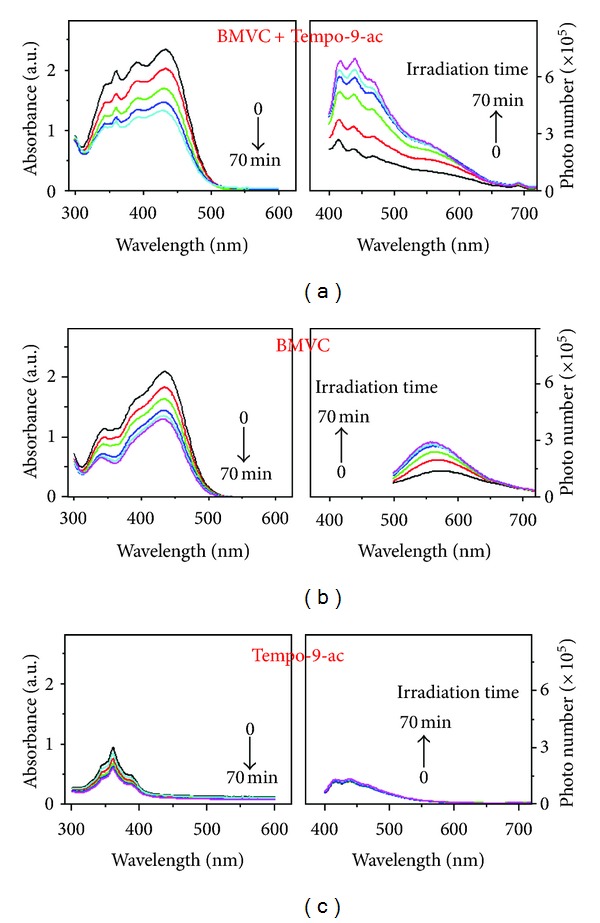
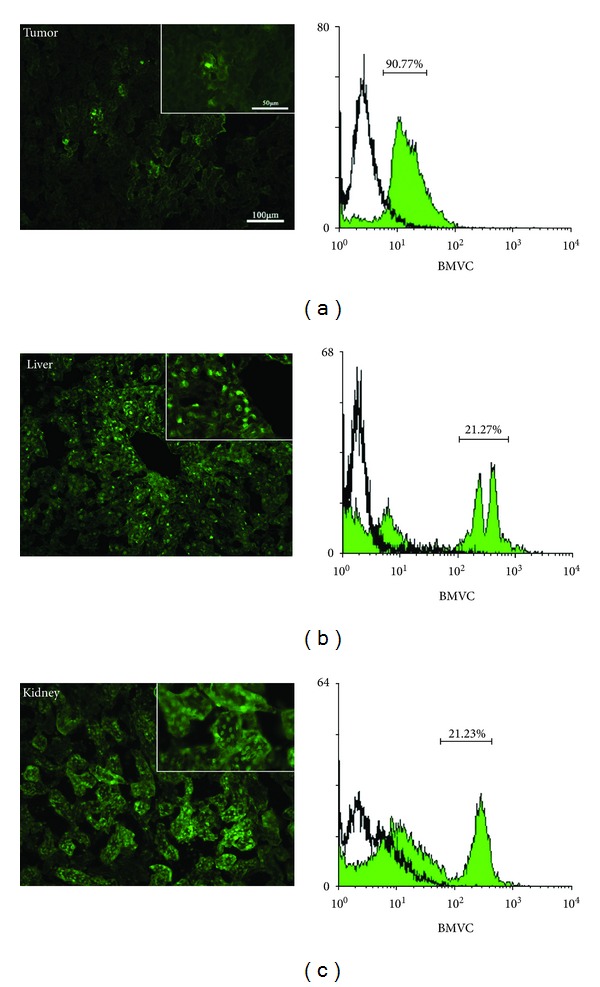
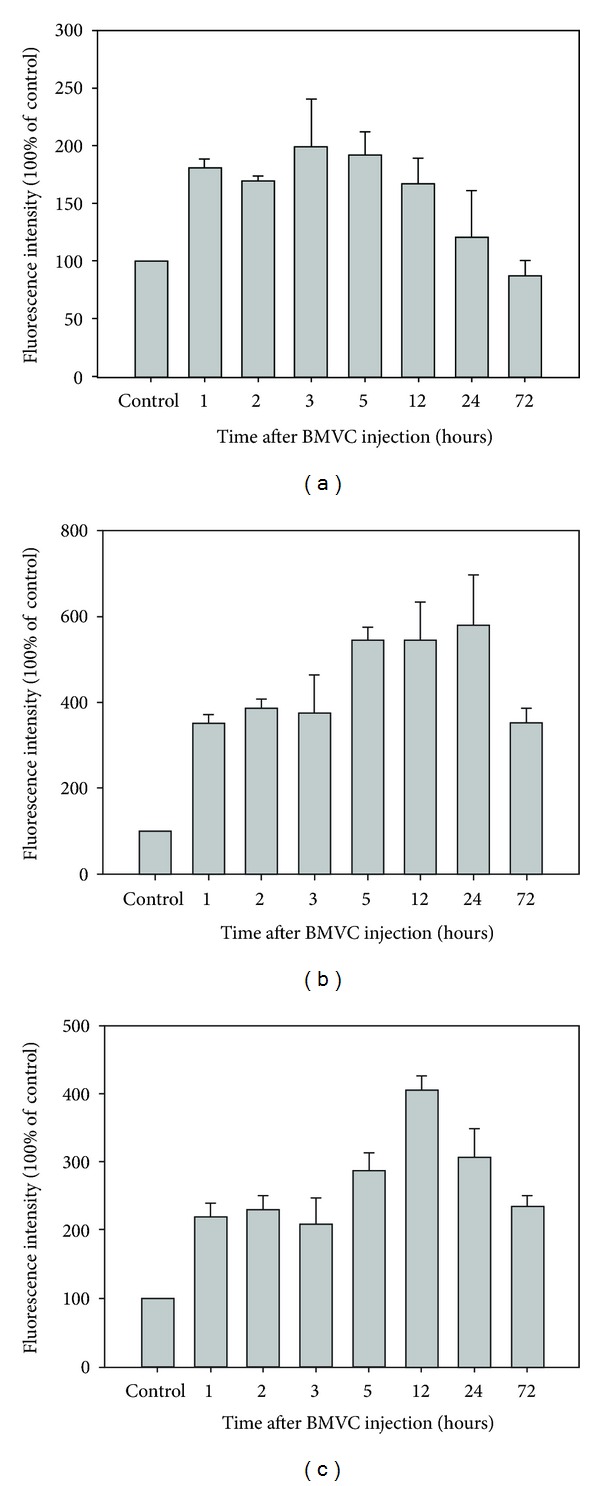
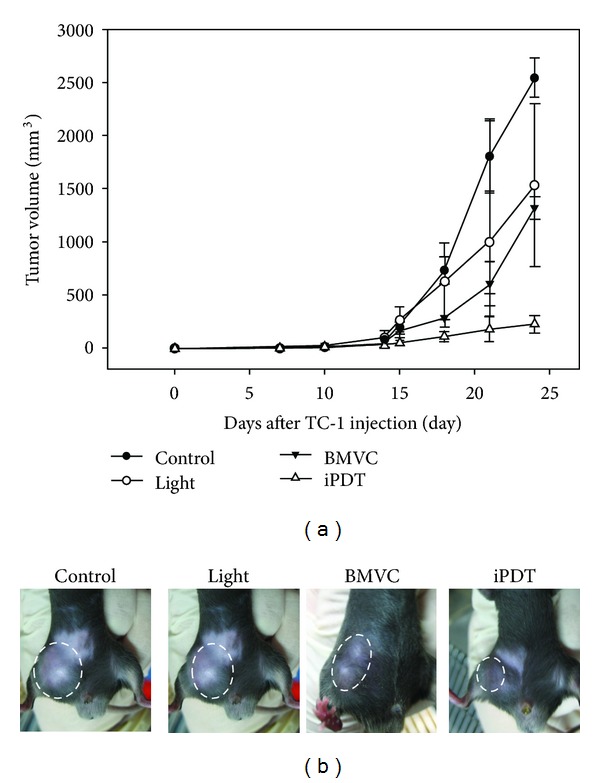
We have applied a fluorescent molecule 3,6-bis(1-methyl-4-vinylpyridinium) carbazole diiodide (BMVC) for tumor targeting and treatment. In this study, we investigated the photo-induced antitumor effect of BMVC. In vitro cell line studies showed that BMVC significantly killed TC-1 tumor cells at light dose greater than 40 J/cm(2). The fluorescence of BMVC in the tumor peaked at 3 hours and then gradually decreased to reach the control level after 24 hours. In vivo tumor treatment studies showed BMVC plus light irradiation (iPDT) significantly inhibited the tumor growth. At day 24 after tumor implantation, tumor volume was measured to be 225 ± 79 mm(3), 2542 ± 181 mm(3), 1533 ± 766 mm(3), and 1317 ± 108 mm(3) in the iPDT, control, light-only, and BMVC-only groups, respectively. Immunohistochemistry studies showed the microvascular density was significantly lower in the iPDT group. Taken together, our results demonstrated that BMVC may be a potent tumor-specific photosensitizer (PS) for PDT.
我们应用一种荧光分子 3,6-双(1-甲基-4-乙烯基吡啶鎓)咔唑二碘化物(BMVC)进行肿瘤靶向和治疗。在这项研究中,我们研究了 BMVC 的光诱导抗肿瘤作用。体外细胞系研究表明,BMVC 在光剂量大于 40 J/cm(2)时显著杀死 TC-1 肿瘤细胞。BMVC 在肿瘤中的荧光在 3 小时达到峰值,然后逐渐下降,24 小时后达到对照水平。体内肿瘤治疗研究表明,BMVC 加光照射(iPDT)显著抑制肿瘤生长。在肿瘤植入后第 24 天,iPDT、对照组、单纯光照组和 BMVC 组的肿瘤体积分别为 225 ± 79 mm(3)、2542 ± 181 mm(3)、1533 ± 766 mm(3)和 1317 ± 108 mm(3)。免疫组织化学研究表明,iPDT 组的微血管密度显著降低。综上所述,我们的结果表明,BMVC 可能是一种有效的肿瘤特异性光动力治疗光敏剂(PS)。