Department of Experimental Psychology, University of Ghent Ghent, Belgium.
Front Hum Neurosci. 2013 Mar 19;7:82. doi: 10.3389/fnhum.2013.00082. eCollection 2013.
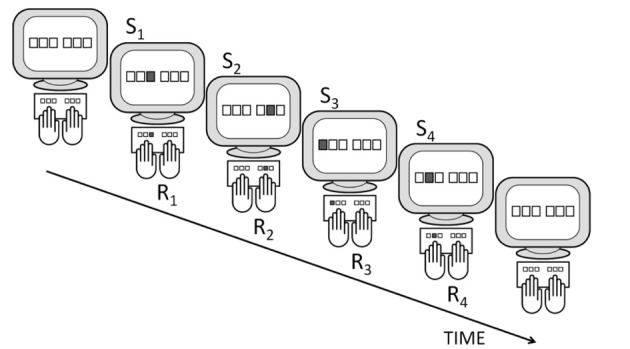
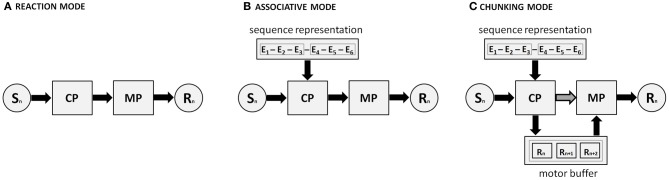
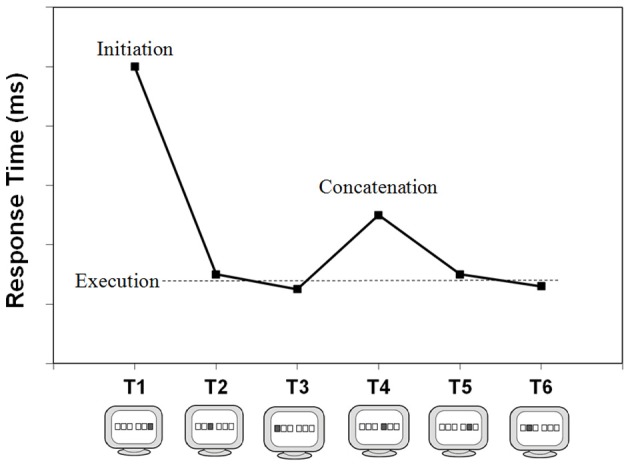
Work with the discrete sequence production (DSP) task has provided a substantial literature on discrete sequencing skill over the last decades. The purpose of the current article is to provide a comprehensive overview of this literature and of the theoretical progress that it has prompted. We start with a description of the DSP task and the phenomena that are typically observed with it. Then we propose a cognitive model, the dual processor model (DPM), which explains performance of (skilled) discrete key-press sequences. Key features of this model are the distinction between a cognitive processor and a motor system (i.e., motor buffer and motor processor), the interplay between these two processing systems, and the possibility to execute familiar sequences in two different execution modes. We further discuss how this model relates to several related sequence skill research paradigms and models, and we outline outstanding questions for future research throughout the paper. We conclude by sketching a tentative neural implementation of the DPM.
在过去几十年中,离散序列产生(DSP)任务的研究为离散序列技能提供了大量文献。本文的目的是对这一文献以及它所引发的理论进展进行全面概述。我们首先描述了 DSP 任务以及通常在该任务中观察到的现象。然后,我们提出了一个认知模型,即双处理器模型(DPM),该模型解释了(熟练)离散按键序列的表现。该模型的关键特征包括认知处理器和运动系统(即运动缓冲器和运动处理器)之间的区分、这两个处理系统之间的相互作用,以及以两种不同执行模式执行熟悉序列的可能性。我们进一步讨论了该模型如何与几个相关的序列技能研究范式和模型相关,并在整篇论文中概述了未来研究的悬而未决的问题。最后,我们通过概述 DPM 的一个试探性神经实现来结束本文。