Experimental Hematology Laboratory, Department of Physiology, School of Basic Medical Sciences, Central South University, Changsha, China.
PLoS One. 2013;8(3):e58757. doi: 10.1371/journal.pone.0058757. Epub 2013 Mar 14.
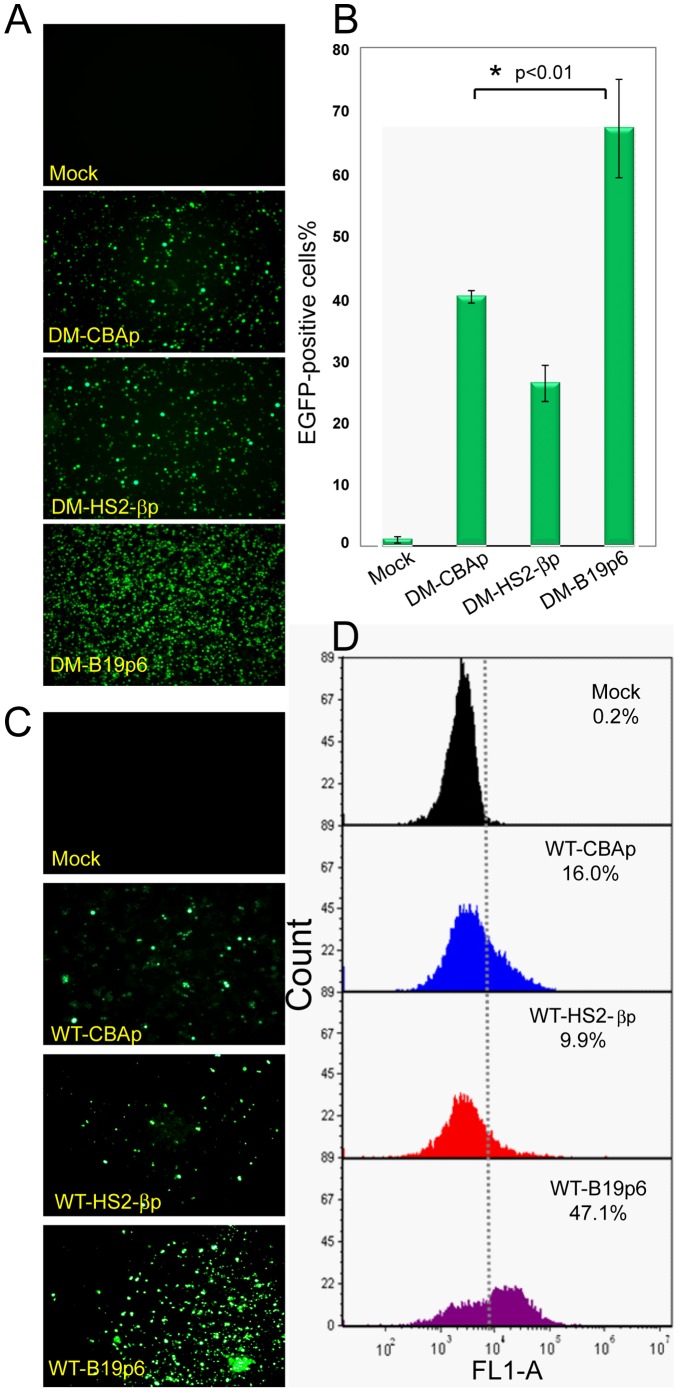
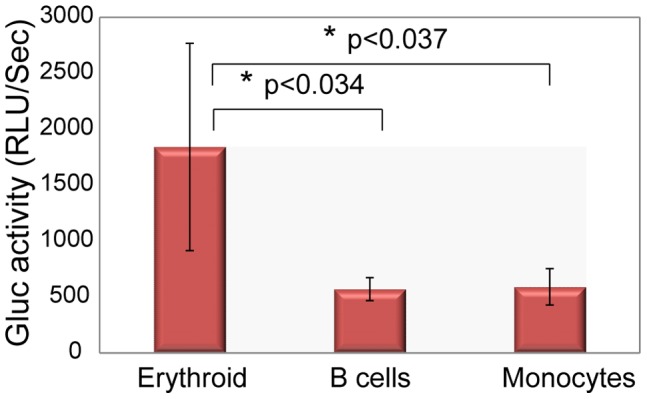
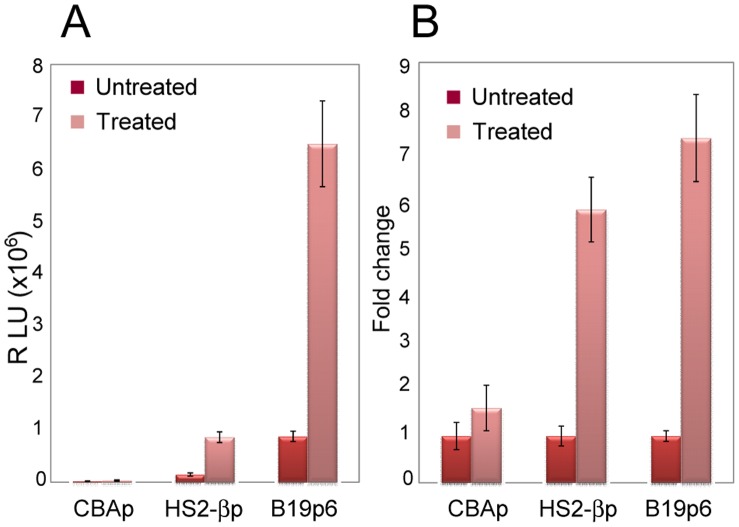
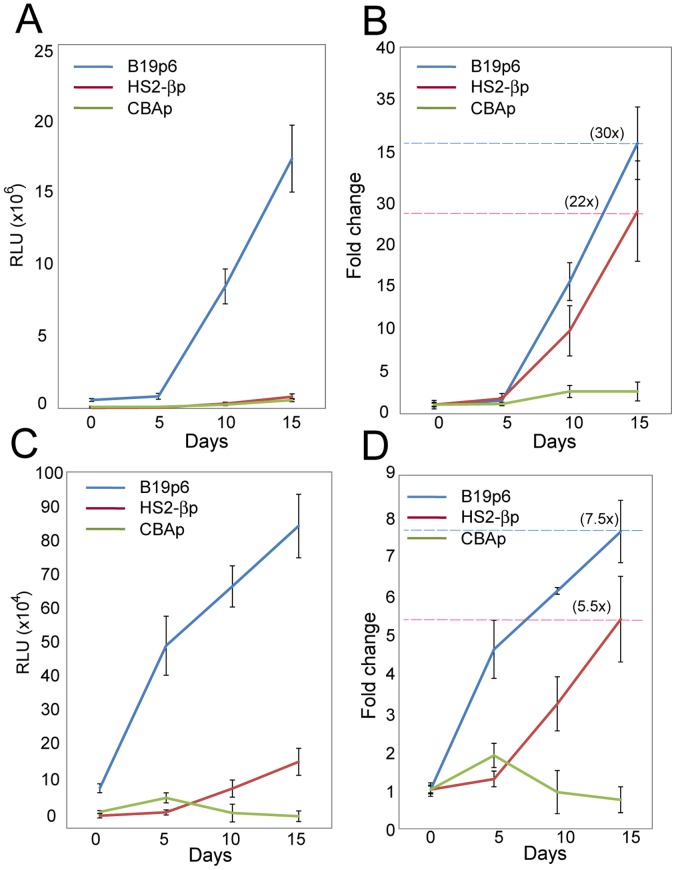
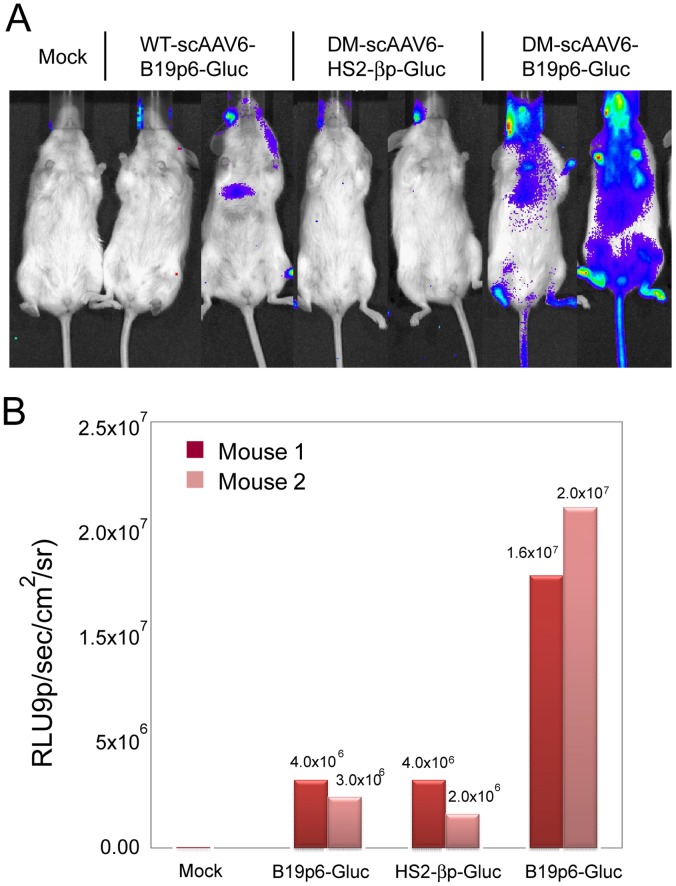
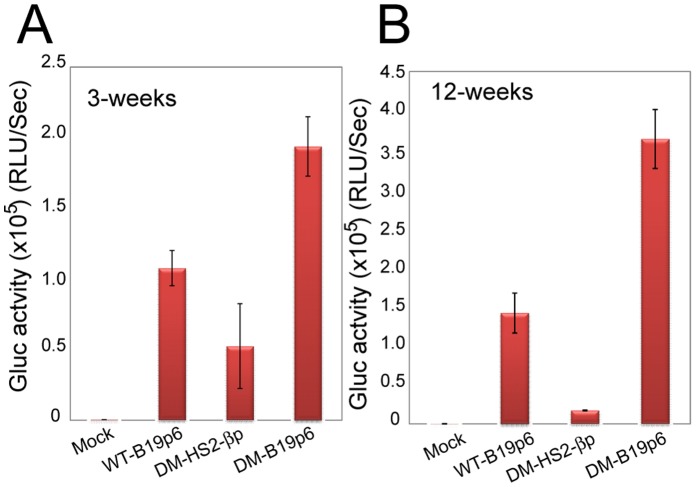
We have observed that of the 10 AAV serotypes, AAV6 is the most efficient in transducing primary human hematopoietic stem cells (HSCs), and that the transduction efficiency can be further increased by specifically mutating single surface-exposed tyrosine (Y) residues on AAV6 capsids. In the present studies, we combined the two mutations to generate a tyrosine double-mutant (Y705+731F) AAV6 vector, with which >70% of CD34(+) cells could be transduced. With the long-term objective of developing recombinant AAV vectors for the potential gene therapy of human hemoglobinopathies, we generated the wild-type (WT) and tyrosine-mutant AAV6 vectors containing the following erythroid cell-specific promoters: β-globin promoter (βp) with the upstream hyper-sensitive site 2 (HS2) enhancer from the β-globin locus control region (HS2-βbp), and the human parvovirus B19 promoter at map unit 6 (B19p6). Transgene expression from the B19p6 was significantly higher than that from the HS2-βp, and increased up to 30-fold and up to 20-fold, respectively, following erythropoietin (Epo)-induced differentiation of CD34(+) cells in vitro. Transgene expression from the B19p6 or the HS2-βp was also evaluated in an immuno-deficient xenograft mouse model in vivo. Whereas low levels of expression were detected from the B19p6 in the WT AAV6 capsid, and that from the HS2-βp in the Y705+731F AAV6 capsid, transgene expression from the B19p6 promoter in the Y705+731F AAV6 capsid was significantly higher than that from the HS2-βp, and was detectable up to 12 weeks post-transplantation in primary recipients, and up to 6 additional weeks in secondary transplanted animals. These data demonstrate the feasibility of the use of the novel Y705+731F AAV6-B19p6 vectors for high-efficiency transduction of HSCs as well as expression of the b-globin gene in erythroid progenitor cells for the potential gene therapy of human hemoglobinopathies such as β-thalassemia and sickle cell disease.
我们观察到,在 10 种 AAV 血清型中,AAV6 对原代人造血干细胞(HSCs)的转导效率最高,并且通过特异性突变 AAV6 衣壳表面暴露的单个酪氨酸(Y)残基可以进一步提高转导效率。在本研究中,我们将两种突变结合起来,产生了一个双酪氨酸突变(Y705+731F)AAV6 载体,用该载体可以转导超过 70%的 CD34+细胞。为了开发用于治疗人类血红蛋白病的重组 AAV 载体,我们构建了野生型(WT)和酪氨酸突变 AAV6 载体,它们包含以下红系细胞特异性启动子:β-珠蛋白启动子(βp)与β-珠蛋白基因座控制区(HS2-βbp)中的上游高敏感位点 2(HS2)增强子,以及人细小病毒 B19 启动子位于图谱单位 6(B19p6)。体外红细胞生成素(Epo)诱导 CD34+细胞分化后,B19p6 的转基因表达明显高于 HS2-βp,分别增加了 30 倍和 20 倍。B19p6 或 HS2-βp 的转基因表达也在体内免疫缺陷异种移植小鼠模型中进行了评估。虽然 WT AAV6 衣壳中的 B19p6 检测到低水平的表达,而 Y705+731F AAV6 衣壳中的 HS2-βp 检测到低水平的表达,但 Y705+731F AAV6 衣壳中的 B19p6 启动子的转基因表达明显高于 HS2-βp,在原发性受者中可检测到 12 周,在二次移植动物中可检测到 6 周。这些数据表明,新型 Y705+731F AAV6-B19p6 载体可用于高效转导 HSCs,并在红系祖细胞中表达 b-珠蛋白基因,用于治疗β-地中海贫血和镰状细胞病等人类血红蛋白病的潜在基因治疗。