Program in Emerging Infectious Disease, Duke-NUS Graduate Medical School, Singapore.
PLoS Negl Trop Dis. 2013;7(3):e2107. doi: 10.1371/journal.pntd.0002107. Epub 2013 Mar 14.
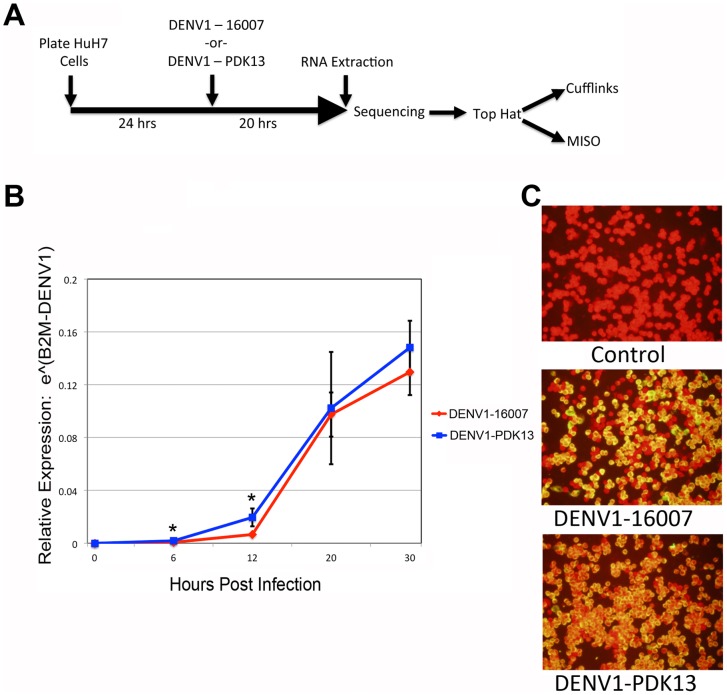
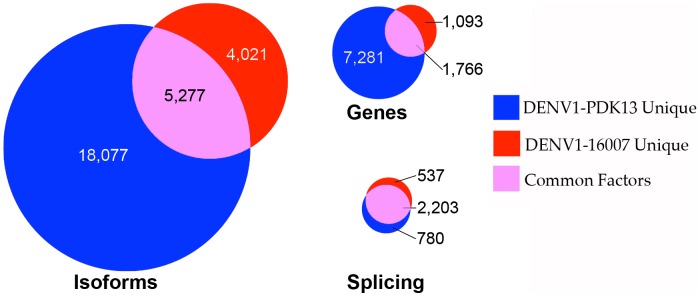
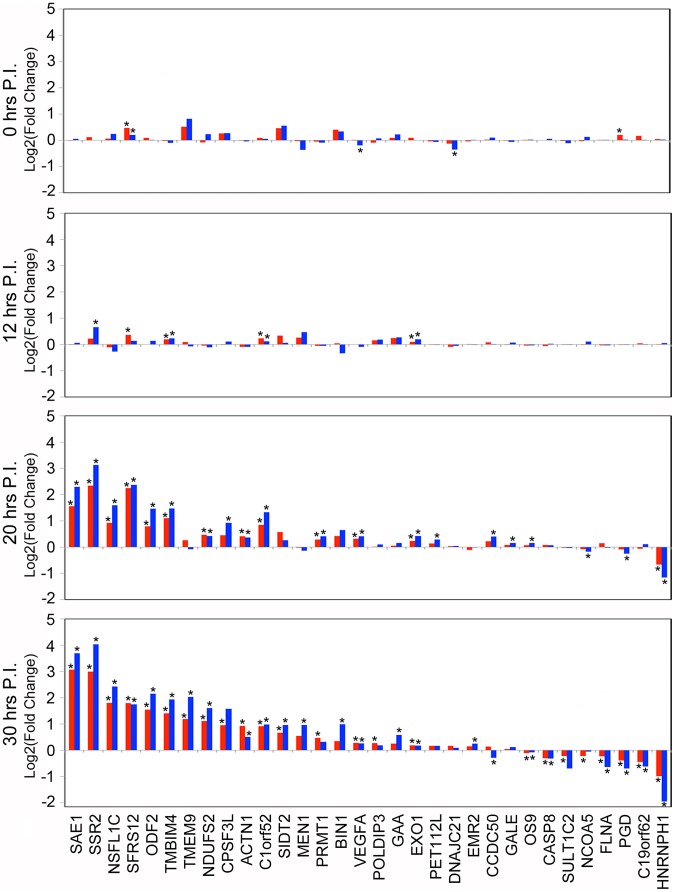
Dengue viruses 1-4 (DENV1-4) rely heavily on the host cell machinery to complete their life cycle, while at the same time evade the host response that could restrict their replication efficiency. These requirements may account for much of the broad gene-level changes to the host transcriptome upon DENV infection. However, host gene function is also regulated through transcriptional start site (TSS) selection and post-transcriptional modification to the RNA that give rise to multiple gene isoforms. The roles these processes play in the host response to dengue infection have not been explored. In the present study, we utilized RNA sequencing (RNAseq) to identify novel transcript variations in response to infection with both a pathogenic strain of DENV1 and its attenuated derivative. RNAseq provides the information necessary to distinguish the various isoforms produced from a single gene and their splice variants. Our data indicate that there is an extensive amount of previously uncharacterized TSS and post-transcriptional modifications to host RNA over a wide range of pathways and host functions in response to DENV infection. Many of the differentially expressed genes identified in this study have previously been shown to be required for flavivirus propagation and/or interact with DENV gene products. We also show here that the human transcriptome response to an infection by wild-type DENV or its attenuated derivative differs significantly. This differential response to wild-type and attenuated DENV infection suggests that alternative processing events may be part of a previously uncharacterized innate immune response to viral infection that is in large part evaded by wild-type DENV.
登革病毒 1-4 型(DENV1-4)严重依赖宿主细胞机制来完成其生命周期,同时逃避可能限制其复制效率的宿主反应。这些要求可能解释了 DENV 感染后宿主转录组的广泛基因水平变化的大部分原因。然而,宿主基因的功能也通过转录起始位点(TSS)选择和 RNA 的转录后修饰来调节,这些修饰产生了多种基因亚型。这些过程在宿主对登革热感染的反应中所起的作用尚未得到探索。在本研究中,我们利用 RNA 测序(RNAseq)来鉴定对致病性 DENV1 及其减毒衍生物感染的反应中产生的新型转录变体。RNAseq 提供了区分单个基因产生的各种亚型及其剪接变体的必要信息。我们的数据表明,在广泛的途径和宿主功能中,宿主 RNA 存在大量以前未被描述的 TSS 和转录后修饰,以响应 DENV 感染。本研究中鉴定的许多差异表达基因以前被证明是黄病毒增殖所必需的,或者与 DENV 基因产物相互作用。我们还在此表明,人类转录组对野生型 DENV 或其减毒衍生物的感染反应有很大的不同。对野生型和减毒 DENV 感染的这种不同反应表明,替代加工事件可能是以前未被描述的对病毒感染的固有免疫反应的一部分,而野生型 DENV 在很大程度上逃避了这种反应。