Department of Biology, Stanford University, Stanford, California, United States of America.
PLoS One. 2013;8(3):e57970. doi: 10.1371/journal.pone.0057970. Epub 2013 Mar 8.
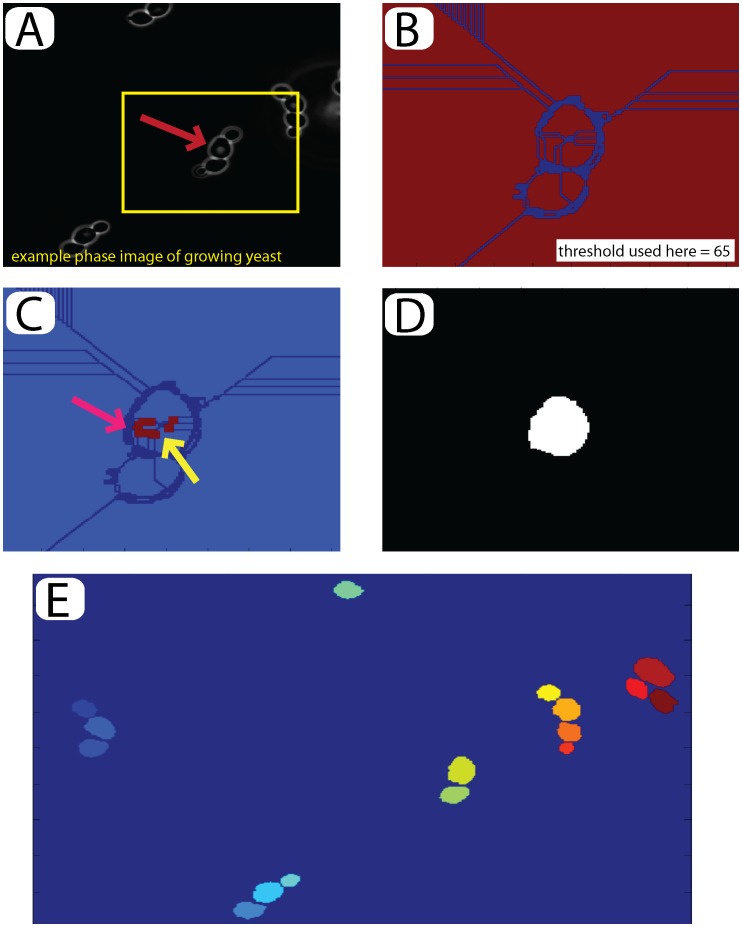
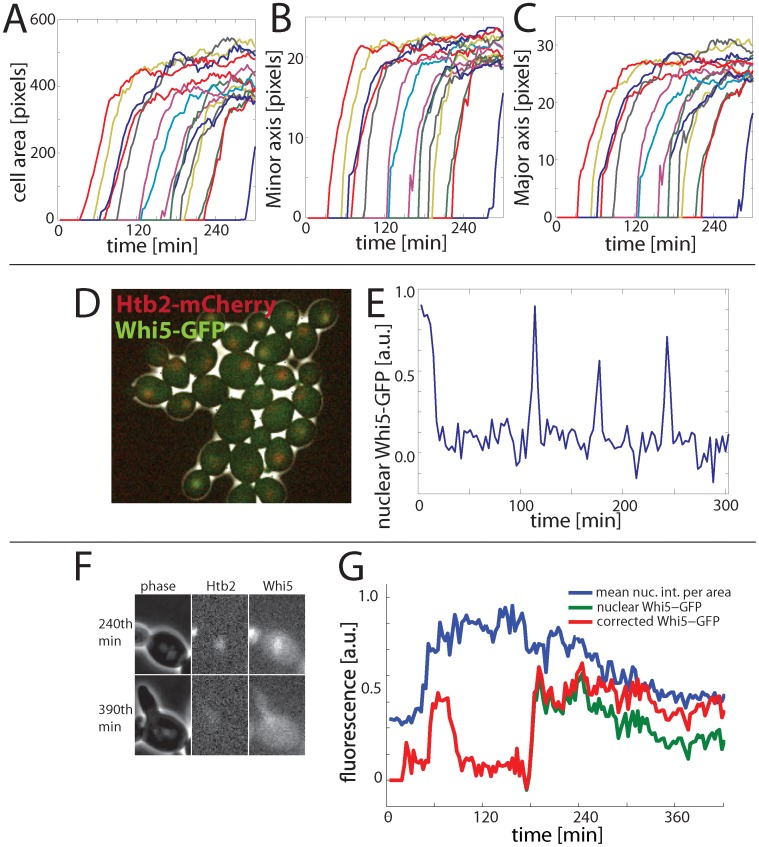
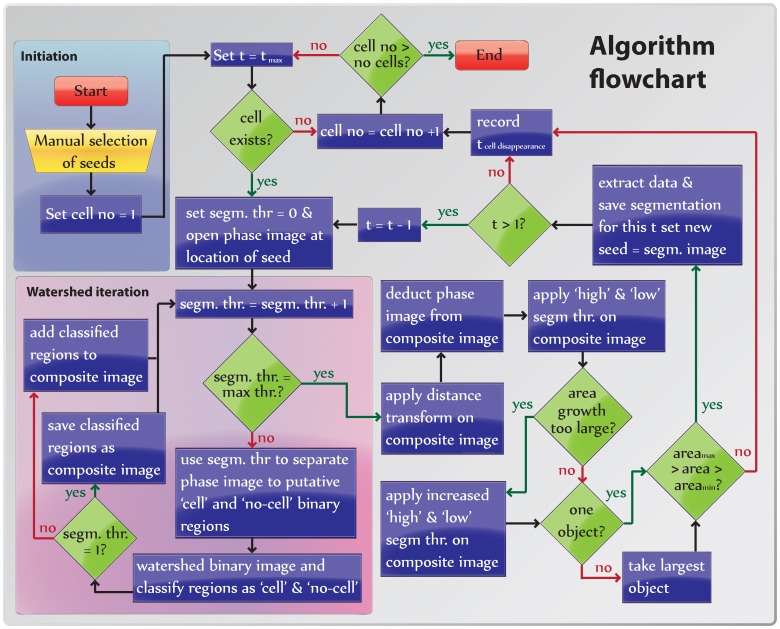
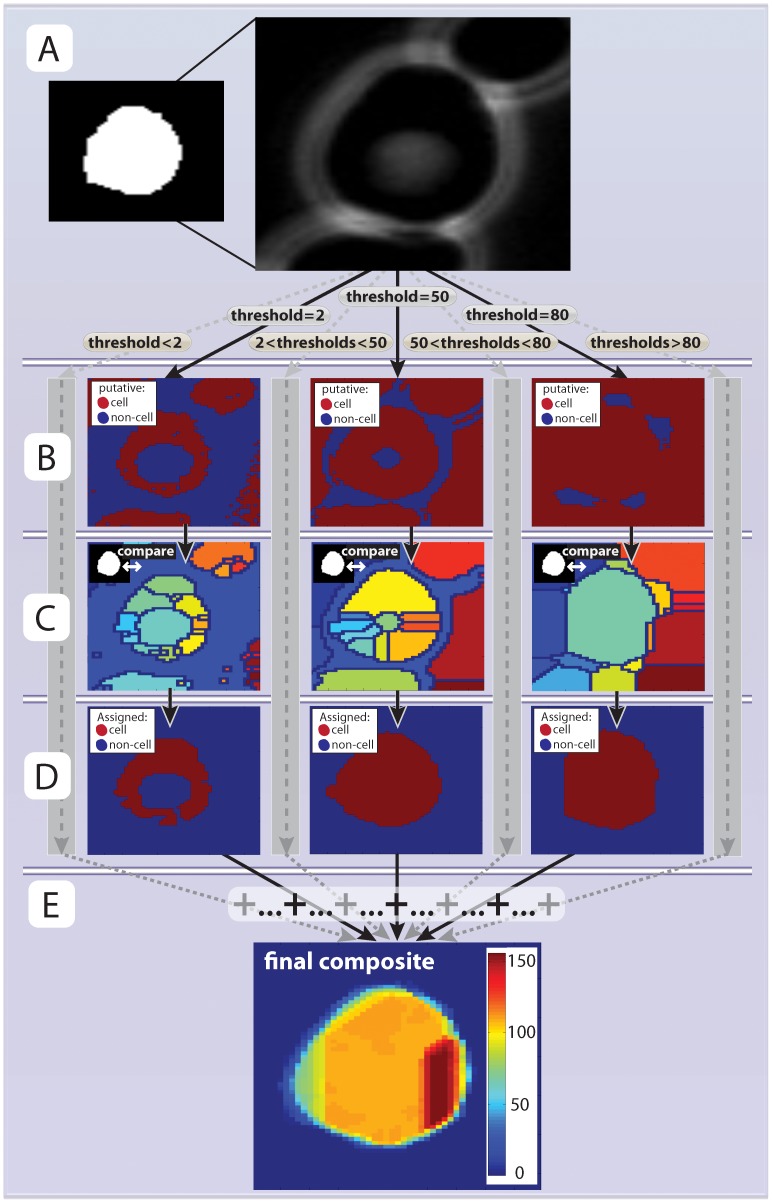
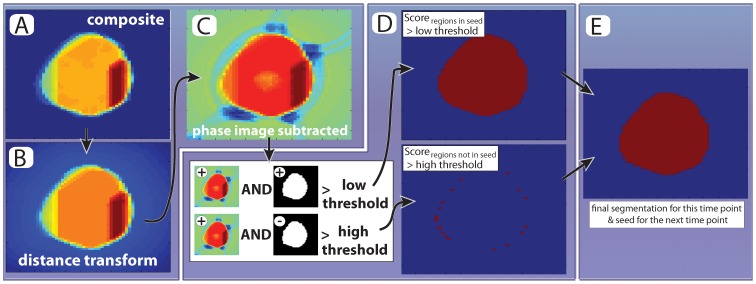
Our understanding of dynamic cellular processes has been greatly enhanced by rapid advances in quantitative fluorescence microscopy. Imaging single cells has emphasized the prevalence of phenomena that can be difficult to infer from population measurements, such as all-or-none cellular decisions, cell-to-cell variability, and oscillations. Examination of these phenomena requires segmenting and tracking individual cells over long periods of time. However, accurate segmentation and tracking of cells is difficult and is often the rate-limiting step in an experimental pipeline. Here, we present an algorithm that accomplishes fully automated segmentation and tracking of budding yeast cells within growing colonies. The algorithm incorporates prior information of yeast-specific traits, such as immobility and growth rate, to segment an image using a set of threshold values rather than one specific optimized threshold. Results from the entire set of thresholds are then used to perform a robust final segmentation.
我们对动态细胞过程的理解,已经通过定量荧光显微镜的快速发展得到了极大的增强。对单细胞的成像强调了一些现象的普遍性,这些现象从群体测量中很难推断出来,例如全有或全无的细胞决策、细胞间的可变性和振荡。对这些现象的研究需要在很长一段时间内对单个细胞进行分割和跟踪。然而,准确的细胞分割和跟踪是困难的,并且通常是实验管道中的限速步骤。在这里,我们提出了一种算法,可以在生长的菌落中对出芽酵母细胞进行全自动分割和跟踪。该算法结合了酵母特异性特征的先验信息,例如不活动和生长速度,以便使用一组阈值而不是一个特定的优化阈值来分割图像。然后,使用整个阈值集来进行稳健的最终分割。