Department of Emergency Medicine, Johns Hopkins University, Baltimore, MD, USA.
Ann Emerg Med. 2013 Jul;62(1):80-8. doi: 10.1016/j.annemergmed.2013.01.005. Epub 2013 Mar 20.
We evaluate the cost-effectiveness of polymerase chain reaction (PCR)-based rapid influenza testing and treatment for influenza in adult emergency department (ED) patients who are at high risk for or have evidence of influenza-related complications.
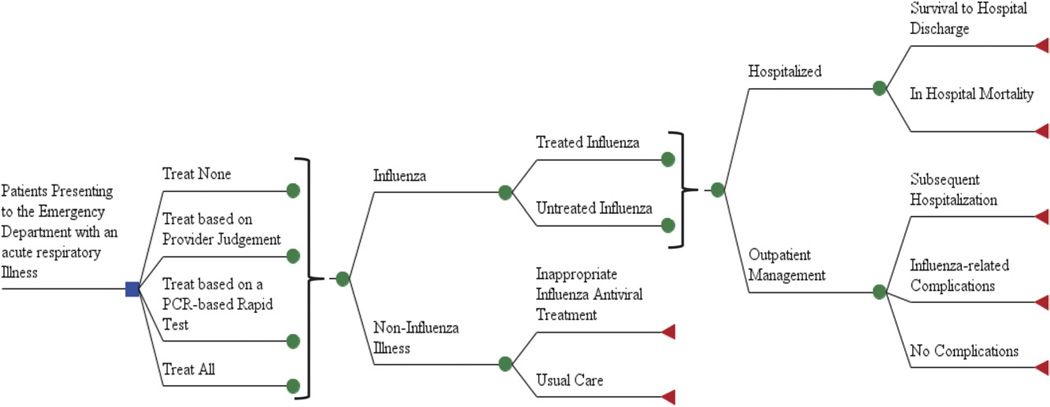
We developed a cost-utility decision analysis model that assessed adult patients presenting to the ED with symptoms of an acute respiratory infection, who met the Centers for Disease Control and Prevention criteria for recommended antiviral treatment. Analysis was performed from the societal perspective, with incremental comparisons of 4 influenza testing and treatment strategies: treat none, treat according to provider judgment, treat according to results of a PCR-based rapid diagnostic test, and treat all.
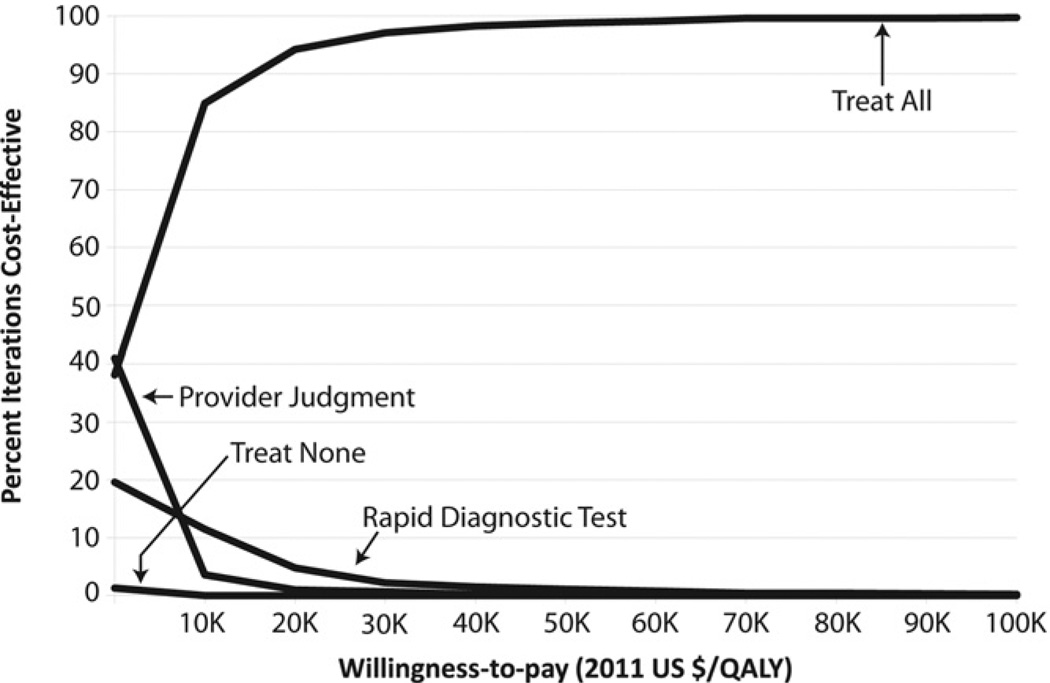
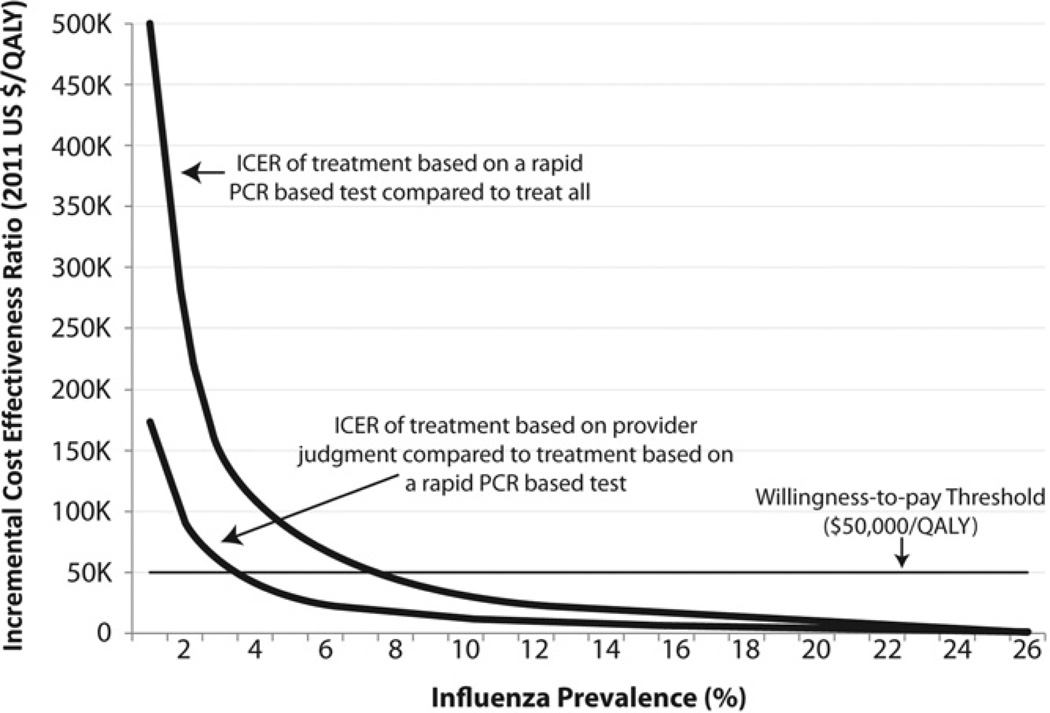
Treating no patients with antivirals was dominated by all other strategies that increased in both cost and benefit in the following order: treat according to provider judgment, treat according to results of a PCR-based rapid diagnostic test, and treat all. As influenza prevalence increases, treating all patients eventually dominated all other options.
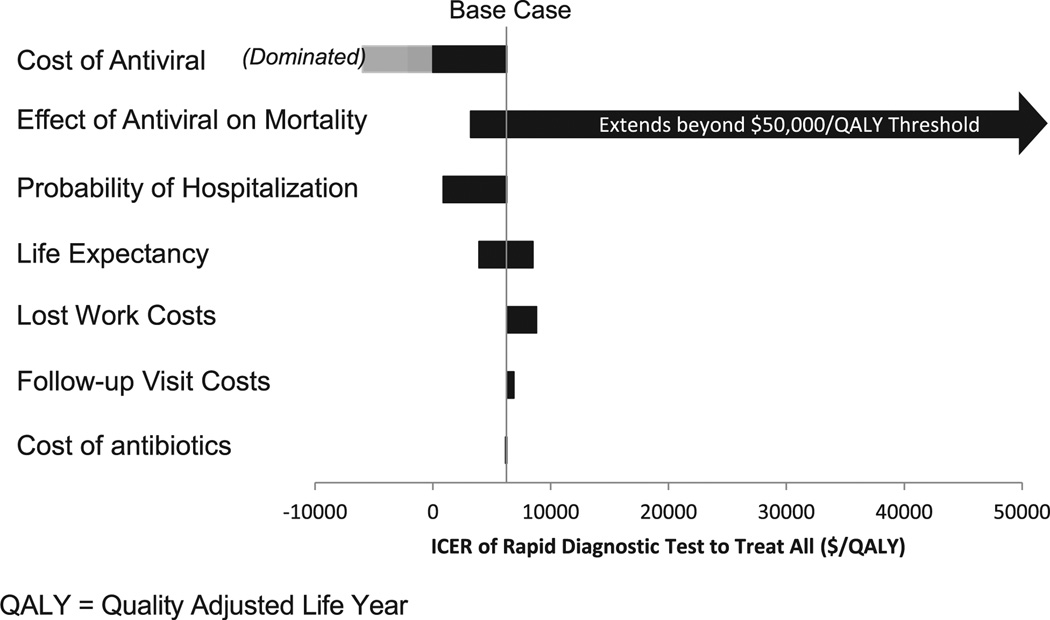
The economic benefit of incorporating use of rapid PCR-based influenza testing for ED patients at risk of developing influenza-related complications depends on influenza prevalence; treatment guided by physician diagnosis or rapid testing, and treatment of all patients is more effective and less costly than no treatment.
我们评估了聚合酶链反应(PCR)为基础的快速流感检测和治疗对有流感相关并发症高危因素或有相关并发症证据的成年急诊患者的成本效益。
我们开发了一种成本效益决策分析模型,评估了因急性呼吸道感染而到急诊就诊、符合疾病预防控制中心推荐抗病毒治疗标准的成年患者。分析从社会角度进行,对 4 种流感检测和治疗策略进行增量比较:不治疗任何患者、根据医生判断进行治疗、根据基于 PCR 的快速诊断测试结果进行治疗以及对所有患者进行治疗。
不治疗任何患者的抗病毒药物治疗策略被其他所有策略所主导,这些策略在成本和效益方面都有所增加,按以下顺序排列:根据医生判断进行治疗、根据基于 PCR 的快速诊断测试结果进行治疗以及对所有患者进行治疗。随着流感流行率的增加,对所有患者进行治疗最终主导了所有其他选择。
在有发生流感相关并发症风险的急诊患者中,使用快速基于 PCR 的流感检测的经济效益取决于流感流行率;医生诊断或快速检测指导的治疗以及对所有患者的治疗比不治疗更有效且成本更低。