Abbasi Mohsen, Tvakoli Nader, Bagheri Faradonbeh Saeed, Bakhshayeshi Azam
Department of Emergency Medicine, School of Medicine, Iran University of Medical Sciences, Tehran, Iran.
Trauma and Injury Research Center, Iran University of Medical Sciences, Tehran, Iran.
Med J Islam Repub Iran. 2022 Apr 16;36:36. doi: 10.47176/mjiri.36.36. eCollection 2022.
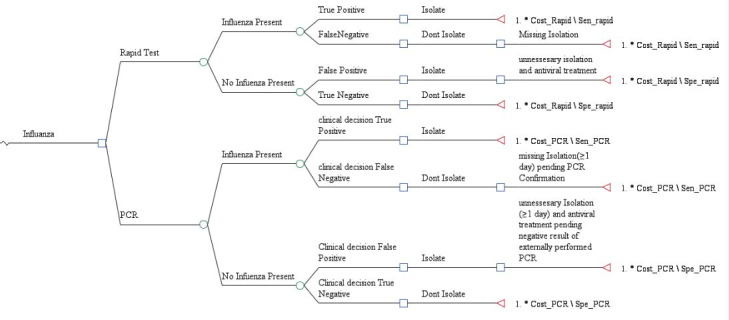
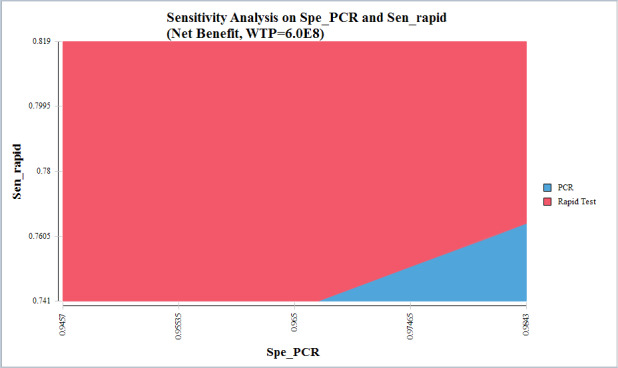
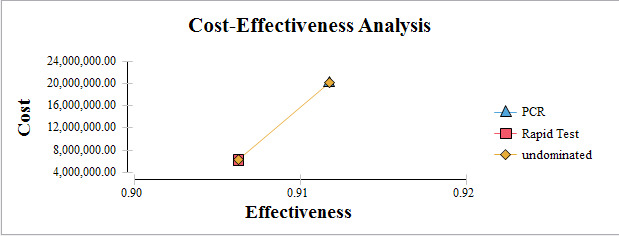
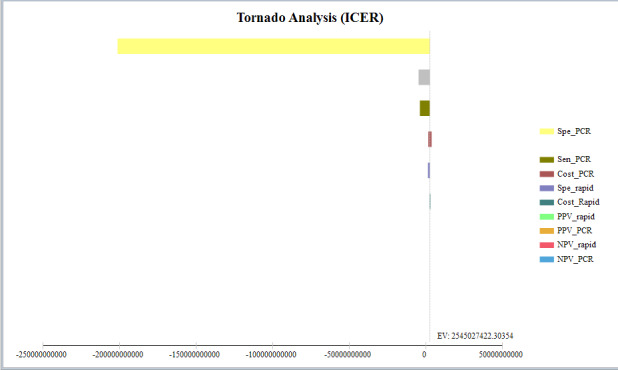
: It is important to have a rapid and cost-effective laboratory test for the early diagnosis of respiratory diseases.The aim of this study was to analyze the cost-effectiveness of rapid tests and PCR in patients with suspected influenza. This study was a cost-effectiveness analysis from a community perspective that in which patients who were referred to the emergency department of selected hospitals of IUMS university with suspected respiratory symptoms of influenza were studied by convenience sampling method. The intervention and comparator were rapid tests and PCR respectively. effectiveness indicators in this study include sensitivity, specificity, positive and negative predictive value of both tests, and it examines costs from a community perspective. After drawing the decision tree model in the TreeAge software, the incremental cost-effectiveness ratio was calculated and to evaluate the strength of the analysis results, one-way and two-way sensitivity analyses on all cost and effectiveness parameters were used. According to the findings of this study, the effectiveness index in rapid test and PCR is equal to 0.90 and 0.91, respectively, and the average cost of the two tests is equal to 62.157 and 201.37$, respectively, the ICERwas 25450.27 and the cost-effectiveness threshold was estimated equal to 6000 according to the per capita GDP of the country. One-way and two-way sensitivity analysis showed that the result of cost-effectiveness analysis did not change, and the rapid test is cost-effective. Rapid test is less costly and effective than PCR, but the cost difference is greater than the difference in effectiveness and in terms of effectiveness indicators, both diagnostic tests are almost similar, and this cost difference has led to the choice of the rapid test as a cost-effective option. Therefore, it is recommended that physicians prioritize rapid tests in the diagnosis of respiratory diseases.
对于呼吸道疾病的早期诊断,拥有快速且经济高效的实验室检测至关重要。本研究的目的是分析快速检测和聚合酶链反应(PCR)在疑似流感患者中的成本效益。本研究是一项从社区角度进行的成本效益分析,通过便利抽样法对转诊至伊玛目霍梅尼医科大学(IUMS)选定医院急诊科、有疑似流感呼吸道症状的患者进行研究。干预措施和对照分别为快速检测和PCR。本研究中的有效性指标包括两种检测的灵敏度、特异性、阳性和阴性预测值,并从社区角度考察成本。在TreeAge软件中绘制决策树模型后,计算增量成本效益比,并对所有成本和有效性参数进行单向和双向敏感性分析,以评估分析结果的稳健性。根据本研究结果,快速检测和PCR的有效性指数分别为0.90和0.91,两种检测的平均成本分别为62.157美元和201.37美元,增量成本效益比为25450.27,根据该国人均国内生产总值估计成本效益阈值为6000。单向和双向敏感性分析表明,成本效益分析结果不变,快速检测具有成本效益。快速检测比PCR成本更低且效果相当,但成本差异大于效果差异,就有效性指标而言,两种诊断检测几乎相似,这种成本差异导致选择快速检测作为具有成本效益的选项。因此,建议医生在呼吸道疾病诊断中优先考虑快速检测。