Department of Bioengineering, University of Pennsylvania, Philadelphia, Pennsylvania 19104, USA.
Nat Mater. 2013 May;12(5):458-65. doi: 10.1038/nmat3586. Epub 2013 Mar 24.
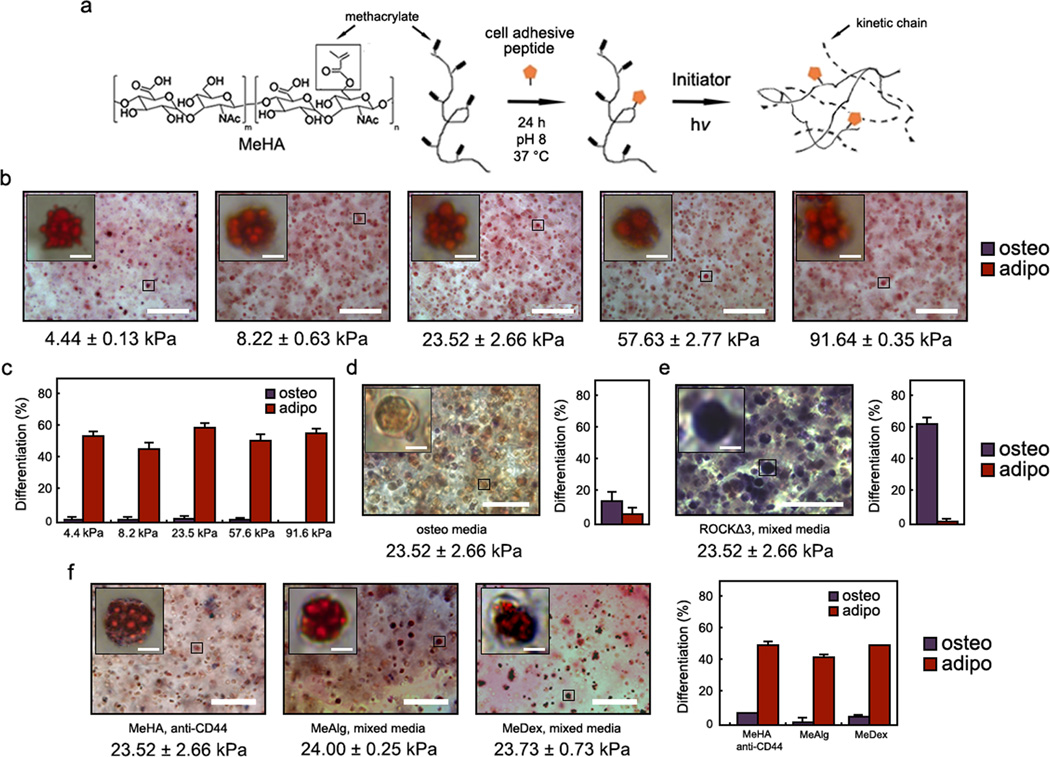
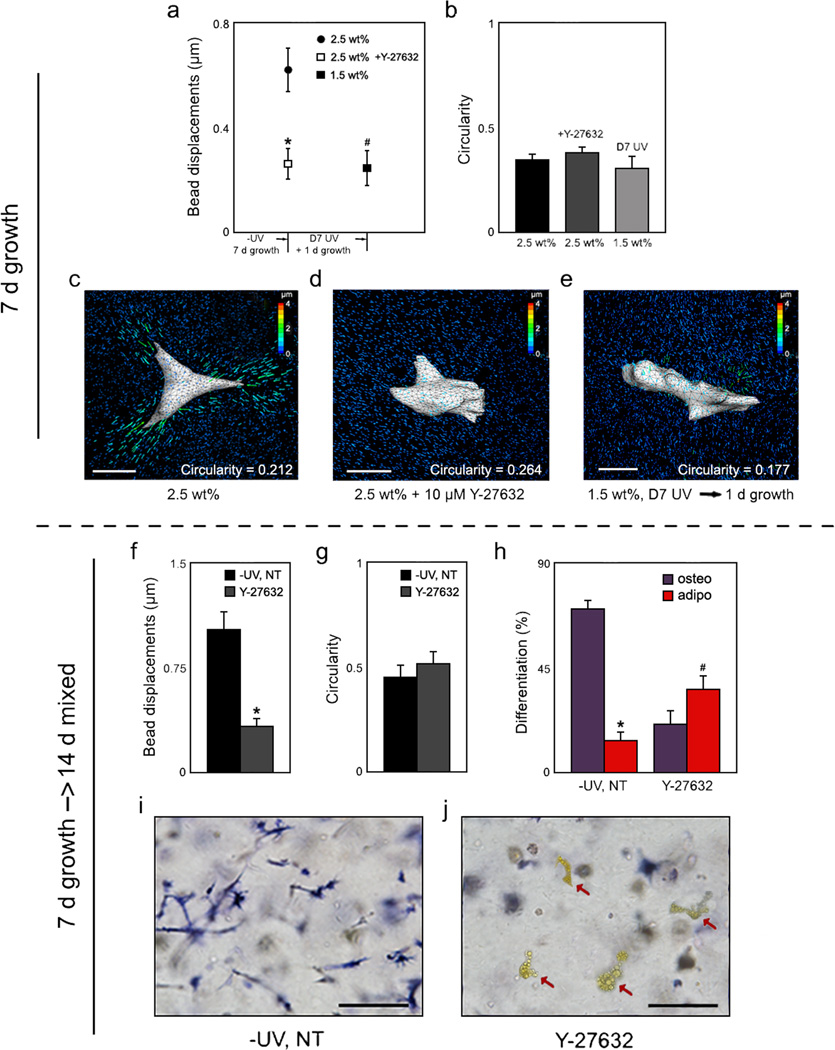
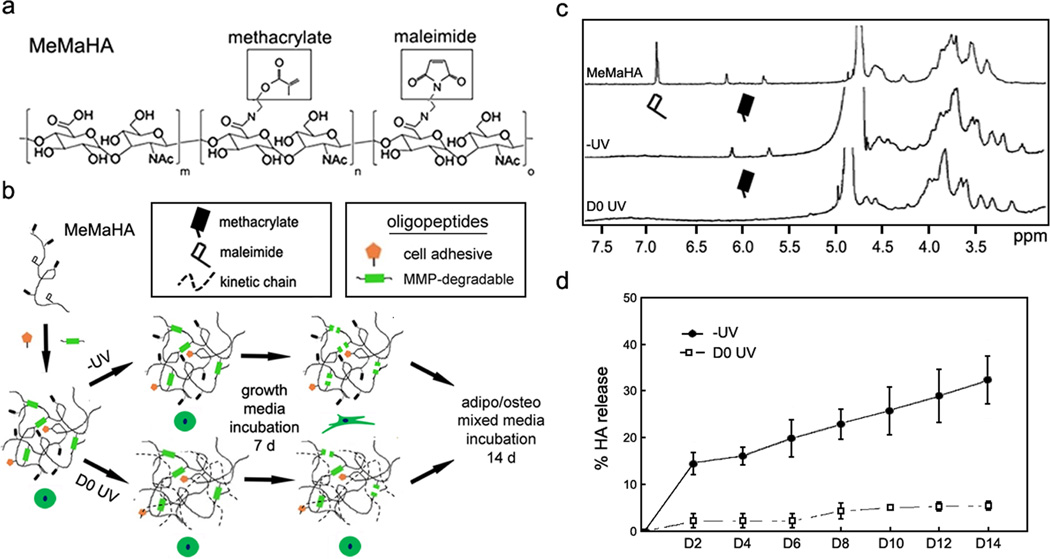
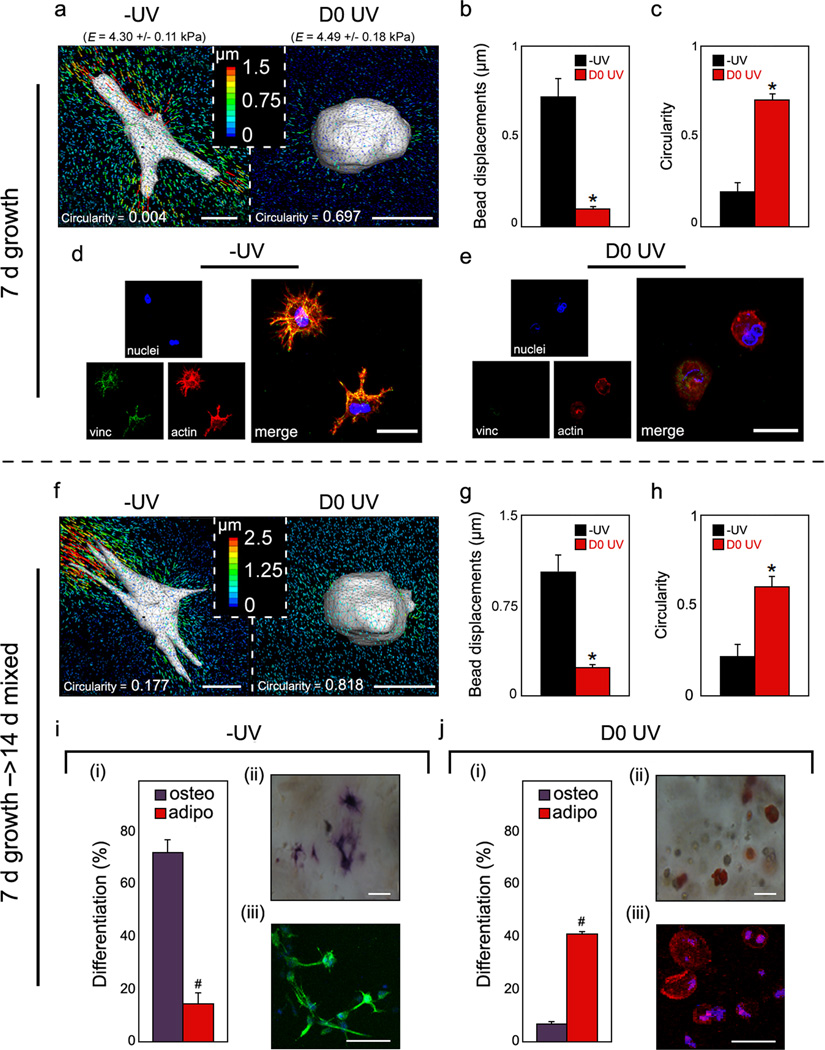
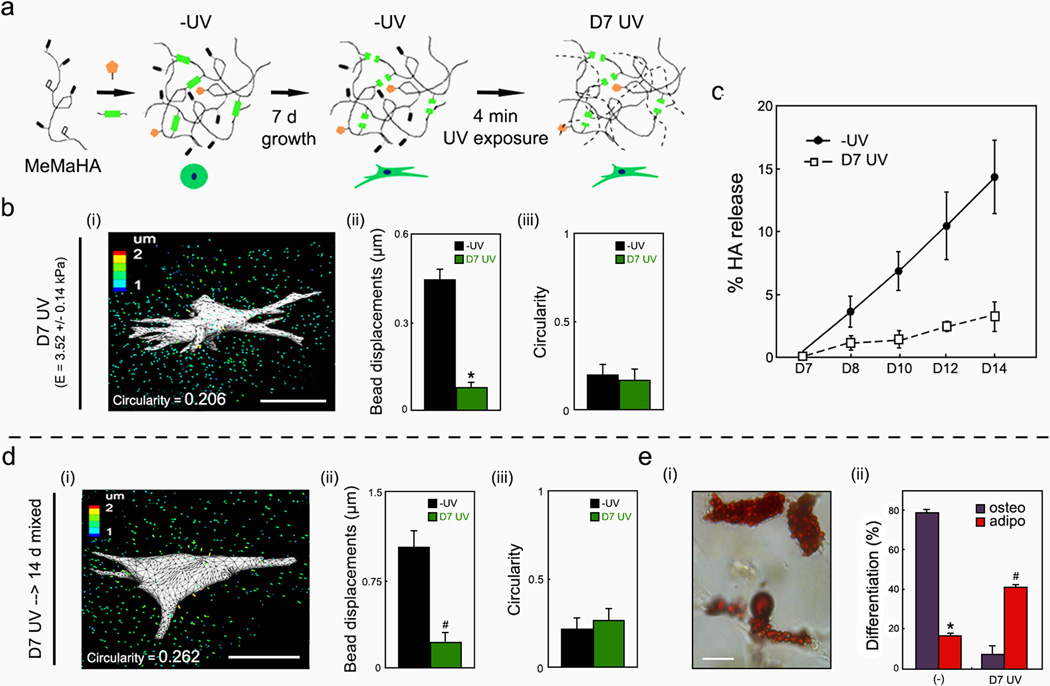
Although cell-matrix adhesive interactions are known to regulate stem cell differentiation, the underlying mechanisms, in particular for direct three-dimensional encapsulation within hydrogels, are poorly understood. Here, we demonstrate that in covalently crosslinked hyaluronic acid (HA) hydrogels, the differentiation of human mesenchymal stem cells (hMSCs) is directed by the generation of degradation-mediated cellular traction, independently of cell morphology or matrix mechanics. hMSCs within HA hydrogels of equivalent elastic moduli that permit (restrict) cell-mediated degradation exhibited high (low) degrees of cell spreading and high (low) tractions, and favoured osteogenesis (adipogenesis). Moreover, switching the permissive hydrogel to a restrictive state through delayed secondary crosslinking reduced further hydrogel degradation, suppressed traction, and caused a switch from osteogenesis to adipogenesis in the absence of changes to the extended cellular morphology. Furthermore, inhibiting tension-mediated signalling in the permissive environment mirrored the effects of delayed secondary crosslinking, whereas upregulating tension induced osteogenesis even in the restrictive environment.
尽管已知细胞-基质黏附相互作用可调节干细胞分化,但对于直接在水凝胶中进行三维包封的情况,其潜在机制仍知之甚少。在这里,我们证明在共价交联的透明质酸(HA)水凝胶中,人类间充质干细胞(hMSC)的分化是由降解介导的细胞牵引力产生所决定的,而与细胞形态或基质力学无关。在弹性模量相同但允许(限制)细胞介导降解的 HA 水凝胶中,hMSC 表现出高度(低度)的细胞铺展和高(低)牵引力,并有利于成骨(成脂)。此外,通过延迟二次交联将允许降解的水凝胶转变为限制状态会进一步减少水凝胶降解,抑制牵引力,并在不改变延伸细胞形态的情况下导致从成骨向成脂的转变。此外,在允许的环境中抑制张力介导的信号转导与延迟二次交联的效果相似,而即使在限制环境中上调张力也能诱导成骨。