Division of Radiation and Cancer Biology, Department of Radiation Oncology, University of Michigan, Ann Arbor, MI 48109, USA.
Cell Res. 2013 May;23(5):599-619. doi: 10.1038/cr.2013.44. Epub 2013 Mar 26.
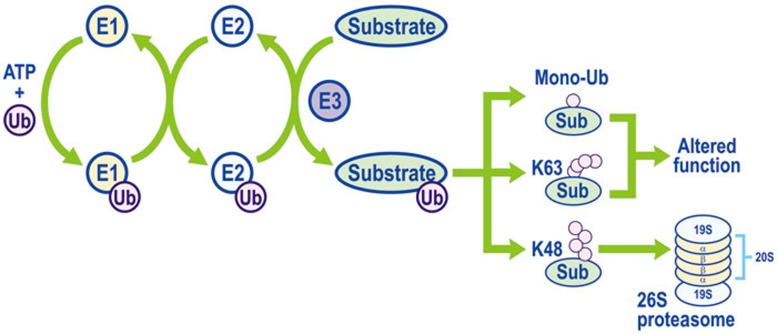
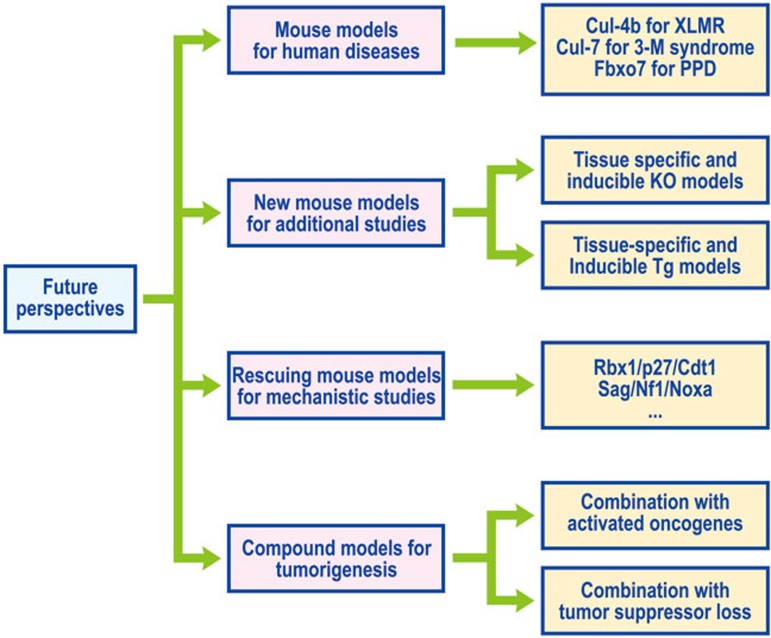
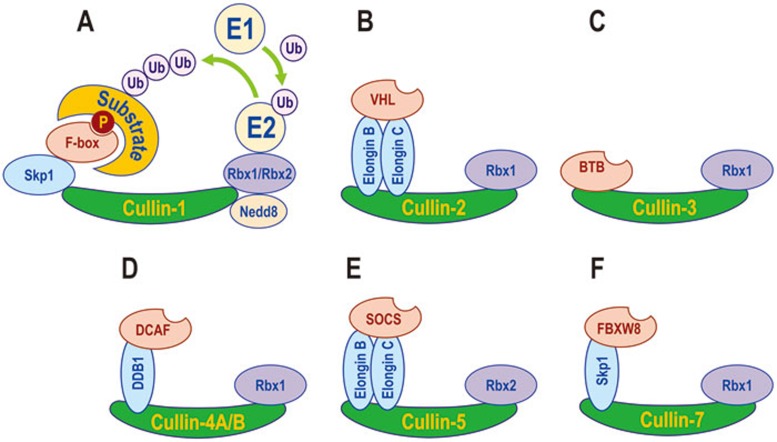
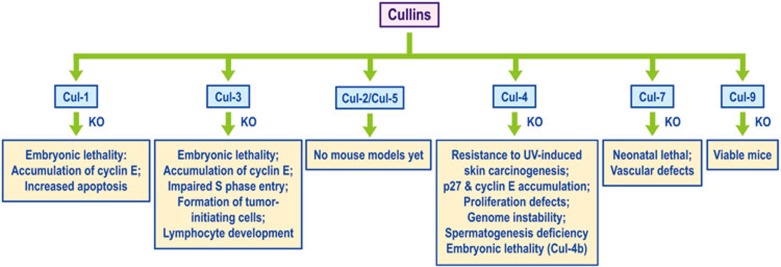
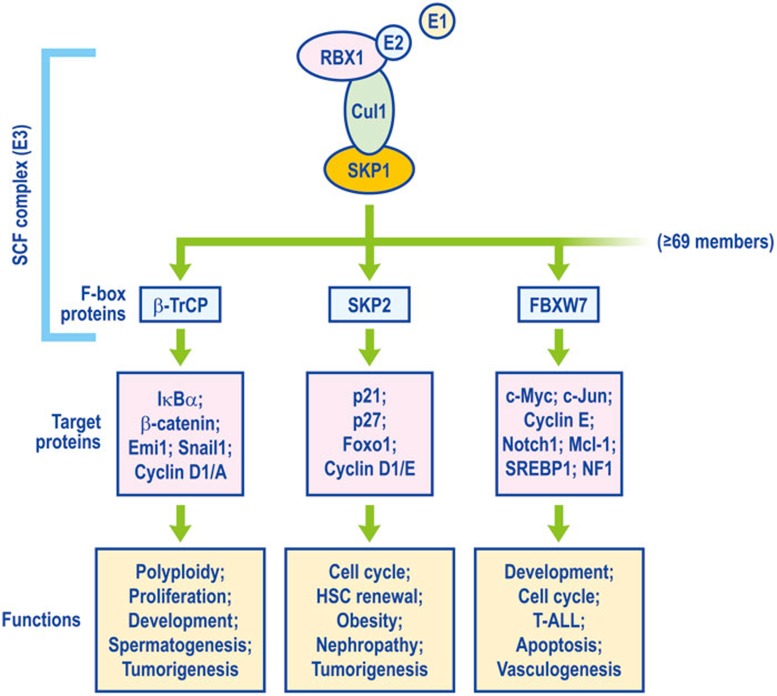
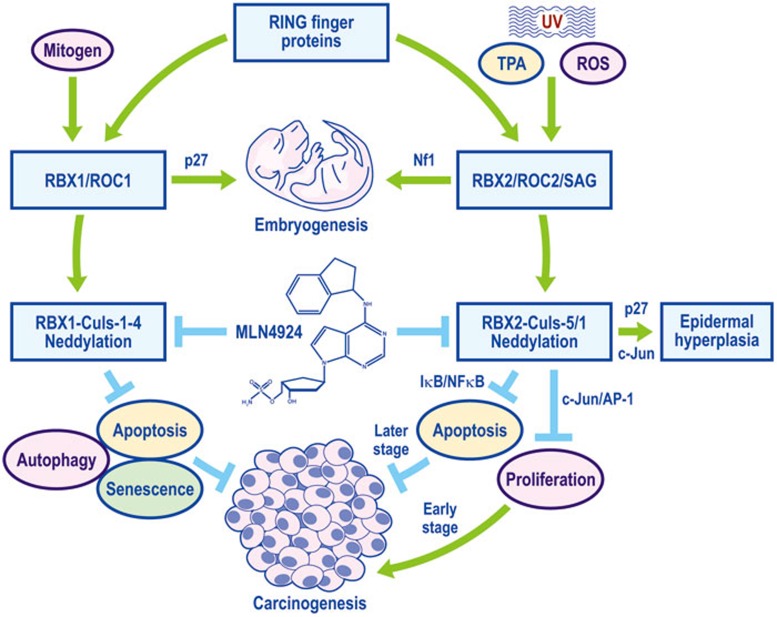
The SCF (SKP1 (S-phase-kinase-associated protein 1), Cullin-1, F-box protein) E3 ubiquitin ligases, the founding member of Cullin-RING ligases (CRLs), are the largest family of E3 ubiquitin ligases in mammals. Each individual SCF E3 ligase consists of one adaptor protein SKP1, one scaffold protein cullin-1 (the first family member of the eight cullins), one F-box protein out of 69 family members, and one out of two RING (Really Interesting New Gene) family proteins RBX1/ROC1 or RBX2/ROC2/SAG/RNF7. Various combinations of these four components construct a large number of SCF E3s that promote the degradation of many key regulatory proteins in cell-context, temporally, and spatially dependent manners, thus controlling precisely numerous important cellular processes, including cell cycle progression, apoptosis, gene transcription, signal transduction, DNA replication, maintenance of genome integrity, and tumorigenesis. To understand how the SCF E3 ligases regulate these cellular processes and embryonic development under in vivo physiological conditions, a number of mouse models with transgenic (Tg) expression or targeted deletion of components of SCF have been established and characterized. In this review, we will provide a brief introduction to the ubiquitin-proteasome system (UPS) and the SCF E3 ubiquitin ligases, followed by a comprehensive overview on the existing Tg and knockout (KO) mouse models of the SCF E3s, and discuss the role of each component in mouse embryogenesis, cell proliferation, apoptosis, carcinogenesis, as well as other pathogenic processes associated with human diseases. We will end with a brief discussion on the future directions of this research area and the potential applications of the knowledge gained to more effective therapeutic interventions of human diseases.
SCF(SKP1(S 期激酶相关蛋白 1)、Cullin-1、F-box 蛋白)E3 泛素连接酶是 Cullin-RING 连接酶(CRLs)的创始成员,是哺乳动物中最大的 E3 泛素连接酶家族。每个单独的 SCF E3 连接酶由一个衔接蛋白 SKP1、一个支架蛋白 Cullin-1(八个 Cullins 中的第一个家族成员)、一个 F-box 蛋白(69 个家族成员中的一个)和一个 RING(真正有趣的新基因)家族蛋白 RBX1/ROC1 或 RBX2/ROC2/SAG/RNF7 中的一个组成。这四个组件的各种组合构建了大量的 SCF E3,以细胞上下文、时间和空间依赖的方式促进许多关键调节蛋白的降解,从而精确控制许多重要的细胞过程,包括细胞周期进程、细胞凋亡、基因转录、信号转导、DNA 复制、基因组完整性的维持和肿瘤发生。为了了解 SCF E3 连接酶如何在体内生理条件下调节这些细胞过程和胚胎发育,已经建立并表征了许多具有转(Tg)表达或靶向缺失 SCF 成分的小鼠模型。在这篇综述中,我们将简要介绍泛素-蛋白酶体系统(UPS)和 SCF E3 泛素连接酶,然后全面概述现有的 SCF E3 的 Tg 和敲除(KO)小鼠模型,并讨论每个组件在小鼠胚胎发生、细胞增殖、细胞凋亡、肿瘤发生以及与人类疾病相关的其他致病过程中的作用。最后,我们将简要讨论该研究领域的未来方向以及从该知识中获得的潜在应用,以更有效地干预人类疾病。