Computational Biology Center, IBM Thomas J. Watson Research Center, Yorktown Heights, NY 10598, USA.
Sci Rep. 2013;3:1560. doi: 10.1038/srep01560.
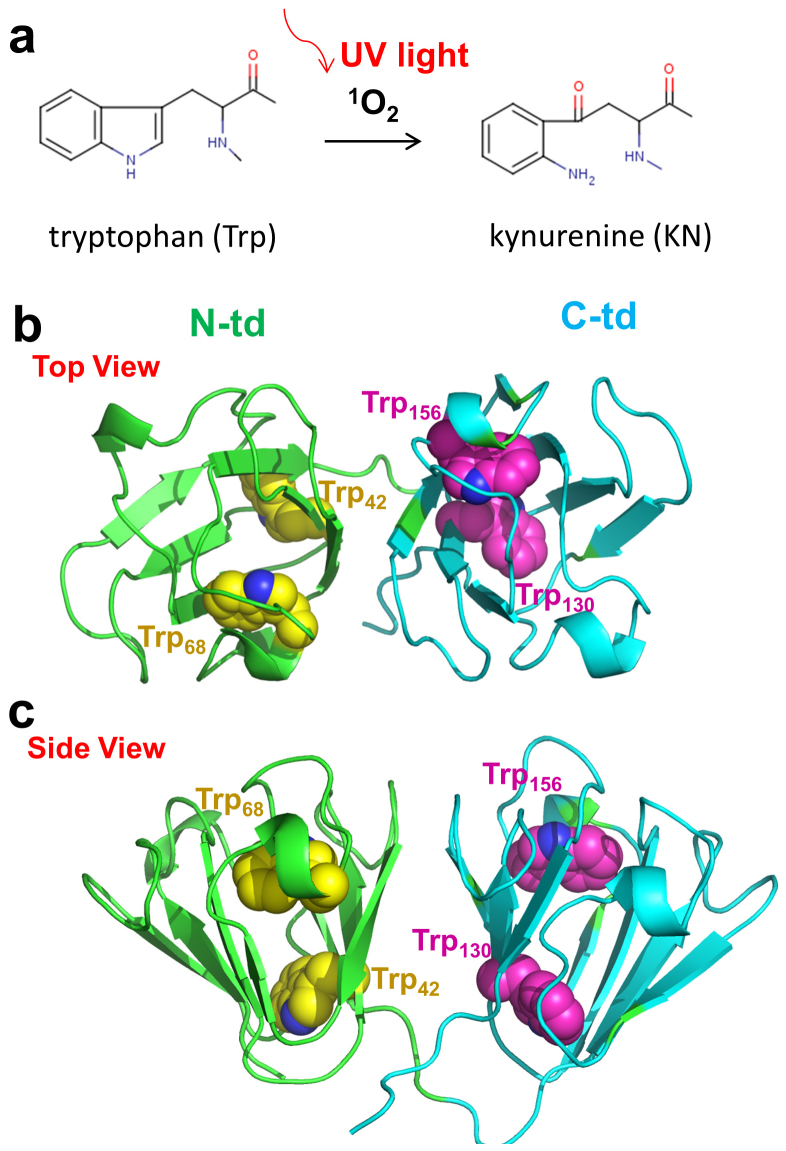
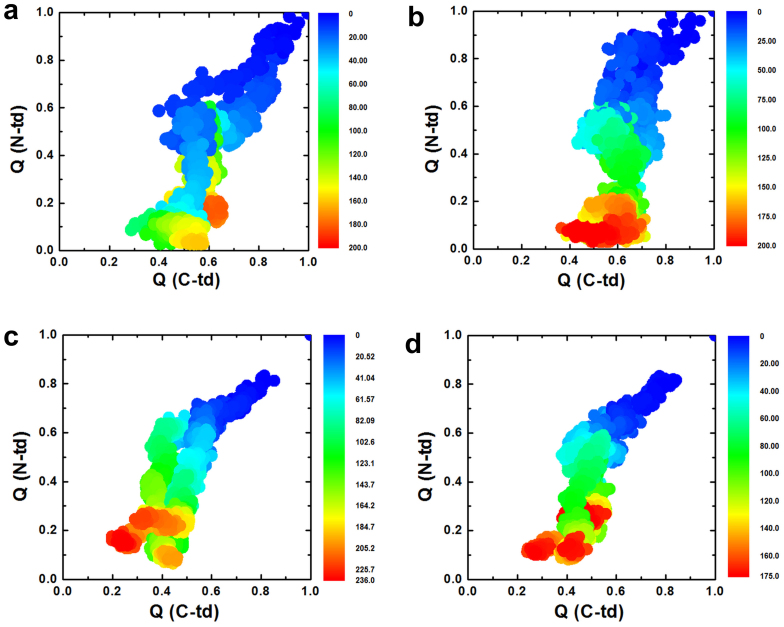
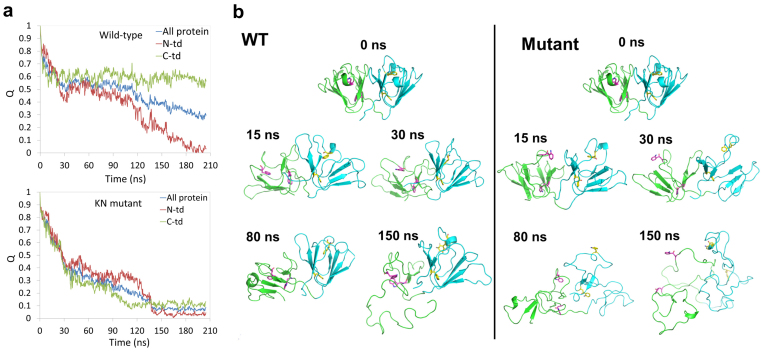
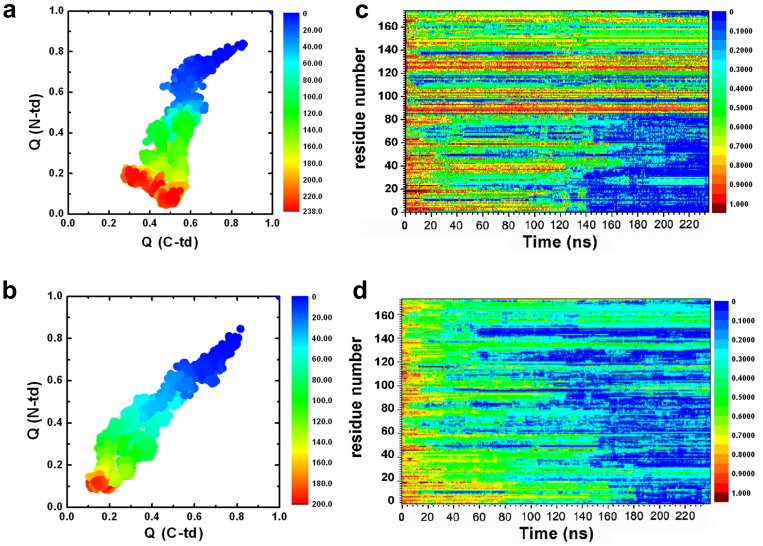
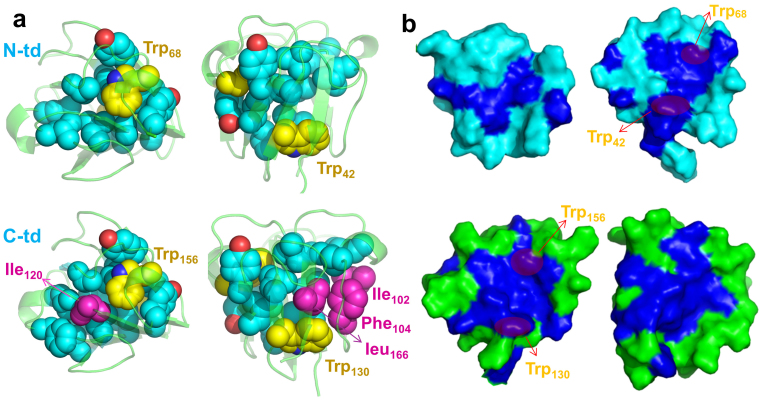
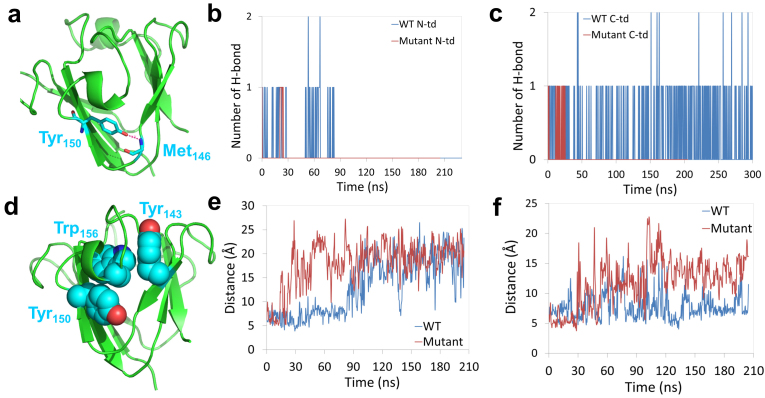
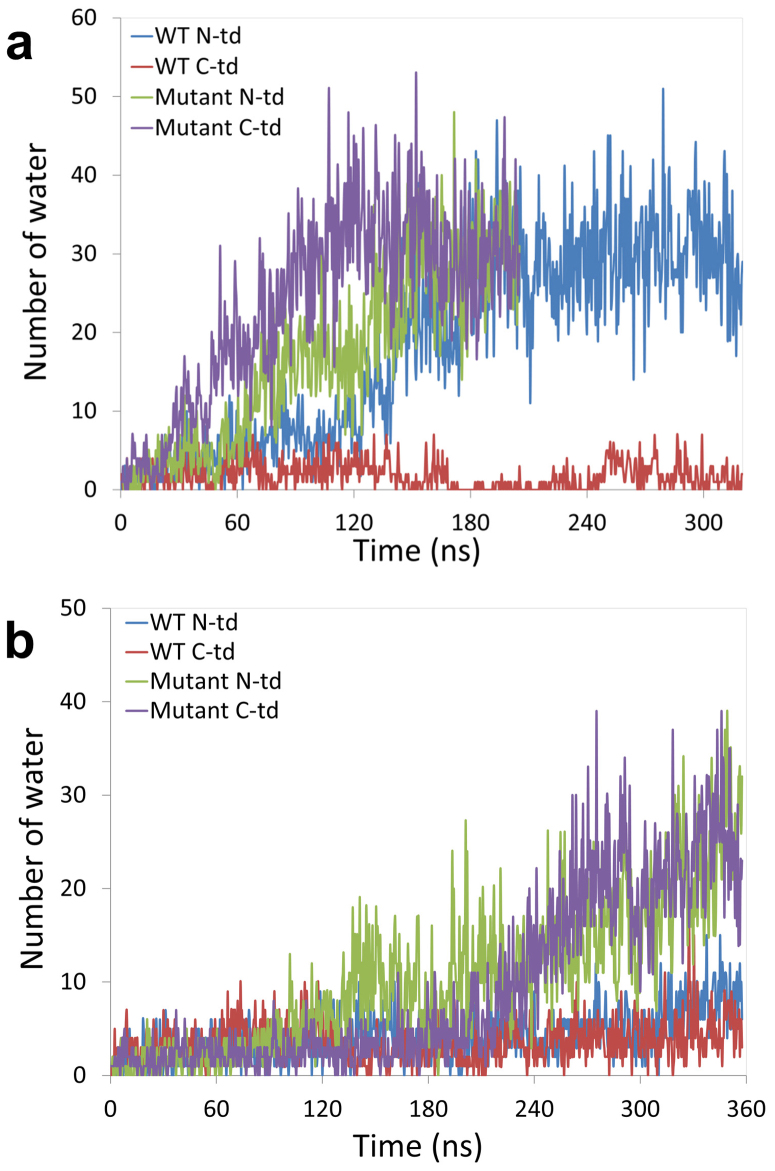
Age-onset cataracts are believed to be expedited by the accumulation of UV-damaged human γD-crystallins in the eye lens. Here we show with molecular dynamics simulations that the stability of γD-crystallin is greatly reduced by the conversion of tryptophan to kynurenine due to UV-radiation, consistent with previous experimental evidences. Furthermore, our atomic-detailed results reveal that kynurenine attracts more waters and other polar sidechains due to its additional amino and carbonyl groups on the damaged tryptophan sidechain, thus breaching the integrity of nearby dry center regions formed by the two Greek key motifs in each domain. The damaged tryptophan residues cause large fluctuations in the Tyr-Trp-Tyr sandwich-like hydrophobic clusters, which in turn break crucial hydrogen-bonds bridging two β-strands in the Greek key motifs at the "tyrosine corner". Our findings may provide new insights for understanding of the molecular mechanism of the initial stages of UV-induced cataractogenesis.
年龄相关性白内障被认为是由紫外线损伤的人γD-晶体蛋白在眼晶状体中的积累加速所致。在这里,我们通过分子动力学模拟表明,由于紫外线辐射,色氨酸转化为犬尿氨酸会大大降低γD-晶体蛋白的稳定性,这与先前的实验证据一致。此外,我们的原子细节结果表明,由于受损色氨酸侧链上的额外氨基和羰基基团,犬尿氨酸吸引了更多的水和其他极性侧链,从而破坏了由每个结构域中的两个希腊关键模体形成的附近干燥中心区域的完整性。受损的色氨酸残基导致 Tyr-Trp-Tyr 三明治状疏水区的大幅波动,进而破坏了“酪氨酸角”处希腊关键模体中连接两个β-链的关键氢键。我们的发现可能为理解紫外线诱导白内障形成的初始阶段的分子机制提供新的见解。