Department of Ophthalmology, Kaohsiung Veterans General Hospital, Kaohsiung, Taiwan.
School of Medicine, National Yang-Ming University, Taipei, Taiwan.
BMC Ophthalmol. 2019 Aug 2;19(1):168. doi: 10.1186/s12886-019-1151-9.
Age-related macular degeneration (AMD) is the primary cause of blindness and severe vision loss in developed countries and is responsible for 8.7% of blindness globally. Ultraviolet radiation can induce DNA breakdown, produce reactive oxygen species, and has been implicated as a risk factor for AMD. This study investigated the effects of UVA radiation on Human retinal pigment epithelial cell (ARPE-19) growth and protein expression.
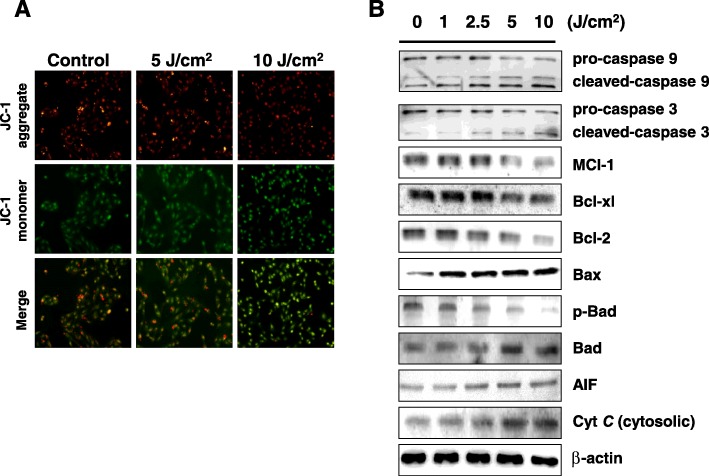
ARPE-19 cells were irradiated with a UVA lamp at different doses (5, 10, 20, 30 and 40 J/cm) from 10 cm. Cell viability was determined by MTT assay. Visual inspection was first achieved with inverted light microscopy and then the DeadEnd™ Fluorometric TUNEL System was used to observe nuclear DNA fragmentation. Flow cytometry based-Annexin V-FITC/PI double-staining was used to further quantify cellular viability. Mitochondrial membrane potential was assessed with JC-1 staining. 2D electrophoresis maps of exposed cells were compared to nonexposed cells and gel images analyzed with PDQuest 2-D Analysis Software. Spots with greater than a 1.5-fold difference were selected for LC-MS/MS analysis and some confirmed by western blot. We further investigated whether caspase activation, apoptotic-related mitochondrial proteins, and regulators of ER stress sensors were involved in UVA-induced apoptosis.
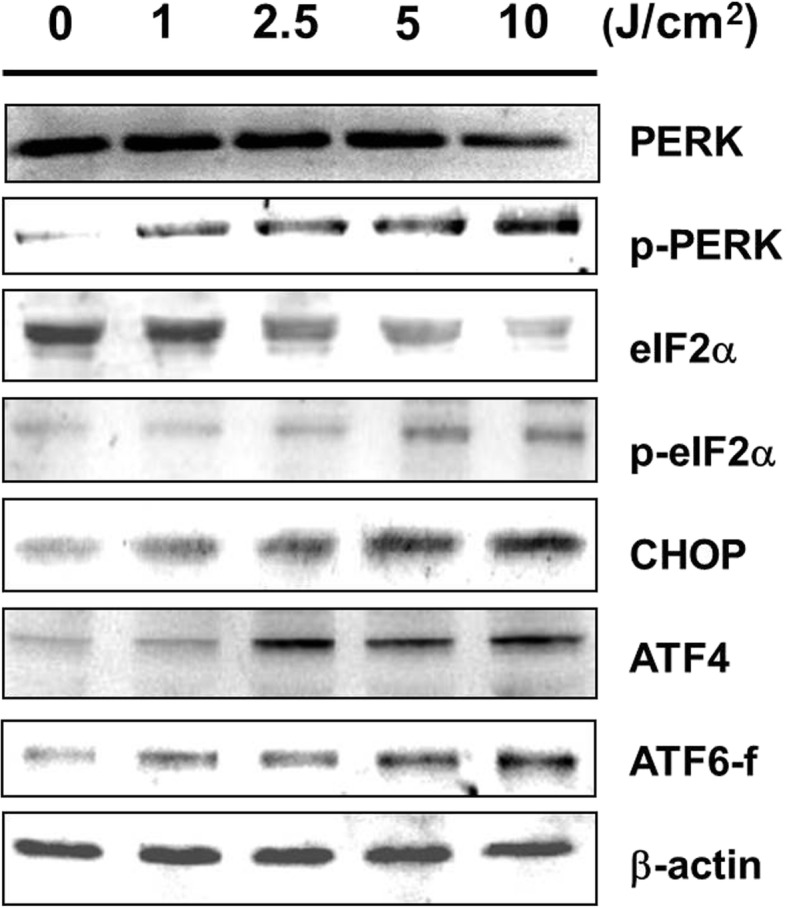
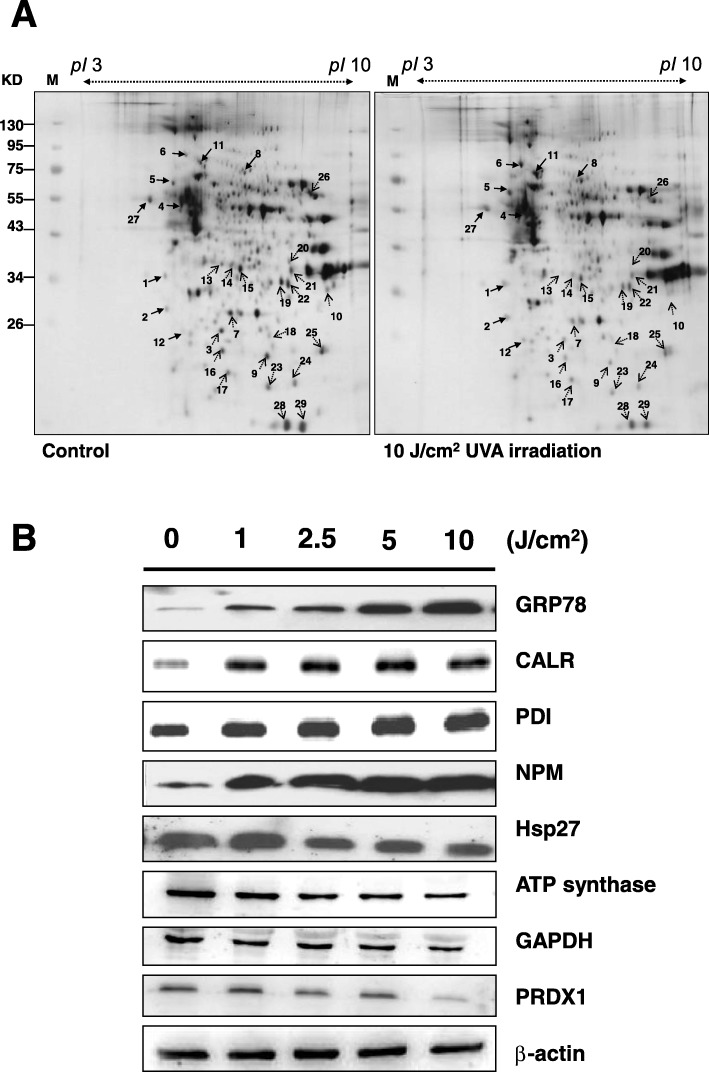
We detected 29 differentially expressed proteins (9 up-regulated and 20 down-regulated) in the exposed cells. Some of these proteins such as CALR, GRP78, NPM, Hsp27, PDI, ATP synthase subunit alpha, PRDX1, and GAPDH are associated with anti-proliferation, induction of apoptosis, and oxidative-stress protection. We also detected altered protein expression levels among caspases (caspase 3 and 9) and in the mitochondrial (cytosolic cytochrome C, AIF, Mcl-1, Bcl-2, Bcl-xl, Bax, Bad, and p-Bad) and ER stress-related (p-PERK, p-eIF2α, ATF4 and CHOP) apoptotic pathways.
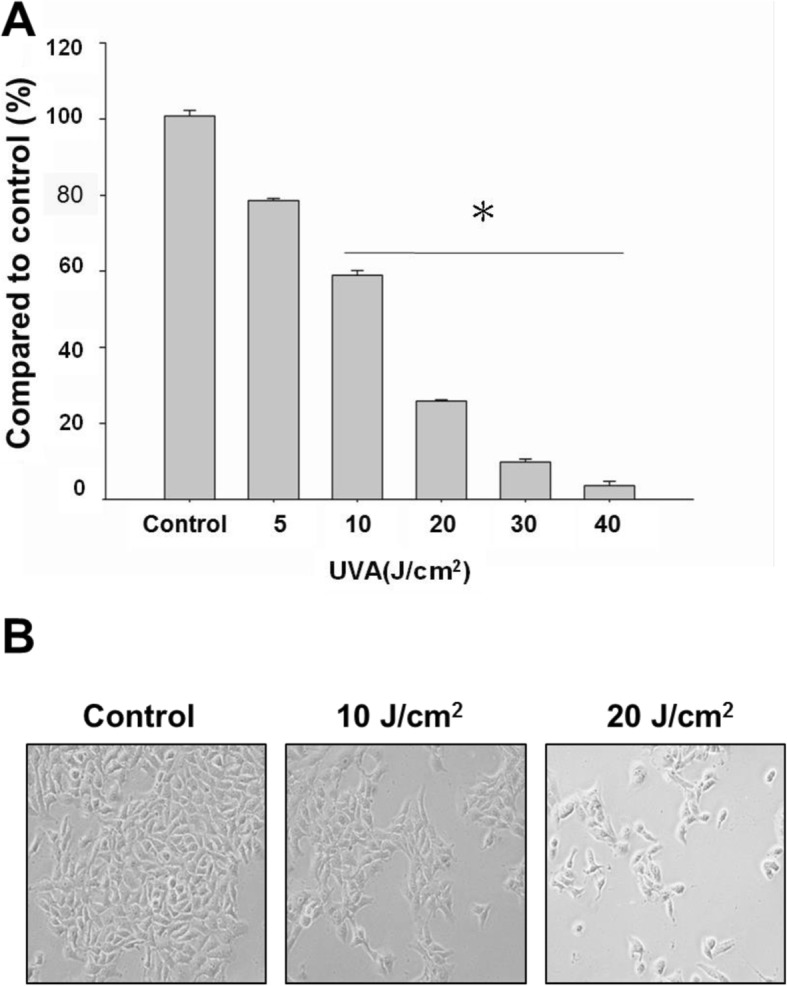
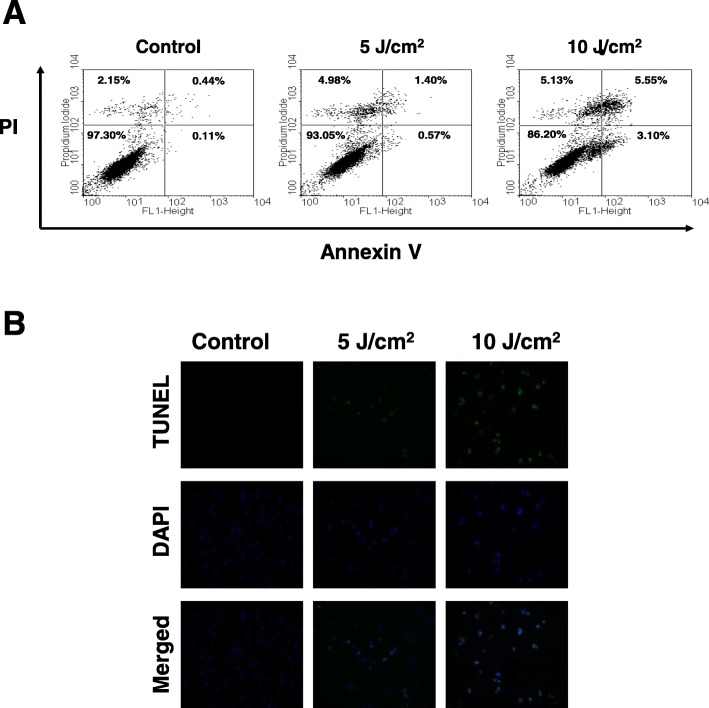
UVA irradiation suppressed the proliferation of ARPE-19 cells in a dose-dependent manner, caused quantitative loses in transmembrane potential (ΔΨm), and induced both early and late apoptosis.
年龄相关性黄斑变性(AMD)是发达国家致盲和严重视力丧失的主要原因,也是全球 8.7%失明的原因。紫外线辐射可导致 DNA 断裂,产生活性氧,并被认为是 AMD 的一个风险因素。本研究探讨了 UVA 辐射对人视网膜色素上皮细胞(ARPE-19)生长和蛋白表达的影响。
ARPE-19 细胞用 UVA 灯从 10cm 处照射不同剂量(5、10、20、30 和 40 J/cm)。通过 MTT 测定法测定细胞活力。首先通过倒置相差显微镜进行目视检查,然后使用 DeadEnd™荧光 TUNEL 系统观察核 DNA 片段化。使用 Annexin V-FITC/PI 双染色的流式细胞术进一步定量细胞活力。使用 JC-1 染色评估线粒体膜电位。将暴露细胞的 2D 电泳图谱与未暴露细胞进行比较,并使用 PDQuest 2-D 分析软件分析凝胶图像。选择差异大于 1.5 倍的斑点进行 LC-MS/MS 分析,并通过 Western blot 验证一些结果。我们进一步研究了 caspase 激活、凋亡相关的线粒体蛋白以及内质网应激传感器的调节剂是否参与了 UVA 诱导的细胞凋亡。
我们在暴露细胞中检测到 29 种差异表达蛋白(9 种上调和 20 种下调)。其中一些蛋白,如 CALR、GRP78、NPM、Hsp27、PDI、ATP 合酶亚基α、PRDX1 和 GAPDH,与抗增殖、诱导凋亡和氧化应激保护有关。我们还检测到细胞色素 C、AIF、Mcl-1、Bcl-2、Bcl-xl、Bax、Bad 和 p-Bad 等 caspase(caspase 3 和 9)以及线粒体(细胞质)和内质网应激相关(p-PERK、p-eIF2α、ATF4 和 CHOP)凋亡途径中的蛋白表达水平改变。
UVA 照射以剂量依赖性方式抑制 ARPE-19 细胞的增殖,导致跨膜电位(ΔΨm)定量损失,并诱导早期和晚期凋亡。