Department of Gastrointestinal Surgery, Shaoxing Hospital of First Affiliated Hospital of Medical School of Zhejiang University, Shaoxing, PR China.
PLoS One. 2013;8(3):e58990. doi: 10.1371/journal.pone.0058990. Epub 2013 Mar 22.
The tetraspanin CD151 acts as a promoter of metastasis and invasion in several tumors. However, the role of CD151 in human gastric cancer (HGC) remains unclear.
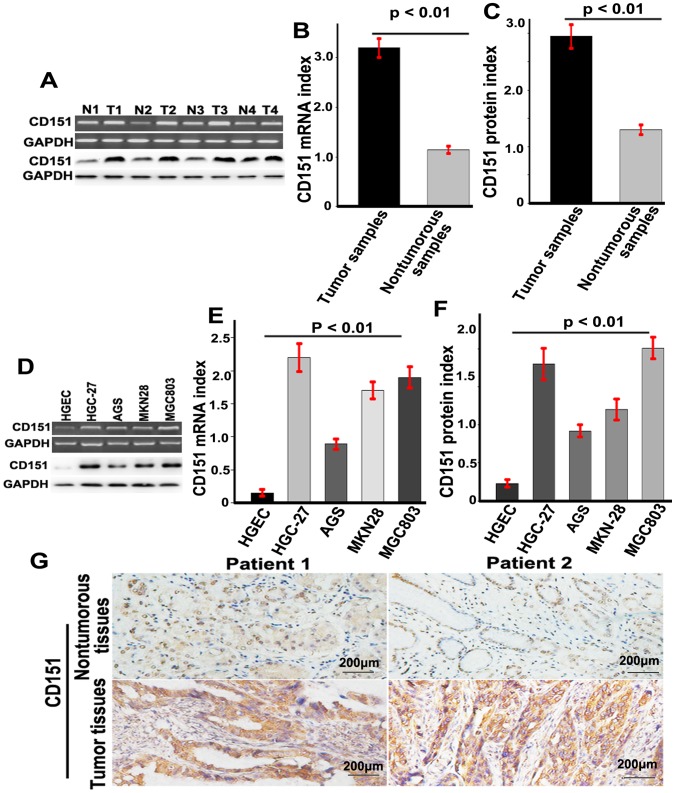
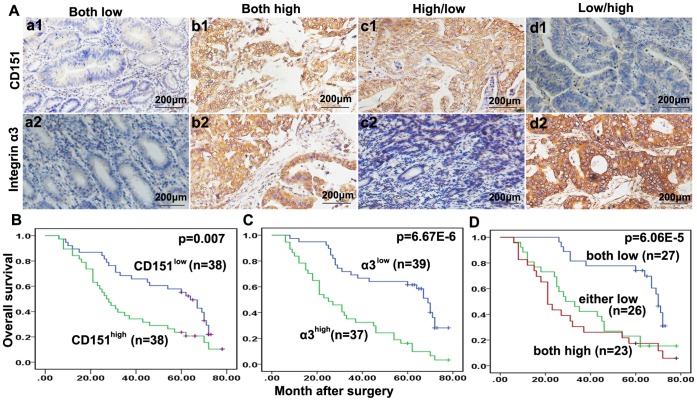
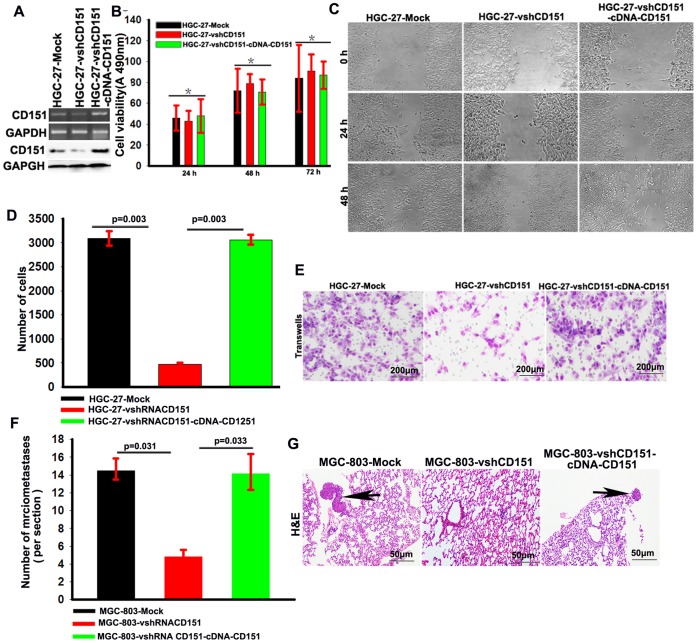
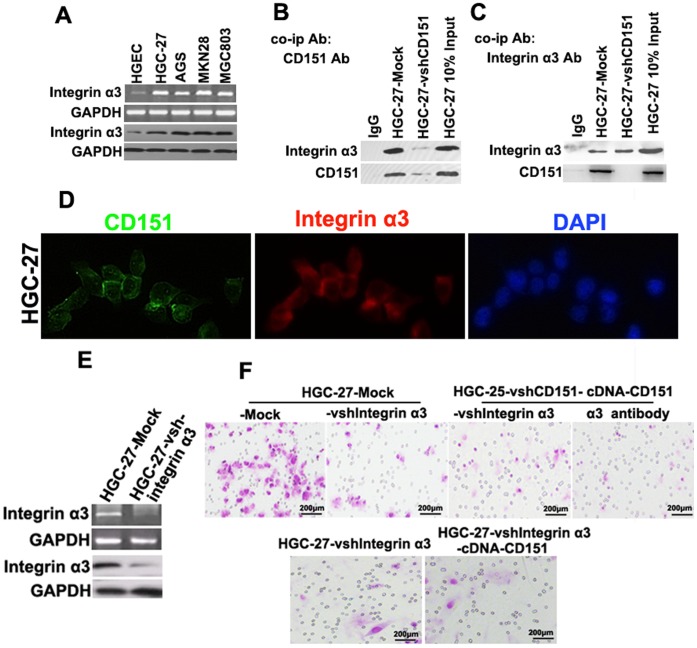
Twenty HGC specimens and matched nontumor samples, human gastric epithelial cells (HGEC), and four gastric cancer cell lines were used to analyze CD151 expression. Short hairpin RNA-mediated downregulation of CD151 expression in HGC cells was performed to examine the role of CD151 in the proliferation and metastasis/invasion of HGC cells in vivo and in vitro. The relationship of CD151 with integrin α3 in HGC cells was investigated by silencing integrin α3 followed by co-immunoprecipitation and immunofluorescence staining. Finally, the prognostic value of CD151 and integrin α3 was evaluated by immunohistochemistry in tissue microarrays of 76 HGC patients.
CD151 was expressed at higher levels in HGC tissues and HGC cells than in nontumor tissues and HGEC cells. Down-regulation of CD151 by vshRNA-CD151 impaired metastasis and invasion of HGC-27 cells, but did not affect cell proliferation. CD151 formed a complex with integrin α3 in HGC cells. CD151-cDNA transfection rescued the metastatic potential and invasiveness of HGC-27-vshCD151 cells, but not those of HGC-27-vshintegrin α3 cells in vitro. Clinically, CD151 overexpression was significantly correlated with high TNM stage, depth of invasion and positive lymph node involvement (p<0.05), and high levels of integrin α3 were associated with large tumor size, high TNM stage, depth of invasion and lymph node involvement (p<0.05). Importantly, the postoperative 5-year overall survival of patients with CD151(low) and/or integrin α3(low) was higher than that of patients with CD151(high) and/or integrin α3(high).
CD151 is positively associated with the invasiveness of HGC, and CD151 or the combination of CD151 and integrin α3 is a novel marker for predicting the prognosis of HGC patients and may be potential therapeutic targets.
四跨膜蛋白 CD151 可促进多种肿瘤的转移和侵袭。然而,CD151 在人胃癌(HGC)中的作用尚不清楚。
使用 20 例 HGC 标本及配对的非肿瘤组织、人胃上皮细胞(HGEC)和 4 种胃癌细胞系分析 CD151 表达。通过短发夹 RNA 介导的 HGC 细胞中 CD151 表达下调,研究 CD151 在 HGC 细胞体内和体外增殖和转移/侵袭中的作用。通过沉默整合素 α3 后进行共免疫沉淀和免疫荧光染色,研究 HGC 细胞中 CD151 与整合素 α3 的关系。最后,通过 76 例 HGC 患者组织微阵列的免疫组化评估 CD151 和整合素 α3 的预后价值。
与非肿瘤组织和 HGEC 细胞相比,CD151 在 HGC 组织和 HGC 细胞中表达水平更高。vshRNA-CD151 下调 CD151 可损害 HGC-27 细胞的转移和侵袭能力,但不影响细胞增殖。CD151 在 HGC 细胞中与整合素 α3 形成复合物。CD151-cDNA 转染可挽救 HGC-27-vshCD151 细胞的转移和侵袭潜能,但不能挽救 HGC-27-vshintegrin α3 细胞的转移和侵袭潜能。临床研究发现,CD151 过表达与较高的 TNM 分期、浸润深度和阳性淋巴结受累显著相关(p<0.05),而整合素 α3 高表达与肿瘤体积大、TNM 分期高、浸润深度和淋巴结受累有关(p<0.05)。重要的是,CD151(low) 和/或整合素 α3(low) 患者的术后 5 年总生存率高于 CD151(high) 和/或整合素 α3(high) 患者。
CD151 与 HGC 的侵袭性呈正相关,CD151 或 CD151 与整合素 α3 的组合是预测 HGC 患者预后的新标志物,可能是潜在的治疗靶点。