Department of Behavioral Science, The University of Texas MD Anderson Cancer Center, Houston, TX 77230-1439, USA.
JAMA Psychiatry. 2013 May;70(5):522-33. doi: 10.1001/jamapsychiatry.2013.678.
Given the actions of varenicline tartrate and bupropion hydrochloride sustained-release (SR) on neurobiological targets related to affect and reward, it is thought that the modulation of nicotine withdrawal symptoms may contribute to their effectiveness.
To assess the relative efficacy of varenicline and bupropion SR plus intensive counseling on smoking cessation and emotional functioning.
Placebo-controlled randomized clinical trial at a university medical center.
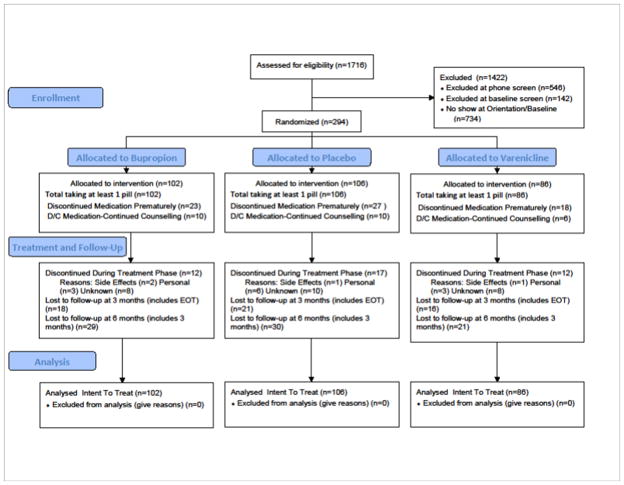
In total, 294 community volunteers who wanted to quit smoking.
Twelve weeks of varenicline, bupropion SR, or placebo plus intensive smoking cessation counseling (10 sessions, for a total of approximately 240 minutes of counseling).
Prolonged abstinence from smoking and weekly measures of depression, negative affect, and other symptoms of nicotine withdrawal.
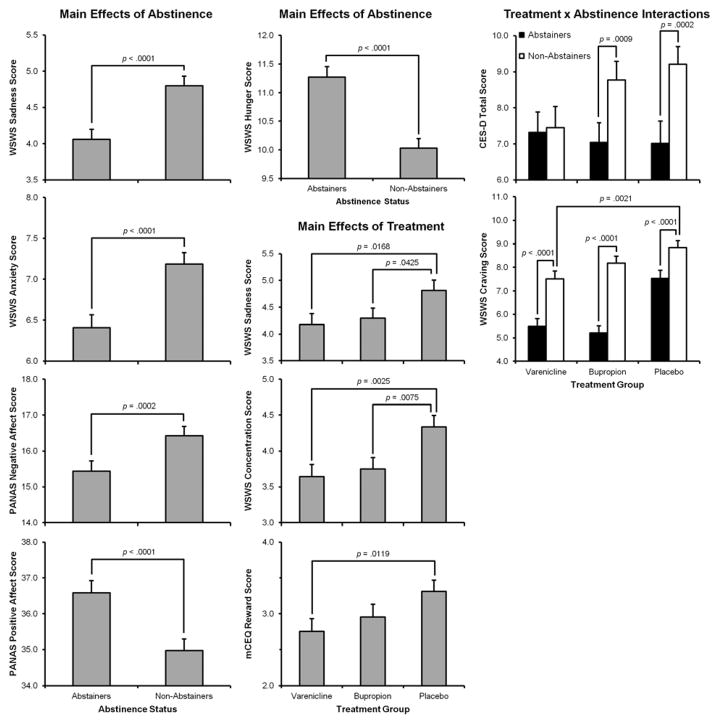
Significant differences were found in abstinence at the end of treatment and through the 3-month postquit follow-up visit, favoring both active medications compared with placebo. At the 6-month postquit follow-up visit, only the varenicline vs placebo comparison remained significant. Varenicline use was also associated with a generalized suppression of depression and reduced smoking reward compared with the other treatments, while both active medications improved concentration, reduced craving, and decreased negative affect and sadness compared with placebo, while having little effect (increase or decrease) on anxiety and anger. No differences were noted in self-reported rates of neuropsychiatric adverse events.
In a community sample, varenicline exerts a robust and favorable effect on smoking cessation relative to placebo and may have a favorable (suppressive) effect on symptoms of depression and other affective measures, with no clear unfavorable effect on neuropsychiatric adverse events.
clinicaltrials.gov Identifier: NCT00507728.
鉴于酒石酸伐尼克兰和盐酸安非他酮缓释片(SR)对与情感和奖赏相关的神经生物学靶标的作用,人们认为调节尼古丁戒断症状可能有助于提高其疗效。
评估酒石酸伐尼克兰和盐酸安非他酮 SR 联合强化咨询对戒烟和情绪功能的相对疗效。
在一所大学医学中心进行的安慰剂对照随机临床试验。
共有 294 名希望戒烟的社区志愿者。
12 周的酒石酸伐尼克兰、盐酸安非他酮 SR 或安慰剂联合强化戒烟咨询(共 10 次,咨询总时长约为 240 分钟)。
戒烟后持续时间和每周抑郁、负性情绪和其他尼古丁戒断症状的测量。
在治疗结束时和戒烟后 3 个月的随访中,与安慰剂相比,两种活性药物均显示出显著的戒烟效果。在戒烟后 6 个月的随访中,只有酒石酸伐尼克兰与安慰剂的比较仍然具有统计学意义。与其他治疗相比,酒石酸伐尼克兰的使用还与抑郁的普遍抑制以及吸烟奖赏的降低相关,而两种活性药物均能改善注意力、减少渴望、降低负性情绪和悲伤感,同时对焦虑和愤怒的影响较小(增加或减少)。在自我报告的神经精神不良事件发生率方面未观察到差异。
在社区样本中,酒石酸伐尼克兰相对于安慰剂在戒烟方面表现出强大且有利的效果,并且可能对抑郁和其他情感测量指标有有利(抑制)作用,对神经精神不良事件没有明显的不利影响。
clinicaltrials.gov 标识符:NCT00507728。