Department of Internal Medicine, Division of Nephrology, University of Michigan Health System, Ann Arbor, MI, USA.
Am J Kidney Dis. 2013 Jul;62(1):23-32. doi: 10.1053/j.ajkd.2013.01.023. Epub 2013 Mar 27.
Limited research exists on physician-delivered education interventions. We examined the feasibility and impact of an educational tool on facilitating physician-patient kidney disease communication.
Pilot feasibility clinical trial with a historical control to examine effect size on patient knowledge and structured questions to elicit physician and patient feedback.
SETTING & PARTICIPANTS: Adults with chronic kidney disease (CKD) stages 1-5, seen in nephrology clinic.
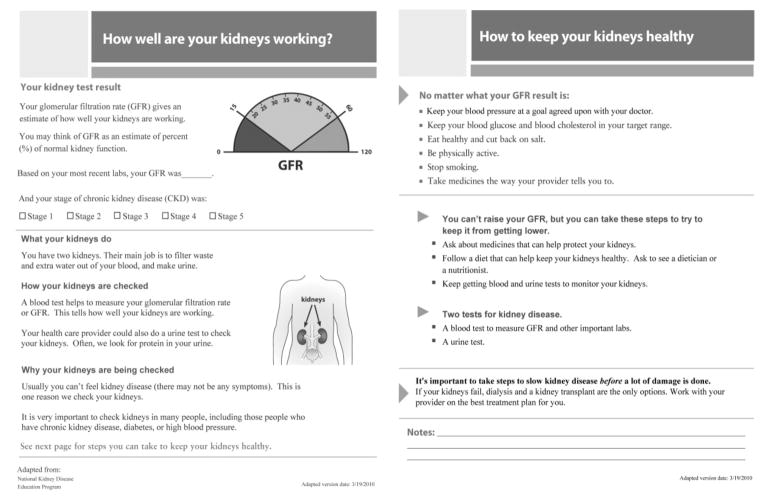
1-page educational worksheet, reviewed by physicians with patients.
Kidney knowledge between patient groups and provider/patient feedback.
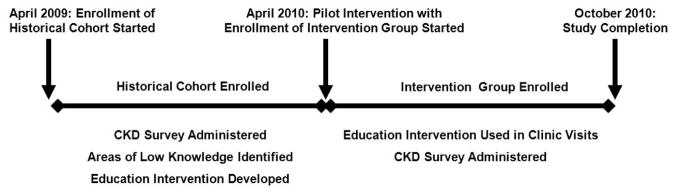
Patient kidney knowledge was measured using a previously validated questionnaire compared between patients receiving the intervention (April to October 2010) and a historical cohort (April to October 2009). Provider input was obtained using structured interviews. Patient input was obtained through survey questions. Patient characteristics were abstracted from the medical record.
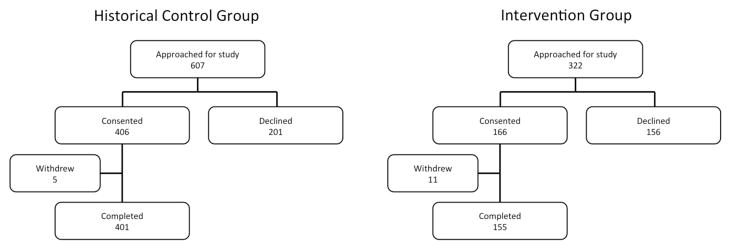
556 patients were included, with 401 patients in the historical cohort and 155 receiving the intervention. Mean age was 57 ± 16 (SD) years, with 53% men, 81% whites, and 78% with CKD stages 3-5. Compared with the historical cohort, patients receiving the intervention had higher adjusted odds of knowing they had CKD (adjusted OR, 2.20; 95% CI, 1.16-4.17; P = 0.02), knowing their kidney function (adjusted OR, 2.25; 95% CI, 1.27-3.97; P = 0.005), and knowing their stage of CKD (adjusted OR, 3.22; 95% CI, 1.49-6.92; P = 0.003). Physicians found the intervention tool easy and feasible to integrate into practice and 98% of patients who received the intervention recommended it for future use.
Study design did not randomly assign patients for comparison and enrollment was performed in clinics at one center.
In this pilot study, a physician-delivered education intervention was feasible to use in practice and was associated with higher patient kidney disease knowledge. Further examination of physician-delivered education interventions for increasing patient disease understanding should be tested through randomized trials.
针对医生实施的教育干预措施,相关研究较为有限。本研究旨在检验一种教育工具在促进医患间肾病沟通方面的可行性和效果。
采用历史对照试验设计,检验患者知识的变化,并通过结构性问题获取医患反馈。
接受肾脏科门诊治疗的慢性肾脏病(CKD)1-5 期的成年患者。
为患者提供 1 页教育工作表,并由医生向患者讲解。
共纳入 556 例患者,其中 401 例患者为历史队列,155 例患者接受了干预。患者的平均年龄为 57 ± 16 岁(标准差),其中 53%为男性,81%为白人,78%为 CKD 3-5 期。与历史队列相比,接受干预的患者在知晓自身患有 CKD(调整比值比[OR],2.20;95%置信区间[CI],1.16-4.17;P = 0.02)、知晓自身肾功能(调整 OR,2.25;95% CI,1.27-3.97;P = 0.005)和知晓自身 CKD 分期(调整 OR,3.22;95% CI,1.49-6.92;P = 0.003)方面的可能性更高。医生认为该干预工具易于融入实践,98%的接受干预的患者推荐将其用于未来。
本研究设计未对患者进行随机分组比较,且仅在一个中心的诊所进行了入组。
在这项初步研究中,医生实施的教育干预措施具有实际可行性,可提高患者对肾病的认知。为了进一步增强患者对疾病的理解,还应通过随机试验检验其他医生实施的教育干预措施。