
结构化小组教育课程改善慢性肾病患者血压自我管理的可行性:一项开放性随机试点试验。
Feasibility of a structured group education session to improve self-management of blood pressure in people with chronic kidney disease: an open randomised pilot trial.
作者信息
Byrne Jo, Khunti Kamlesh, Stone Margaret, Farooqi Azhar, Carr Sue
机构信息
Department of Nephrology, University Hospitals of Leicester NHS Trust, Leicester, UK.
出版信息
BMJ Open. 2011 Dec 19;1(2):e000381. doi: 10.1136/bmjopen-2011-000381. Print 2011.
Objectives We aimed to test, at pilot level, a structured group educational intervention to improve self-management of blood pressure in people with chronic kidney disease (CKD). The current paper explores patient acceptability of the intervention. Design This was an open randomised pilot trial. Participants were randomly assigned to either: A control group (n=41) receiving standard clinical management of hypertension. An intervention group (n=40) receiving standard clinical care plus the educational intervention. Setting Renal outpatient clinics at a single study centre. Participants Patients with early CKD and hypertension were identified and approached for recruitment. Intervention An evidence-based structured group educational intervention (CHEERS) using the principles of social cognitive theory to improve knowledge and self-management skills. Outcomes Recruitment, uptake of the intervention and patient satisfaction were evaluated to explore patient acceptability of the intervention and to determine any differences between patients regarding recruitment and retention. Measures Data on age, sex and ethnicity were collected for all patients approached to take part. For recruited patients, data were also collected on self-efficacy (ability to self-manage). Reasons given by patients declining to take part were recorded. Patients attending the educational session also completed an evaluation form to assess satisfaction. Results A total of 267 patients were approached, and 30% were randomly assigned. Lack of time (48%) and lack of interest (44%) were the main reasons cited for non-participation in the study. Men were significantly more likely to be recruited (p=0.048). The intervention was rated enjoyable and useful by 100% of participants. However, 37.5% of the intervention group failed to attend the educational session after recruitment. Participants failing to attend were significantly more likely to be older (p=0.039) and have lower self-efficacy (p=0.034). Conclusion The findings suggest that delivering and evaluating an effective structured group educational intervention to promote better blood pressure control in patients with CKD would be challenging in the current context of kidney care.
目的
我们旨在以试点水平测试一种结构化的团体教育干预措施,以改善慢性肾脏病(CKD)患者的血压自我管理。本文探讨了患者对该干预措施的接受度。
设计
这是一项开放性随机试点试验。参与者被随机分配到以下两组之一:
对照组(n = 41),接受高血压的标准临床管理。
干预组(n = 40),接受标准临床护理加教育干预。
地点
单个研究中心的肾脏门诊。
参与者
识别出患有早期CKD和高血压的患者并邀请其参与招募。
干预
一种基于证据的结构化团体教育干预(CHEERS),运用社会认知理论的原则来提高知识和自我管理技能。
结果
评估招募情况、干预措施的接受程度和患者满意度,以探讨患者对干预措施的接受度,并确定患者在招募和留存方面的任何差异。
措施
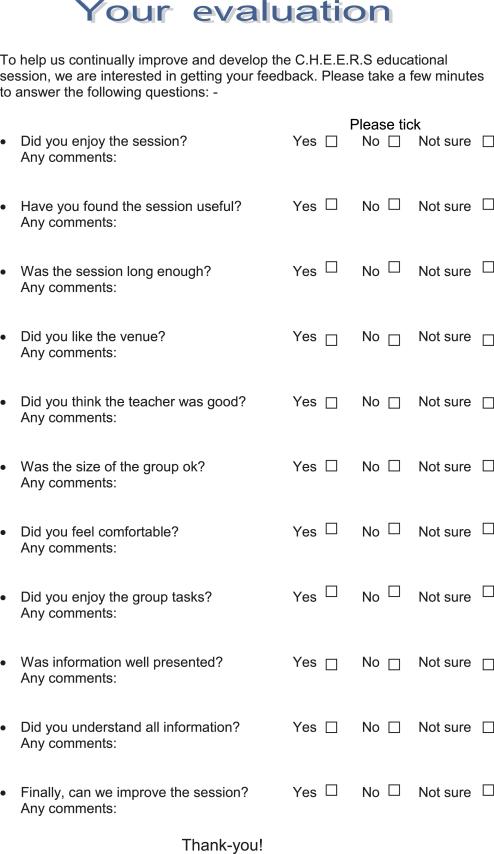
收集所有受邀参与患者的年龄、性别和种族数据。对于招募的患者,还收集自我效能(自我管理能力)数据。记录患者拒绝参与的原因。参加教育课程的患者还填写了一份评估表以评估满意度。
结果
共邀请了267名患者,30%被随机分配。未参与研究的主要原因是时间不足(48%)和缺乏兴趣(44%)。男性被招募的可能性显著更高(p = 0.048)。100%的参与者对干预措施给予了愉快和有用的评价。然而,干预组中有37.5%的患者在招募后未参加教育课程。未参加的参与者年龄显著更大(p = 0.039)且自我效能更低(p = 0.034)。
结论
研究结果表明,在当前肾脏护理背景下,提供并评估一种有效的结构化团体教育干预措施以促进CKD患者更好地控制血压具有挑战性。

 Zotero 插件