Cancer Institute, The First Affiliated Hospital, China Medical University, Shenyang, China.
Toxicol Appl Pharmacol. 2013 Jun 1;269(2):89-99. doi: 10.1016/j.taap.2013.03.015. Epub 2013 Mar 29.
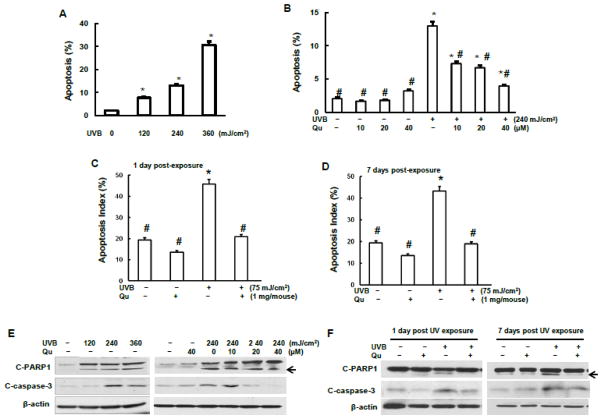
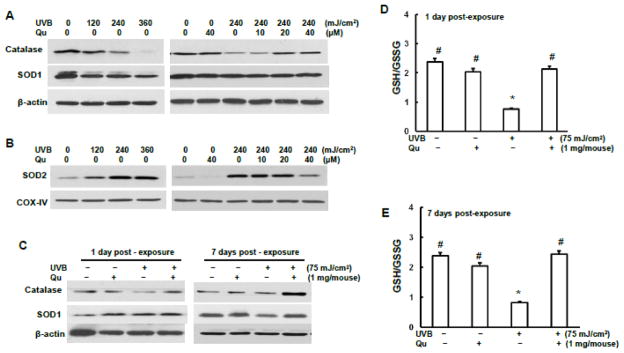
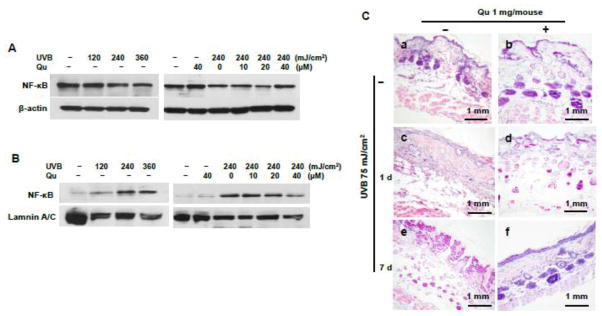
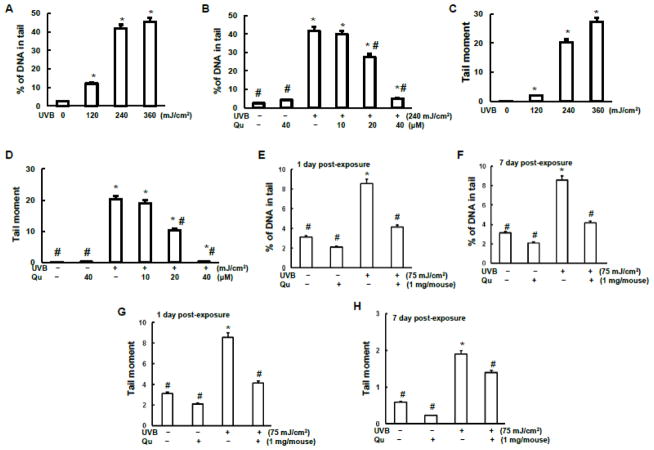
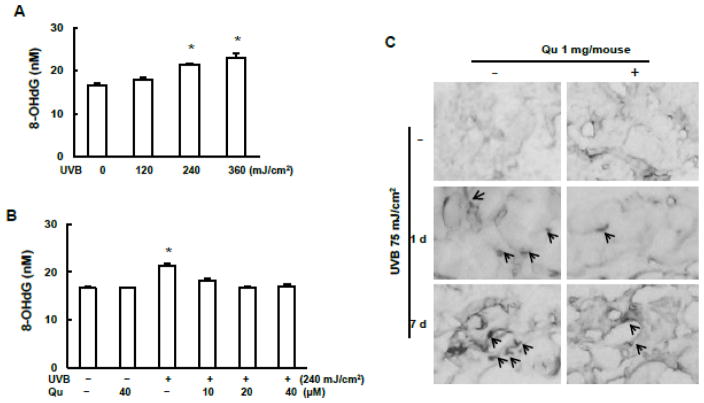
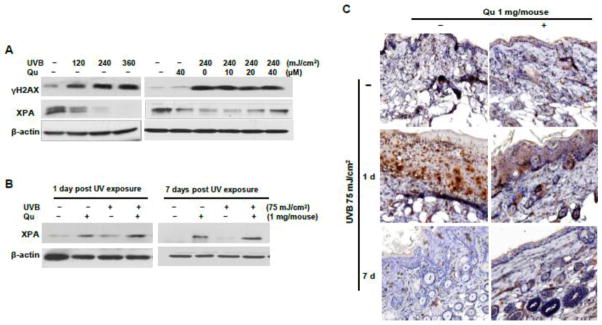
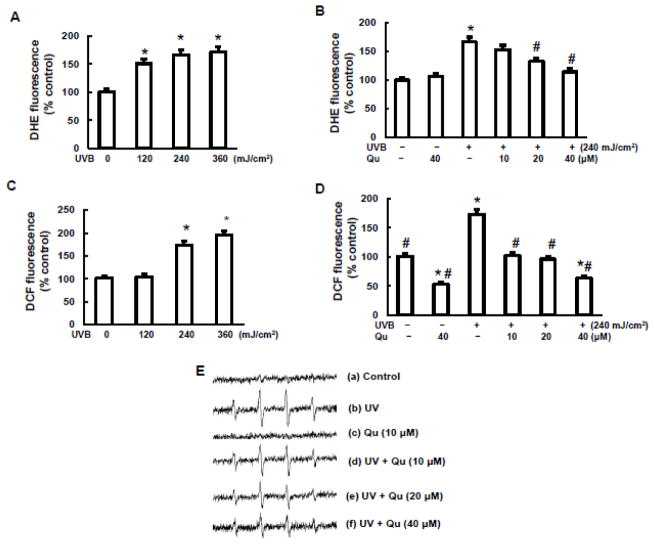
Exposure of the skin to ultraviolet B (UVB) radiation causes oxidative damage to skin, resulting in sunburn, photoaging, and skin cancer. It is generally believed that the skin damage induced by UV irradiation is a consequence of generation of reactive oxygen species (ROS). Recently, there is an increased interest in the use of natural products as chemopreventive agents for non-melanoma skin cancer (NMSC) due to their antioxidants and anti-inflammatory properties. Quercitrin, glycosylated form of quercetin, is the most common flavonoid in nature with antioxidant properties. The present study investigated the possible beneficial effects of quercitrin to inhibit UVB irradiation-induced oxidative damage in vitro and in vivo. Our results showed that quercitrin decreased ROS generation induced by UVB irradiation in JB6 cells. Quercitrin restored catalase expression and GSH/GSSG ratio reduced by UVB exposure, two major antioxidant enzymes, leading to reductions of oxidative DNA damage and apoptosis and protection of the skin from inflammation caused by UVB exposure. The present study demonstrated that quercitrin functions as an antioxidant against UVB irradiation-induced oxidative damage to skin.
皮肤暴露于紫外线 B(UVB)辐射会导致皮肤氧化损伤,从而引起晒伤、光老化和皮肤癌。人们普遍认为,UV 照射引起的皮肤损伤是活性氧(ROS)产生的结果。最近,由于天然产物具有抗氧化和抗炎特性,因此人们越来越关注将其作为非黑色素瘤皮肤癌(NMSC)的化学预防剂。槲皮素苷是槲皮素的糖基化形式,是自然界中最常见的具有抗氧化特性的类黄酮。本研究探讨了槲皮素苷抑制体外和体内 UVB 照射诱导的氧化损伤的可能有益作用。我们的结果表明,槲皮素苷可减少 UVB 照射诱导的 JB6 细胞中 ROS 的产生。槲皮素苷恢复了 UVB 暴露导致的过氧化氢酶表达和 GSH/GSSG 比值降低,这两种主要的抗氧化酶,从而减少氧化 DNA 损伤和凋亡,并保护皮肤免受 UVB 暴露引起的炎症。本研究表明,槲皮素苷可作为抗氧化剂,对抗 UVB 照射引起的皮肤氧化损伤。