Graduate Center for Toxicology, University of Kentucky, 454 HSRB, 1095 VA Drive, Lexington, KY 40536, USA; E-Mails:
Int J Mol Sci. 2011;12(10):7114-62. doi: 10.3390/ijms12107114. Epub 2011 Oct 21.
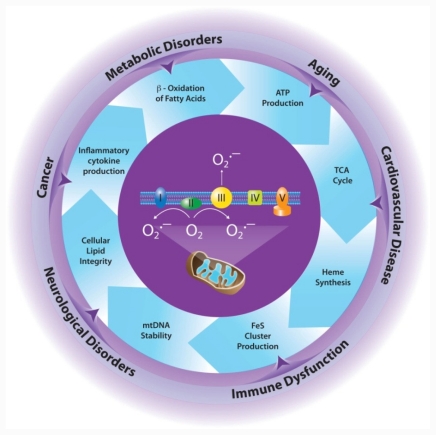
The mitochondrion is vital for many metabolic pathways in the cell, contributing all or important constituent enzymes for diverse functions such as β-oxidation of fatty acids, the urea cycle, the citric acid cycle, and ATP synthesis. The mitochondrion is also a major site of reactive oxygen species (ROS) production in the cell. Aberrant production of mitochondrial ROS can have dramatic effects on cellular function, in part, due to oxidative modification of key metabolic proteins localized in the mitochondrion. The cell is equipped with myriad antioxidant enzyme systems to combat deleterious ROS production in mitochondria, with the mitochondrial antioxidant enzyme manganese superoxide dismutase (MnSOD) acting as the chief ROS scavenging enzyme in the cell. Factors that affect the expression and/or the activity of MnSOD, resulting in diminished antioxidant capacity of the cell, can have extraordinary consequences on the overall health of the cell by altering mitochondrial metabolic function, leading to the development and progression of numerous diseases. A better understanding of the mechanisms by which MnSOD protects cells from the harmful effects of overproduction of ROS, in particular, the effects of ROS on mitochondrial metabolic enzymes, may contribute to the development of novel treatments for various diseases in which ROS are an important component.
线粒体对于细胞中的许多代谢途径至关重要,为多种功能提供全部或重要的组成酶,如脂肪酸的β氧化、尿素循环、柠檬酸循环和 ATP 合成。线粒体也是细胞中活性氧 (ROS) 产生的主要部位。线粒体 ROS 的异常产生会对细胞功能产生巨大影响,部分原因是位于线粒体中的关键代谢蛋白发生氧化修饰。细胞配备了无数的抗氧化酶系统来对抗线粒体中有害的 ROS 产生,其中线粒体抗氧化酶锰超氧化物歧化酶 (MnSOD) 作为细胞中主要的 ROS 清除酶。影响 MnSOD 表达和/或活性的因素,导致细胞抗氧化能力下降,通过改变线粒体代谢功能,对细胞的整体健康产生巨大影响,导致许多疾病的发生和发展。更好地了解 MnSOD 保护细胞免受 ROS 过度产生的有害影响的机制,特别是 ROS 对线粒体代谢酶的影响,可能有助于开发针对 ROS 作为重要成分的各种疾病的新治疗方法。