The Jackson Laboratory, Bar Harbor, Maine 04609, USA.
G3 (Bethesda). 2013 May 20;3(5):807-14. doi: 10.1534/g3.113.005710.
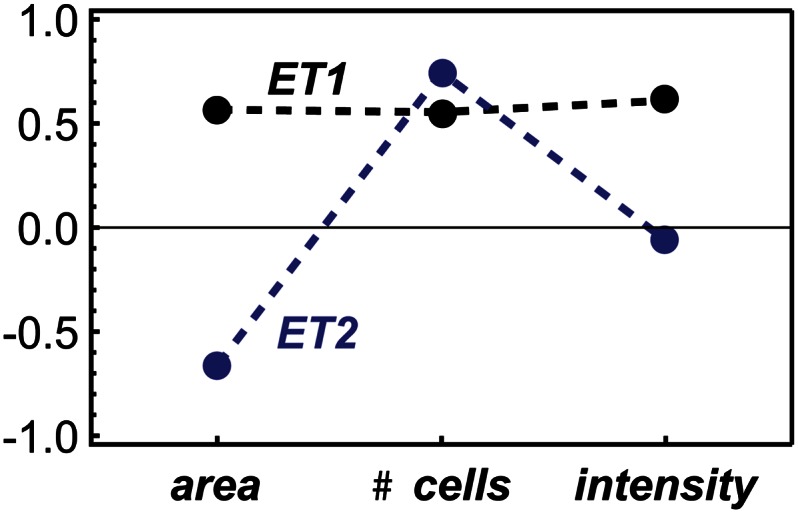
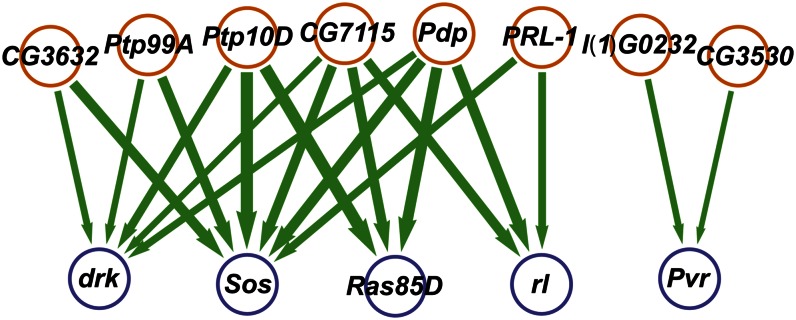
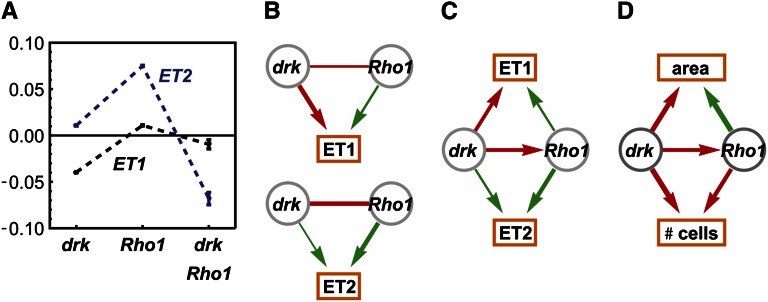
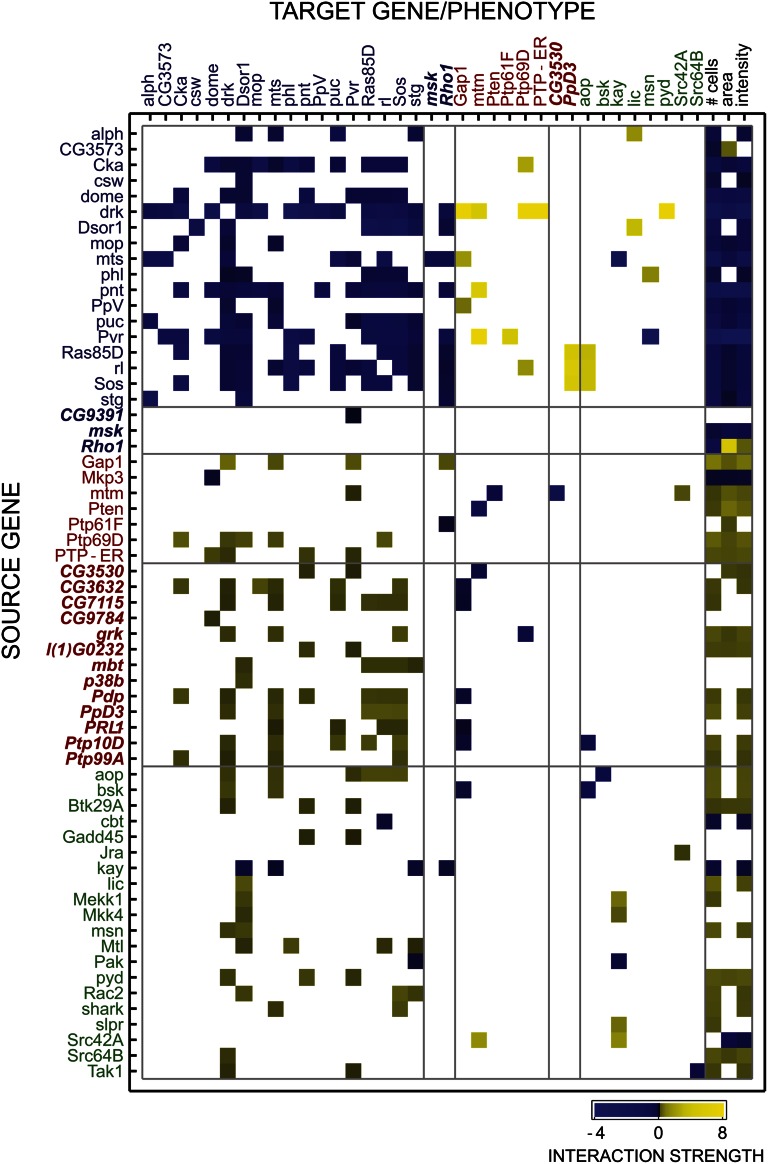
High-throughput genetic interaction screens have enabled functional genomics on a network scale. Groups of cofunctional genes commonly exhibit similar interaction patterns across a large network, leading to novel functional inferences for a minority of previously uncharacterized genes within a group. However, such analyses are often unsuited to cases with a few relevant gene variants or sparse annotation. Here we describe an alternative analysis of cell growth signaling using a computational strategy that integrates patterns of pleiotropy and epistasis to infer how gene knockdowns enhance or suppress the effects of other knockdowns. We analyzed the interaction network for RNAi knockdowns of a set of 93 incompletely annotated genes in a Drosophila melanogaster model of cellular signaling. We inferred novel functional relationships between genes by modeling genetic interactions in terms of knockdown-to-knockdown influences. The method simultaneously analyzes the effects of partially pleiotropic genes on multiple quantitative phenotypes to infer a consistent model of each genetic interaction. From these models we proposed novel candidate Ras inhibitors and their Ras signaling interaction partners, and each of these hypotheses can be inferred independent of network-wide patterns. At the same time, the network-scale interaction patterns consistently mapped pathway organization. The analysis therefore assigns functional relevance to individual genetic interactions while also revealing global genetic architecture.
高通量遗传互作筛选使功能基因组学能够在网络尺度上进行。在一个大网络中,共同起作用的基因通常表现出相似的互作模式,这为一组内少数以前未被描述的基因提供了新的功能推断。然而,这种分析方法通常不适合具有少量相关基因变体或稀疏注释的情况。在这里,我们描述了一种使用计算策略分析细胞生长信号的替代方法,该策略整合了多效性和上位性的模式,以推断基因敲低如何增强或抑制其他敲低的效果。我们分析了 RNAi 敲低一组 93 个不完全注释的基因在黑腹果蝇细胞信号模型中的互作网络。我们通过模拟基因敲低之间的遗传相互作用来推断基因之间的新的功能关系,这些相互作用是基于基因敲低对多个定量表型的影响来建模的。通过这些模型,我们提出了新的候选 Ras 抑制剂及其 Ras 信号相互作用伙伴,并且每个假设都可以独立于网络范围的模式进行推断。同时,网络尺度的相互作用模式一致地映射了途径组织。因此,该分析为单个遗传相互作用分配了功能相关性,同时也揭示了全局遗传结构。