Massachusetts General Hospital Center for Engineering in Medicine, Harvard Medical School, Boston, MA 02114, USA.
Sci Transl Med. 2013 Apr 3;5(179):179ra47. doi: 10.1126/scitranslmed.3005616.
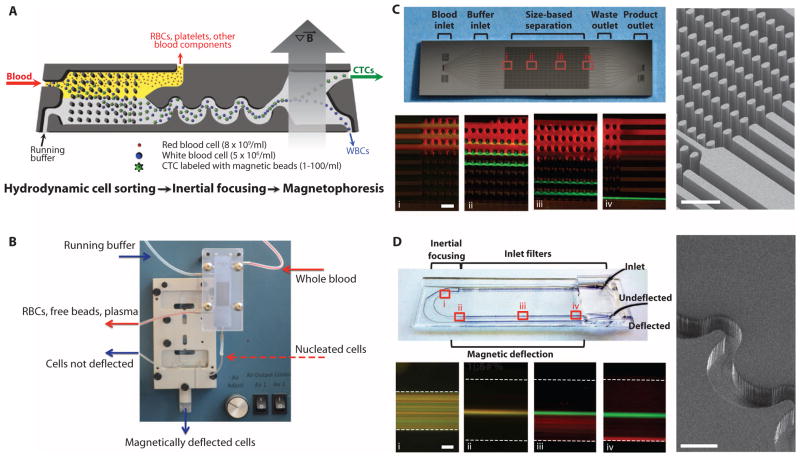
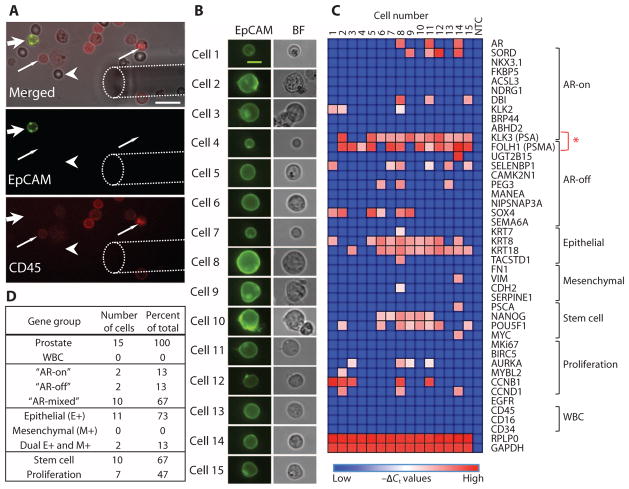
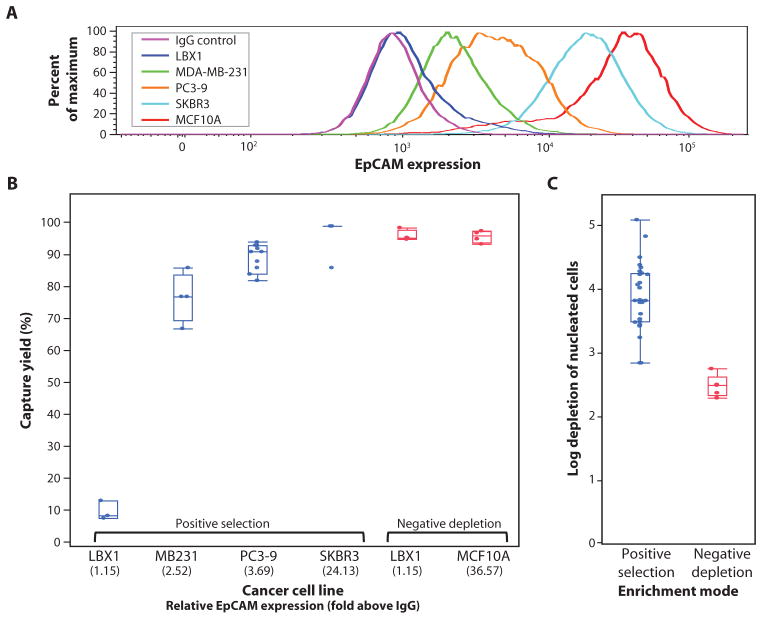
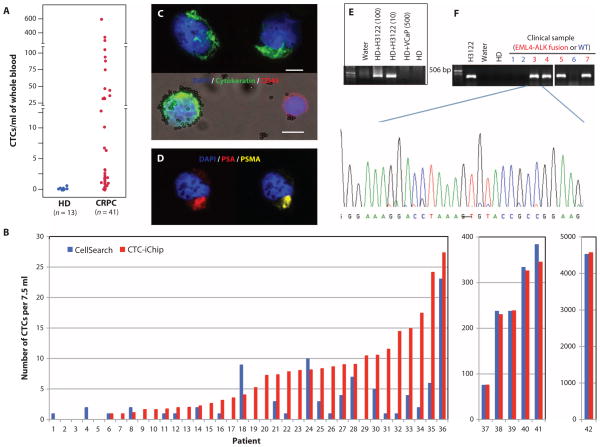
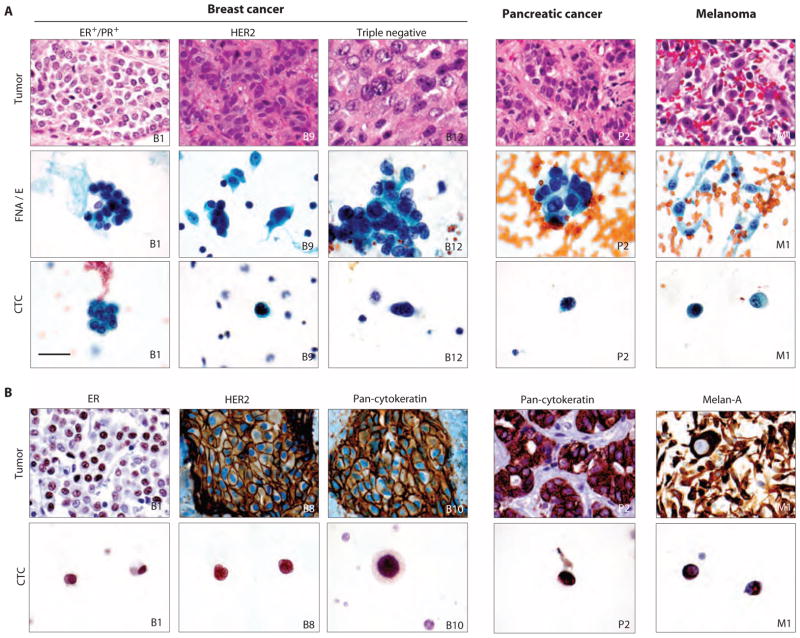
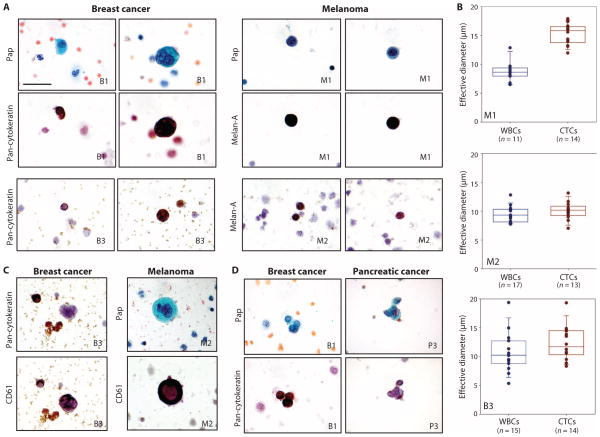
Circulating tumor cells (CTCs) are shed into the bloodstream from primary and metastatic tumor deposits. Their isolation and analysis hold great promise for the early detection of invasive cancer and the management of advanced disease, but technological hurdles have limited their broad clinical utility. We describe an inertial focusing-enhanced microfluidic CTC capture platform, termed "CTC-iChip," that is capable of sorting rare CTCs from whole blood at 10(7) cells/s. Most importantly, the iChip is capable of isolating CTCs using strategies that are either dependent or independent of tumor membrane epitopes, and thus applicable to virtually all cancers. We specifically demonstrate the use of the iChip in an expanded set of both epithelial and nonepithelial cancers including lung, prostate, pancreas, breast, and melanoma. The sorting of CTCs as unfixed cells in solution allows for the application of high-quality clinically standardized morphological and immunohistochemical analyses, as well as RNA-based single-cell molecular characterization. The combination of an unbiased, broadly applicable, high-throughput, and automatable rare cell sorting technology with generally accepted molecular assays and cytology standards will enable the integration of CTC-based diagnostics into the clinical management of cancer.
循环肿瘤细胞 (CTCs) 从原发性和转移性肿瘤病灶脱落到血液中。它们的分离和分析为早期发现侵袭性癌症和晚期疾病的管理提供了很大的希望,但技术障碍限制了它们的广泛临床应用。我们描述了一种基于惯性聚焦增强的微流控 CTC 捕获平台,称为“CTC-iChip”,它能够以 10(7) 个/秒的速度从全血中分离稀有 CTC。最重要的是,iChip 能够使用依赖或不依赖肿瘤膜表位的策略来分离 CTC,因此几乎适用于所有癌症。我们特别在一组扩展的上皮和非上皮癌症中展示了 iChip 的用途,包括肺癌、前列腺癌、胰腺癌、乳腺癌和黑色素瘤。CTC 作为未固定的细胞在溶液中的分选允许应用高质量的临床标准化形态学和免疫组织化学分析,以及基于 RNA 的单细胞分子特征分析。将无偏倚、广泛适用、高通量和自动化的稀有细胞分选技术与普遍接受的分子检测和细胞学标准相结合,将使基于 CTC 的诊断能够整合到癌症的临床管理中。