Karabacak Nezihi Murat, Spuhler Philipp S, Fachin Fabio, Lim Eugene J, Pai Vincent, Ozkumur Emre, Martel Joseph M, Kojic Nikola, Smith Kyle, Chen Pin-i, Yang Jennifer, Hwang Henry, Morgan Bailey, Trautwein Julie, Barber Thomas A, Stott Shannon L, Maheswaran Shyamala, Kapur Ravi, Haber Daniel A, Toner Mehmet
1] Department of Surgery and Center for Engineering in Medicine, Massachusetts General Hospital, Boston, Massachusetts, USA. [2].
Department of Surgery and Center for Engineering in Medicine, Massachusetts General Hospital, Boston, Massachusetts, USA.
Nat Protoc. 2014 Mar;9(3):694-710. doi: 10.1038/nprot.2014.044. Epub 2014 Feb 27.
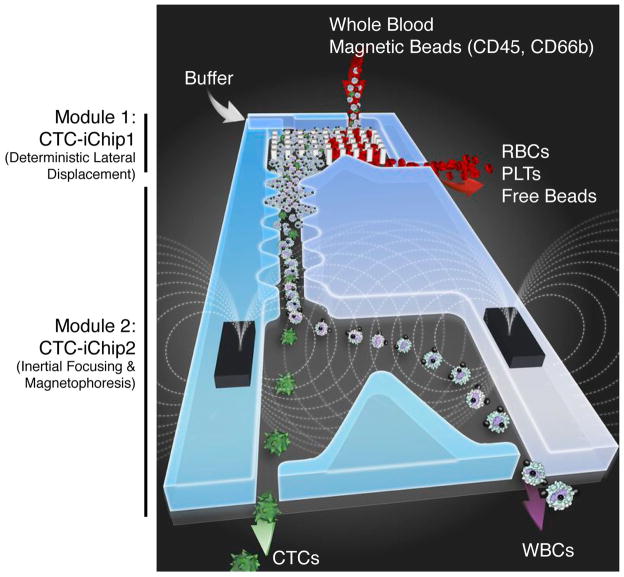
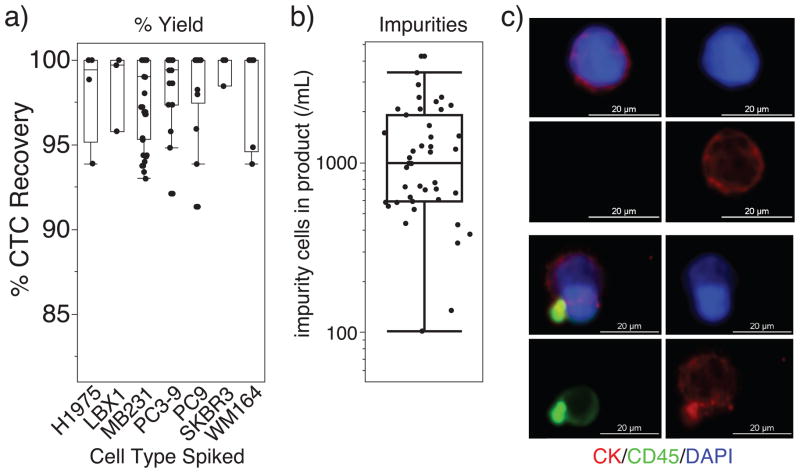
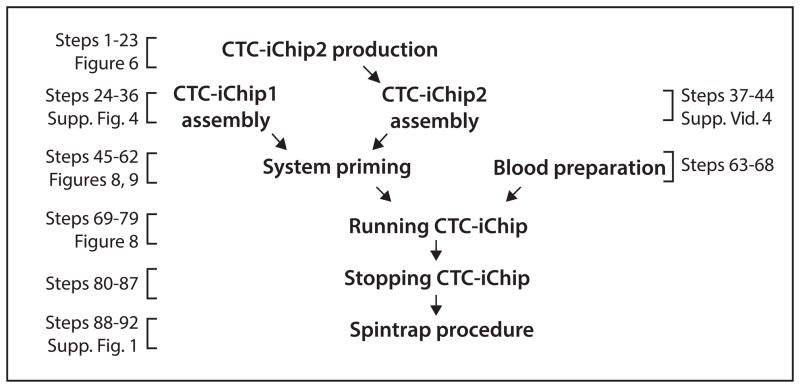
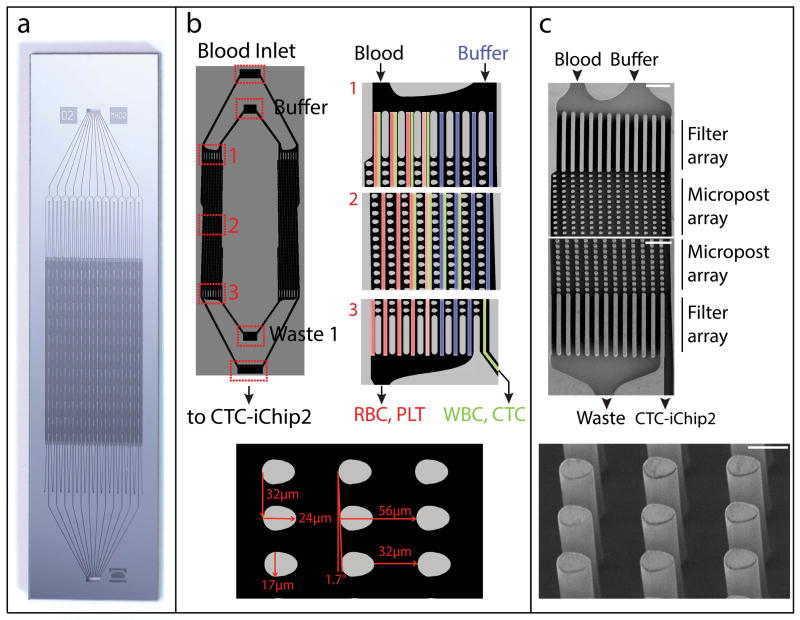
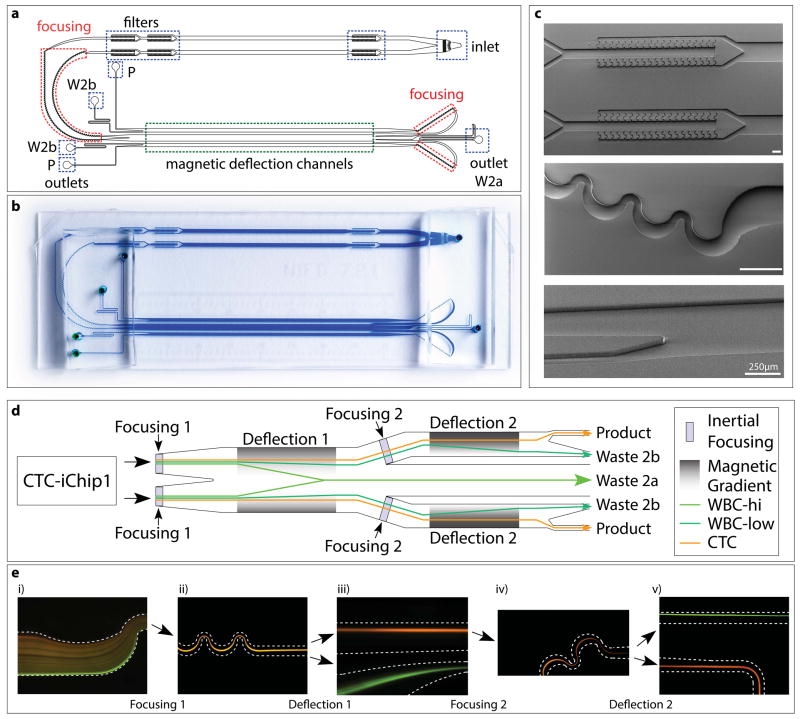
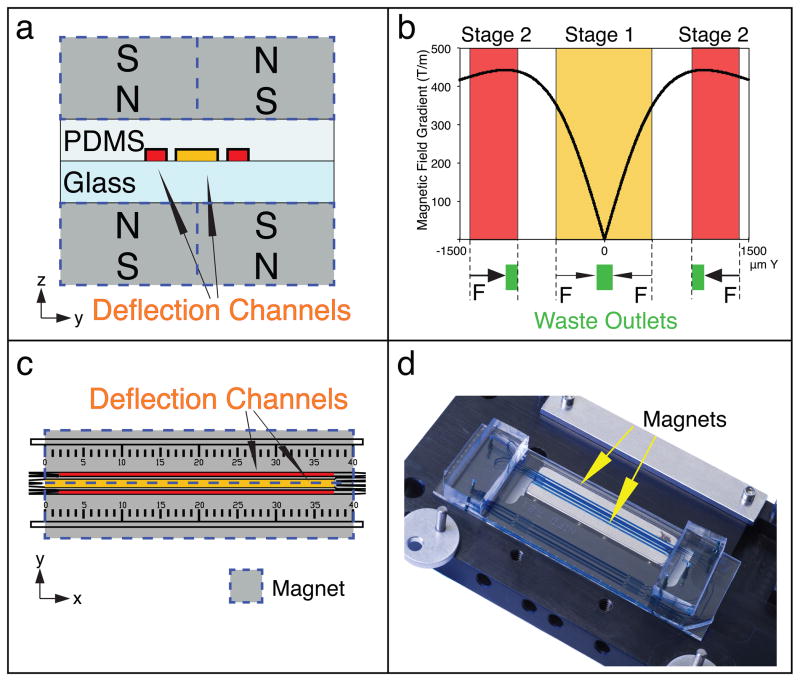
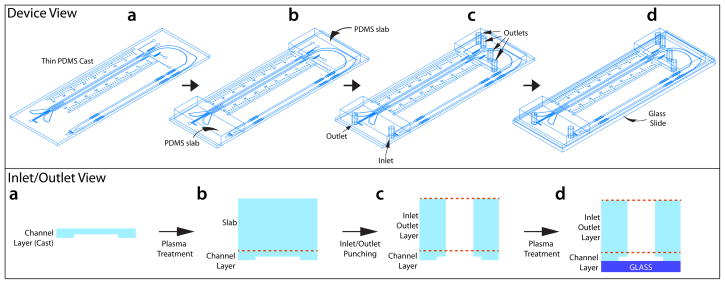
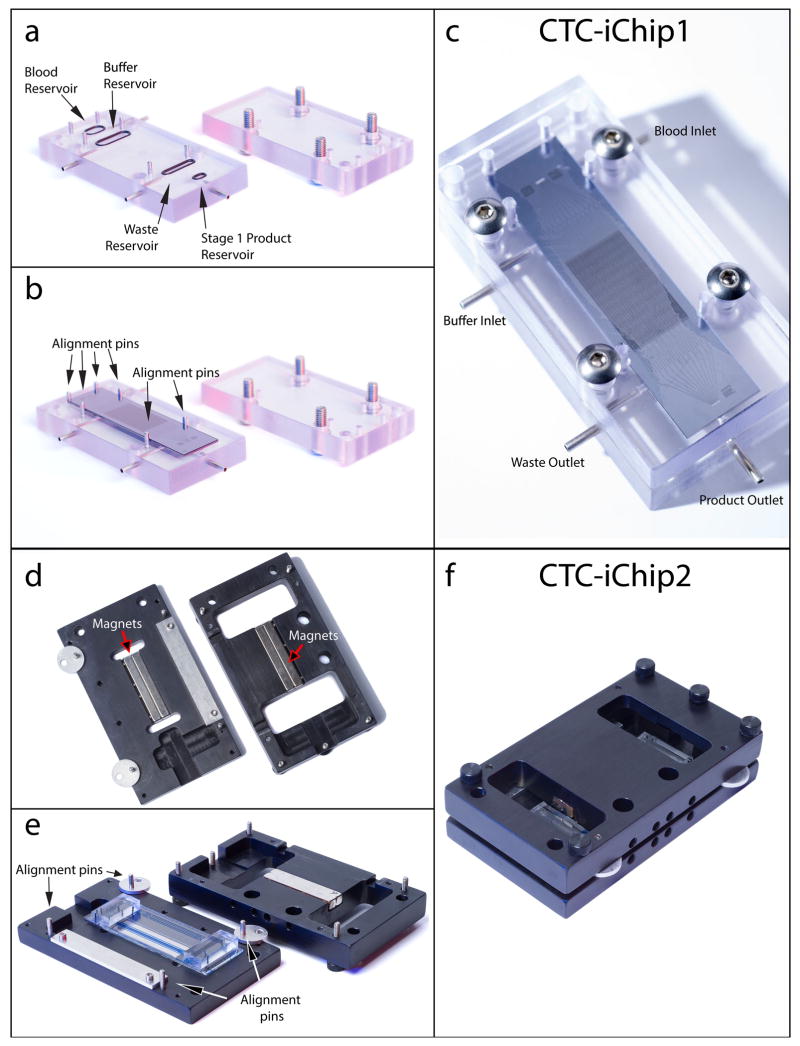
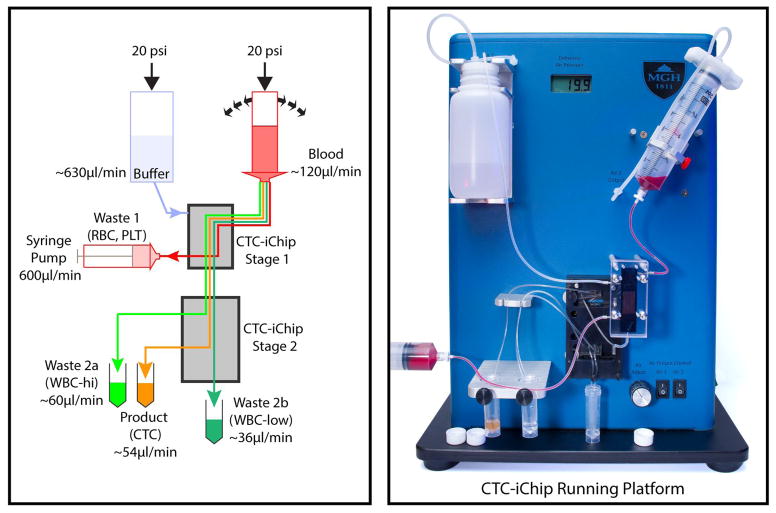
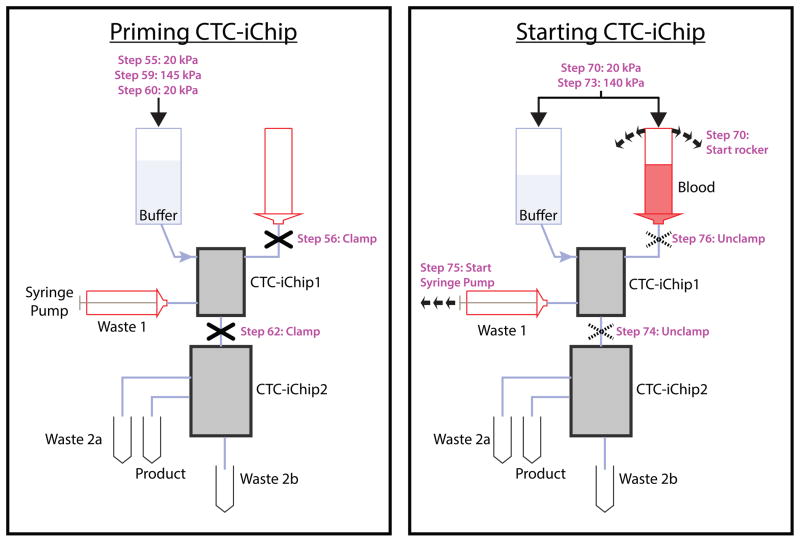
The ability to isolate and analyze rare circulating tumor cells (CTCs) has the potential to further our understanding of cancer metastasis and enhance the care of cancer patients. In this protocol, we describe the procedure for isolating rare CTCs from blood samples by using tumor antigen-independent microfluidic CTC-iChip technology. The CTC-iChip uses deterministic lateral displacement, inertial focusing and magnetophoresis to sort up to 10⁷ cells/s. By using two-stage magnetophoresis and depletion antibodies against leukocytes, we achieve 3.8-log depletion of white blood cells and a 97% yield of rare cells with a sample processing rate of 8 ml of whole blood/h. The CTC-iChip is compatible with standard cytopathological and RNA-based characterization methods. This protocol describes device production, assembly, blood sample preparation, system setup and the CTC isolation process. Sorting 8 ml of blood sample requires 2 h including setup time, and chip production requires 2-5 d.
分离和分析罕见循环肿瘤细胞(CTC)的能力有可能加深我们对癌症转移的理解,并改善癌症患者的护理。在本方案中,我们描述了使用不依赖肿瘤抗原的微流控CTC-iChip技术从血液样本中分离罕见CTC的程序。CTC-iChip利用确定性侧向位移、惯性聚焦和磁泳每秒分选多达10⁷个细胞。通过使用两阶段磁泳和针对白细胞的去除抗体,我们实现了白细胞3.8对数级的去除,并且以每小时8毫升全血的样本处理速度获得了97%的罕见细胞回收率。CTC-iChip与标准细胞病理学和基于RNA的表征方法兼容。本方案描述了设备生产、组装、血液样本制备、系统设置和CTC分离过程。分选8毫升血液样本包括设置时间需要2小时,芯片生产需要2至5天。