Miano Joseph M
Aab Cardiovascular Research Institute, University of Rochester School of Medicine & Dentistry, Rochester, New York 14642, USA.
J Biomed Res. 2010 May;24(3):169-80. doi: 10.1016/S1674-8301(10)60026-7.
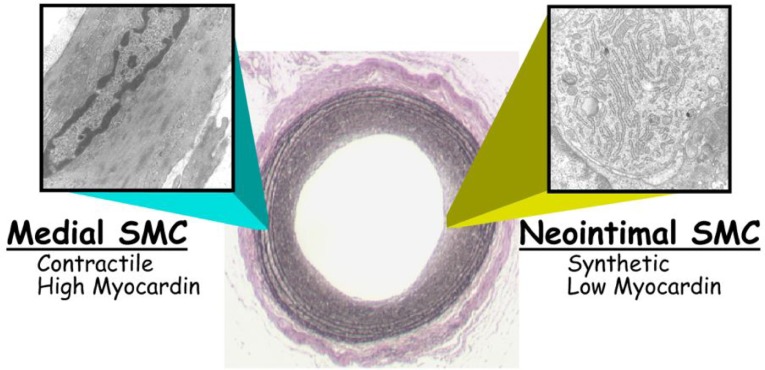
Vascular smooth muscle cells have attracted considerable interest as a model for a flexible program of gene expression. This cell type arises throughout the embryo body plan via poorly understood signaling cascades that direct the expression of transcription factors and microRNAs which, in turn, orchestrate the activation of contractile genes collectively defining this cell lineage. The discovery of myocardin and its close association with serum response factor has represented a major break-through for the molecular understanding of vascular smooth muscle cell differentiation. Retinoids have been shown to improve the outcome of vessel wall remodeling following injury and have provided further insights into the molecular circuitry that defines the vascular smooth muscle cell phenotype. This review summarizes the progress to date in each of these areas of vascular smooth muscle cell biology.
血管平滑肌细胞作为一种基因表达灵活程序的模型,已引起了广泛关注。这种细胞类型通过尚不明确的信号级联反应在整个胚胎身体结构中产生,这些信号级联反应指导转录因子和微小RNA的表达,进而协调收缩基因的激活,共同定义了这个细胞谱系。心肌转录因子的发现及其与血清反应因子的紧密联系,代表了在血管平滑肌细胞分化分子理解方面的重大突破。类视黄醇已被证明可改善损伤后血管壁重塑的结果,并为定义血管平滑肌细胞表型的分子电路提供了进一步的见解。本综述总结了血管平滑肌细胞生物学这些领域迄今取得的进展。