Department of Functional Brain Imaging, Institute of Development, Aging and Cancer, Tohoku University, Sendai, Japan.
PLoS One. 2013;8(3):e59969. doi: 10.1371/journal.pone.0059969. Epub 2013 Mar 21.
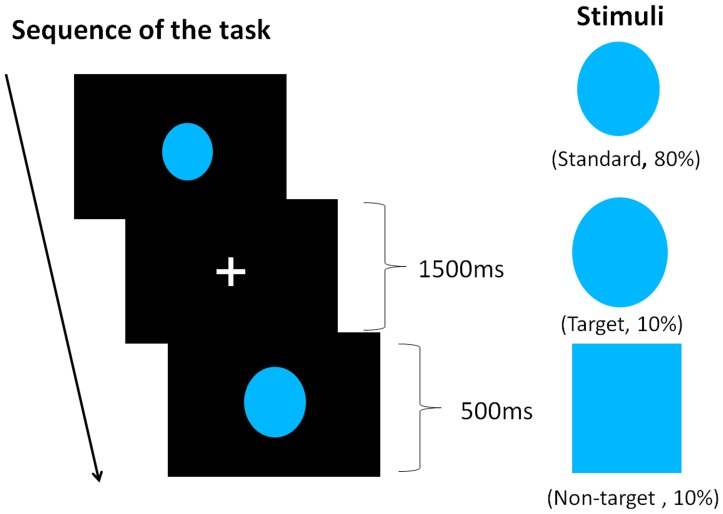
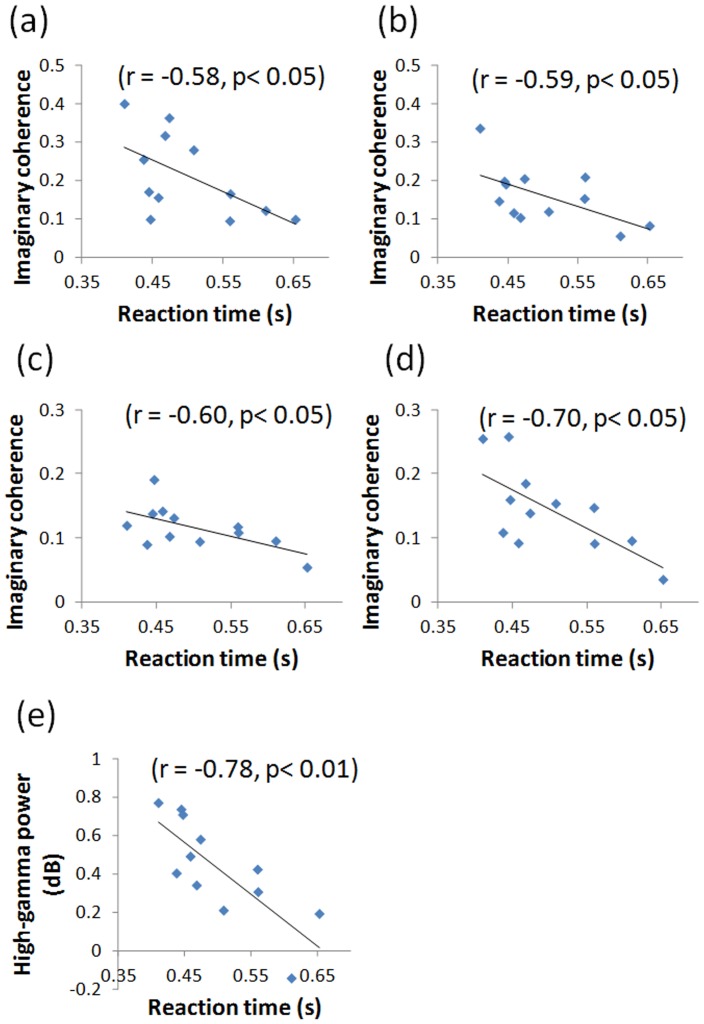
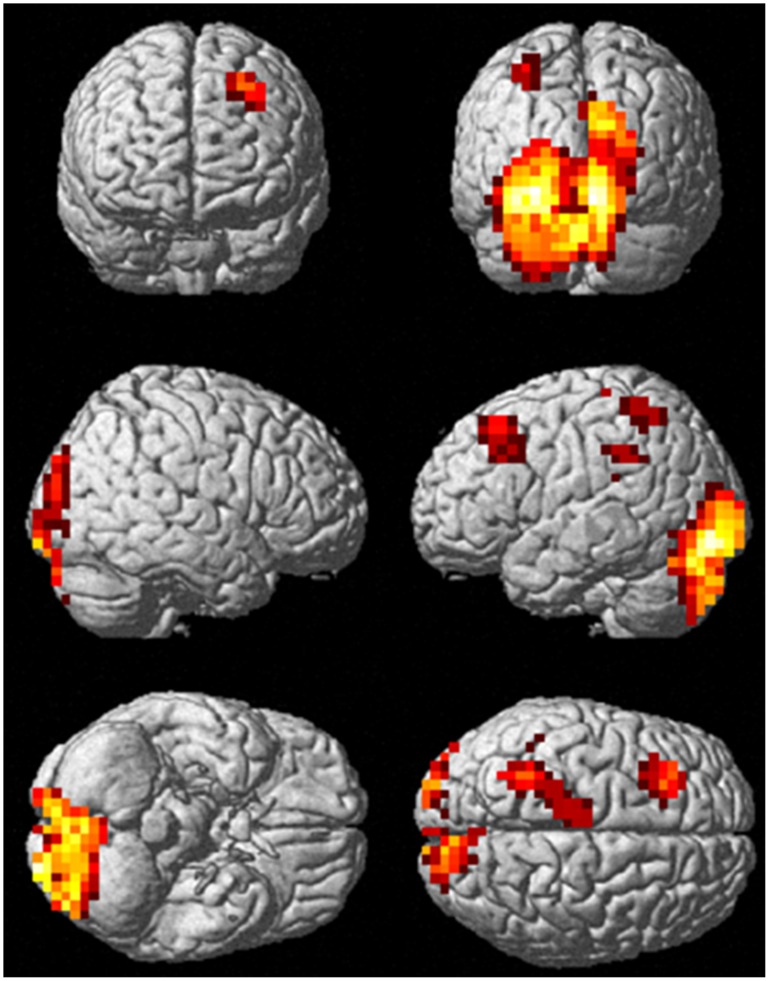
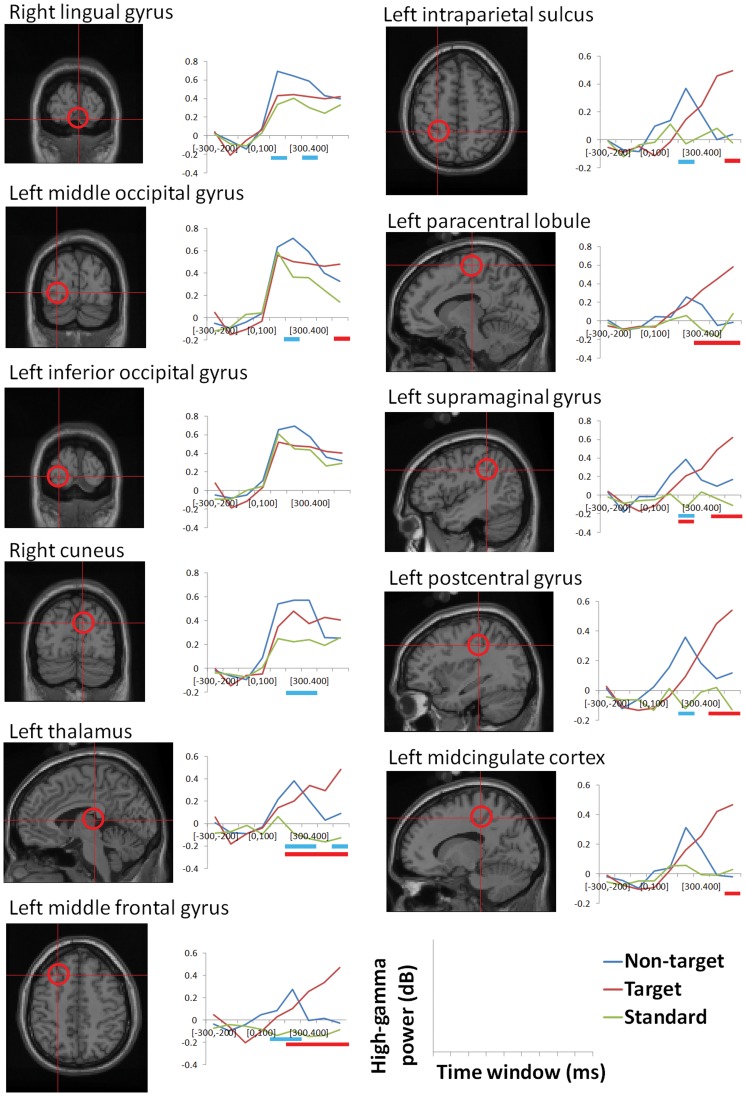
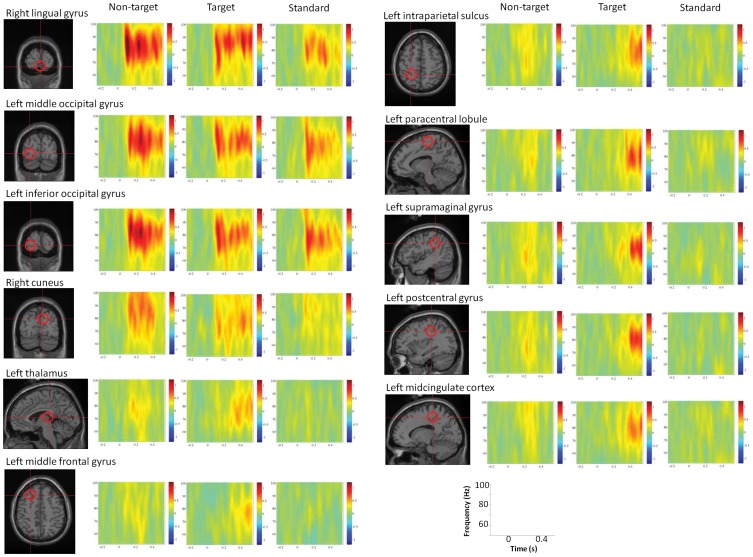
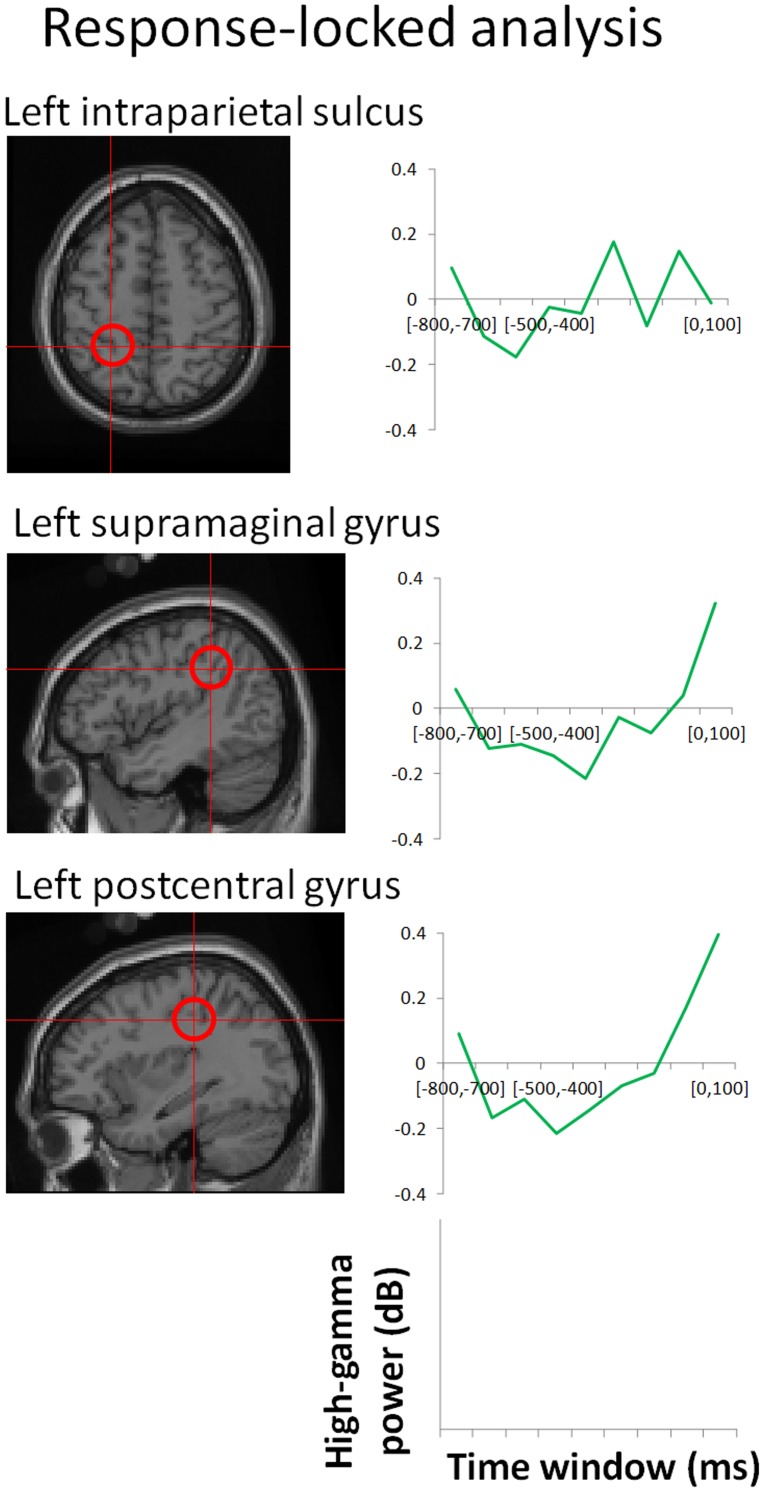
Although many studies have investigated the neural basis of top-down and bottom-up attention, it still requires refinement in both temporal and spatial terms. We used magnetoencephalography to investigate the spatiotemporal dynamics of high-gamma (52-100 Hz) activities during top-down and bottom-up visual attentional processes, aiming to extend the findings from functional magnetic resonance imaging and event-related potential studies. Fourteen participants performed a 3-stimulus visual oddball task, in which both infrequent non-target and target stimuli were presented. We identified high-gamma event-related synchronization in the left middle frontal gyrus, the left intraparietal sulcus, the left thalamus, and the visual areas in different time windows for the target and non-target conditions. We also found elevated imaginary coherence between the left intraparietal sulcus and the right middle frontal gyrus in the high-gamma band from 300 to 400 ms in the target condition, and between the left thalamus and the left middle frontal gyrus in theta band from 150 to 450 ms. In addition, the strength of high-gamma imaginary coherence between the left middle frontal gyrus and left intraparietal sulcus, between the left middle frontal gyrus and the right middle frontal gyrus, and the high-gamma power in the left thalamus predicted inter-subject variation in target detection response time. This source-level electrophysiological evidence enriches our understanding of bi-directional attention processes: stimulus-driven bottom-up attention orientation to a salient, but irrelevant stimulus; and top-down allocation of attentional resources to stimulus evaluation.
虽然许多研究已经探讨了自上而下和自下而上注意的神经基础,但它在时间和空间方面仍需要进一步细化。我们使用脑磁图(MEG)研究了自上而下和自下而上视觉注意过程中高伽马(52-100Hz)活动的时空动力学,旨在扩展功能磁共振成像和事件相关电位研究的发现。14 名参与者执行了一个三刺激视觉Oddball 任务,其中同时呈现了罕见的非目标和目标刺激。我们在不同的时间窗口中识别了左中额叶、左顶内沟、左丘脑和视觉区域中与目标和非目标条件相关的高伽马事件相关同步。我们还发现,在目标条件下,高伽马波段(300-400ms)左顶内沟和右中额叶之间以及θ波段(150-450ms)左丘脑和左中额叶之间的虚相干性升高。此外,左中额叶和左顶内沟之间、左中额叶和右中额叶之间的高伽马虚相干性强度以及左丘脑的高伽马功率预测了目标检测反应时间的个体间变异性。这种源水平的电生理证据丰富了我们对双向注意过程的理解:刺激驱动的自下而上的注意方向是对一个显著但不相关的刺激;自上而下的注意资源分配用于刺激评估。