Division of Basic Medical Sciences, St George's, University of London, Cranmer Terrace, Tooting, London, United Kingdom.
PLoS One. 2013;8(3):e60285. doi: 10.1371/journal.pone.0060285. Epub 2013 Mar 21.
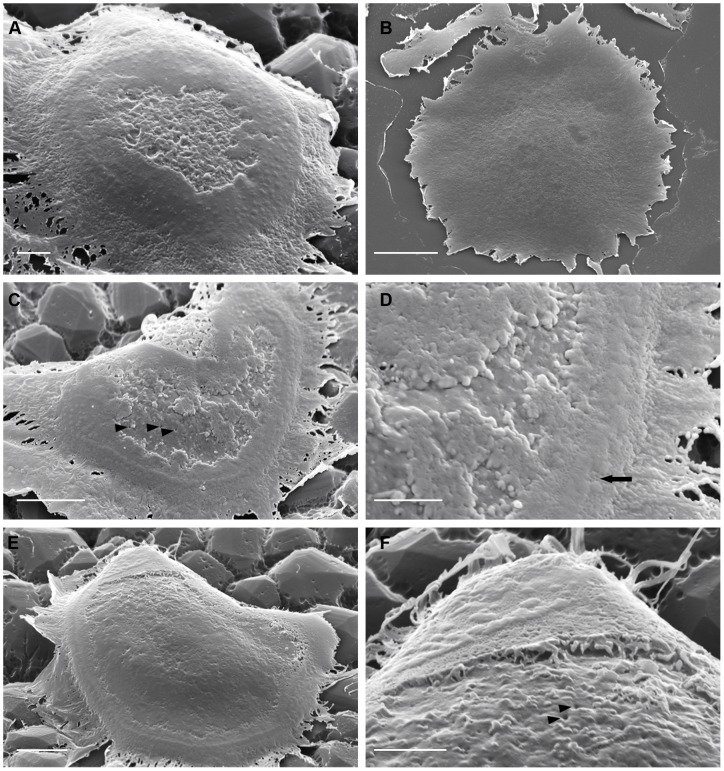
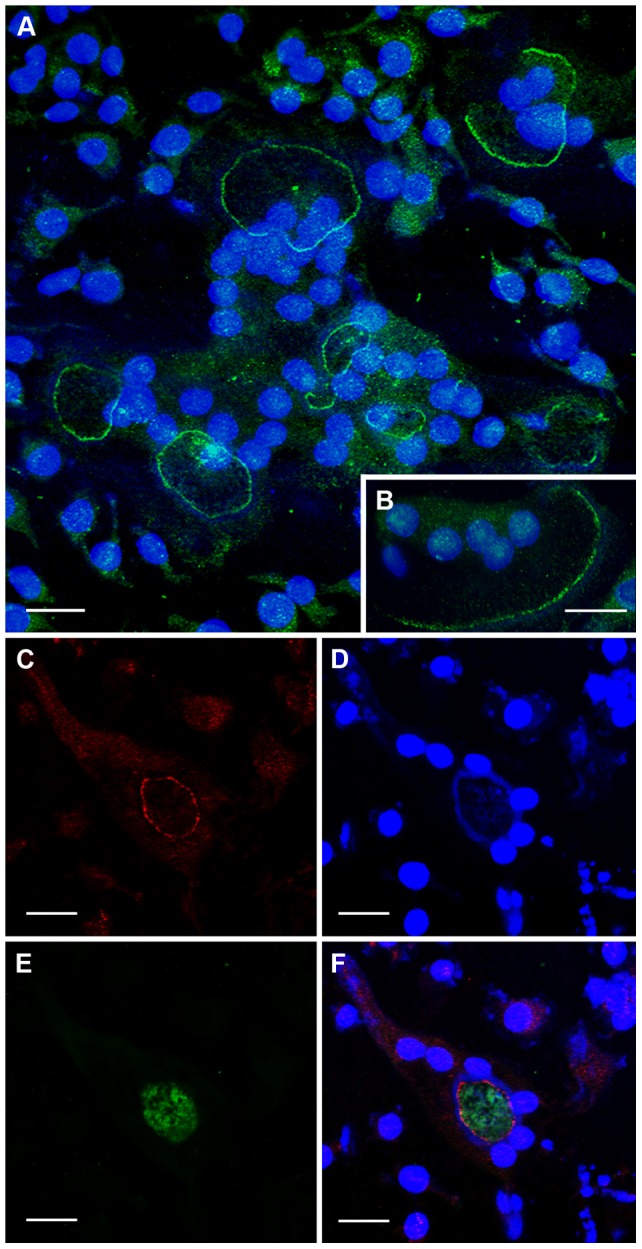
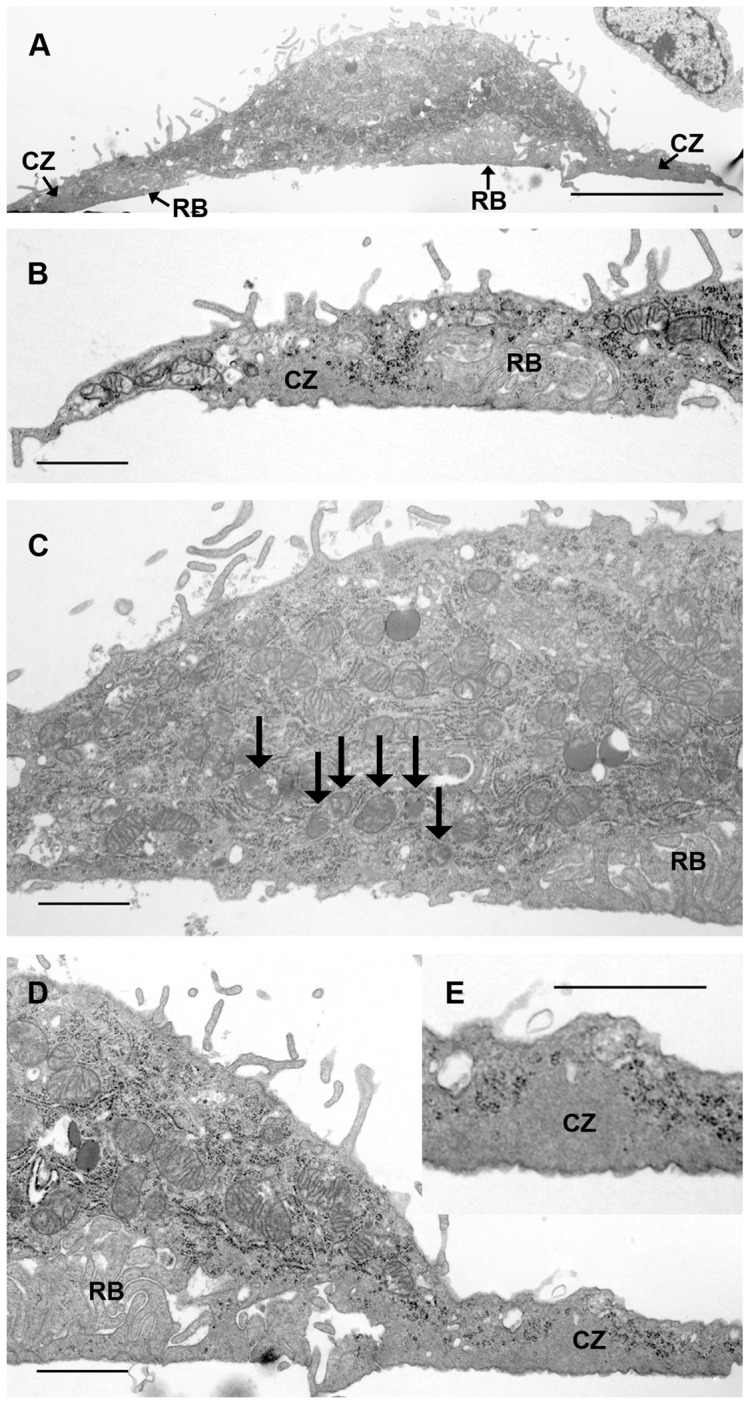
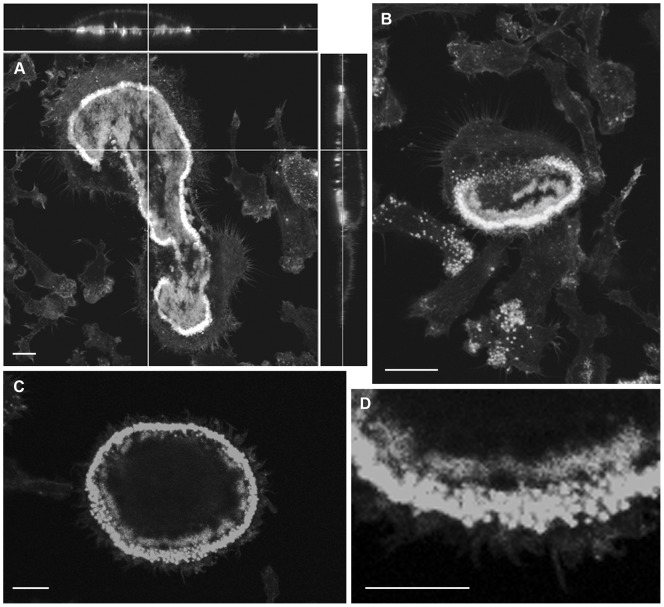
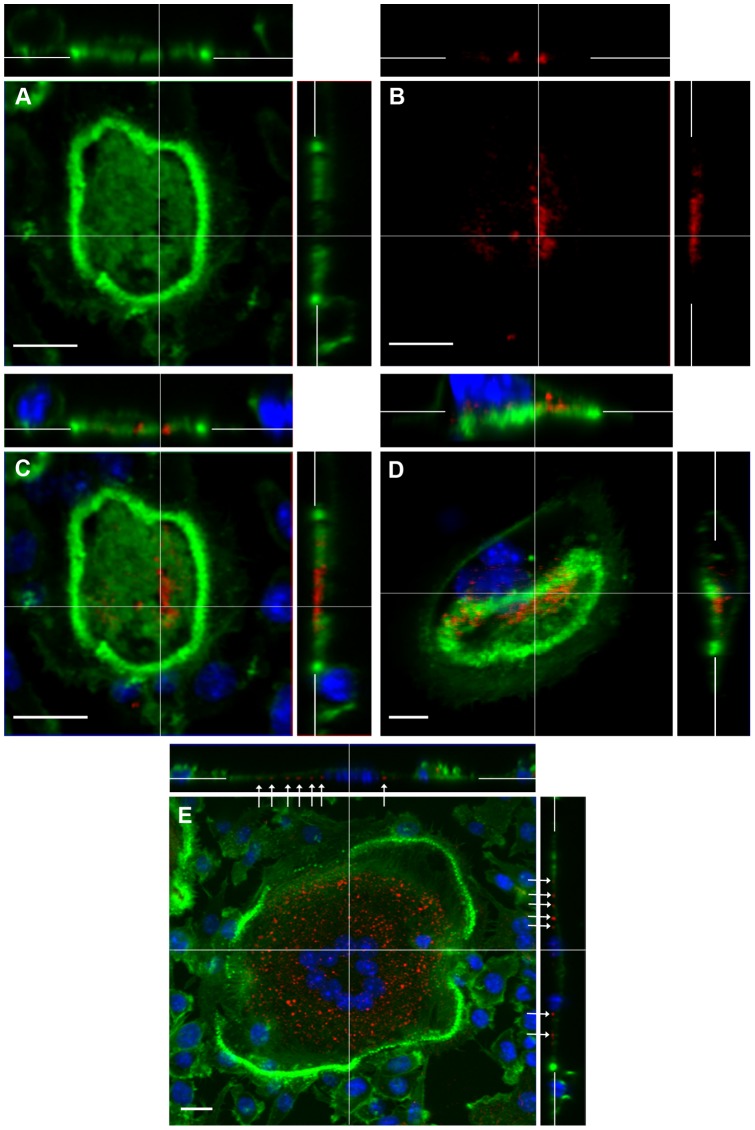
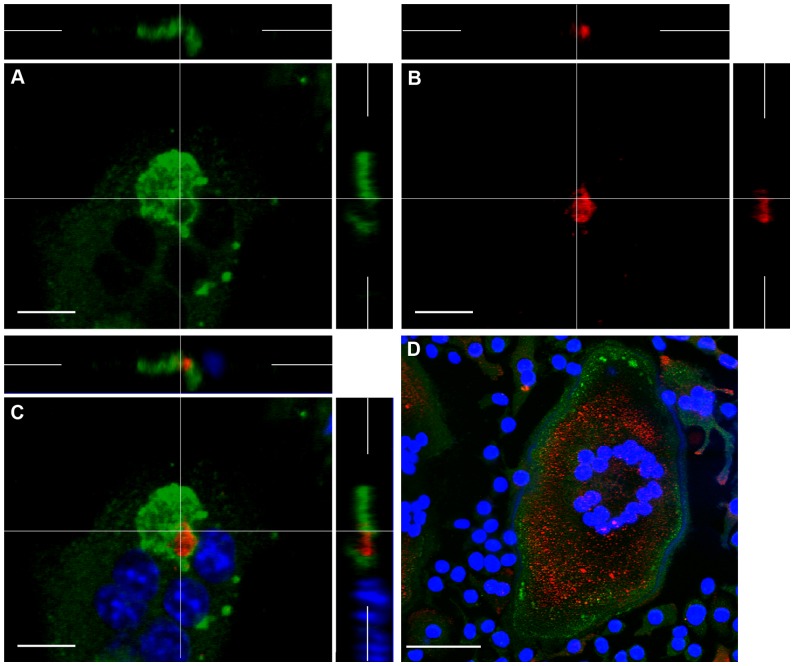
We employed a novel technique to inspect the substrate-apposed surface of activated osteoclasts, the cells that resorb bone, in the scanning electron microscope. The surface revealed unexpected complexity. At the periphery of the cells were circles and crescents of individual or confluent nodules. These corresponded to the podosomes and actin rings that form a 'sealing zone', encircling the resorptive hemivacuole into which protons and enzymes are secreted. Inside these rings and crescents the osteoclast surface was covered with strips and patches of membrane folds, which were flattened against the substrate surface and surrounded by fold-free membrane in which many orifices could be seen. Corresponding regions of folded and fold-free membrane were found by transmission electron microscopy in osteoclasts incubated on bone. We correlated these patterns with the distribution of several proteins crucial to resorption. The strips and patches of membrane folds corresponded in distribution to vacuolar H+-ATPase, and frequently co-localized with F-actin. Cathepsin K localized to F-actin-free foci towards the center of cells with circular actin rings, and at the retreating pole of cells with actin crescents. The chloride/proton antiporter ClC-7 formed a sharply-defined band immediately inside the actin ring, peripheral to vacuolar H+-ATPase. The sealing zone of osteoclasts is permeable to molecules with molecular mass up to 10,000. Therefore, ClC-7 might be distributed at the periphery of the resorptive hemivacuole in order to prevent protons from escaping laterally from the hemivacuole into the sealing zone, where they would dissolve the bone mineral. Since the activation of resorption is attributable to recognition of the αVβ3 ligands bound to bone mineral, such leakage would, by dissolving bone mineral, release the ligands and so terminate resorption. Therefore, ClC-7 might serve not only to provide the counter-ions that enable proton pumping, but also to facilitate resorption by acting as a 'functional sealing zone'.
我们采用一种新的技术,在扫描电子显微镜下观察了破骨细胞(吸收骨头的细胞)的衬底附着表面。该表面显示出出乎意料的复杂性。在细胞的外周,是单独的或融合的结节的圆圈和新月形。这些对应于形成“密封区”的足突和肌动蛋白环,该密封区包围着质子和酶分泌的吸收半液泡。在这些环和新月形的内部,破骨细胞表面覆盖着膜折叠的条带和斑块,这些膜折叠的条带和斑块被压在衬底表面上,并被无折叠膜包围,在无折叠膜中可以看到许多孔。在孵育在骨上的破骨细胞中,通过透射电子显微镜发现了这些折叠和无折叠膜的对应区域。我们将这些模式与对吸收至关重要的几种蛋白质的分布相关联。膜折叠的条带和斑块的分布与液泡 H+-ATP 酶相对应,并且经常与 F-肌动蛋白共定位。组织蛋白酶 K 定位于具有圆形肌动蛋白环的细胞的中心的 F-肌动蛋白自由焦点,以及具有肌动蛋白新月形的细胞的退缩极。氯离子/质子反向转运蛋白 ClC-7 在肌动蛋白环的内部,即在液泡 H+-ATP 酶的外围,形成一个清晰的带。破骨细胞的密封区允许分子量高达 10,000 的分子通过。因此,ClC-7 可能分布在吸收半液泡的外围,以防止质子从半液泡侧向逸出到密封区,在密封区中,它们会溶解骨矿物质。由于吸收的激活归因于识别与骨矿物质结合的αVβ3 配体,因此这种泄漏会通过溶解骨矿物质释放配体并因此终止吸收。因此,ClC-7 不仅可以提供使质子泵浦成为可能的抗衡离子,而且还可以作为“功能密封区”来促进吸收。