Umeå Plant Science Centre, Department of Plant Physiology, Umeå University, Umeå, Sweden.
PLoS One. 2013;8(3):e60305. doi: 10.1371/journal.pone.0060305. Epub 2013 Mar 29.
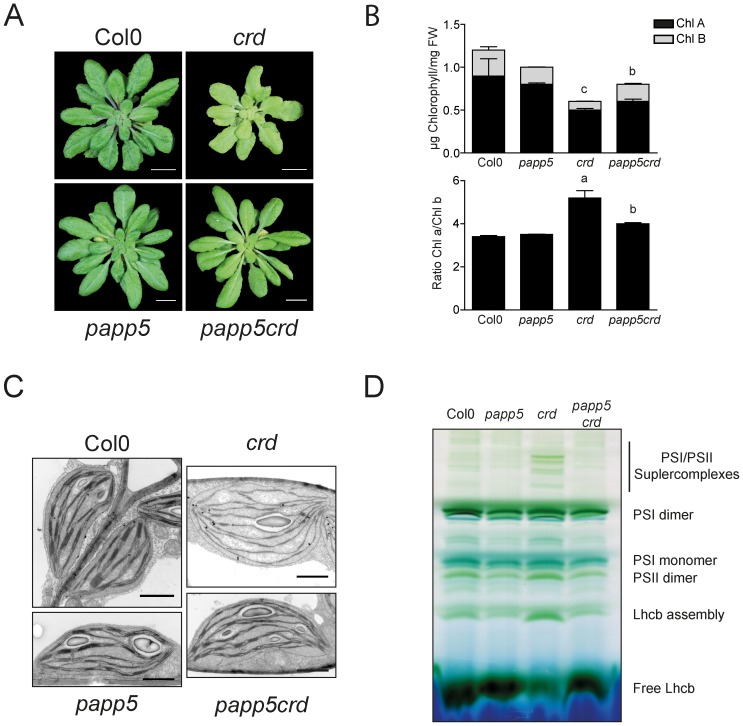
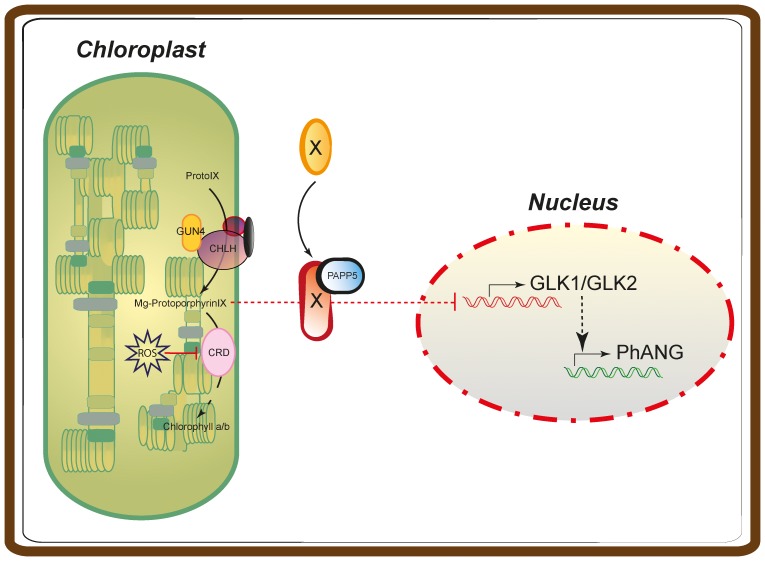
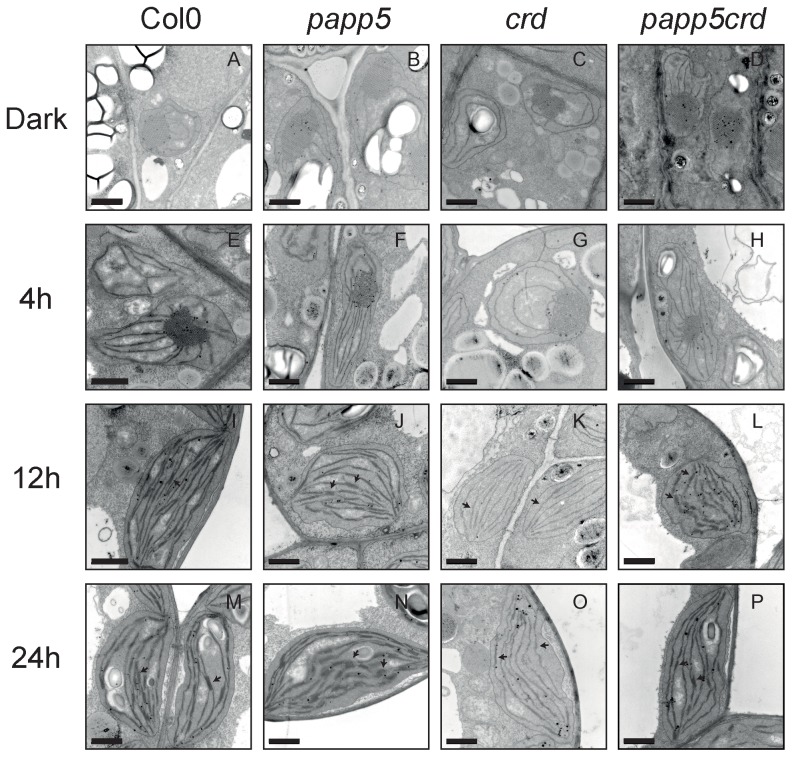
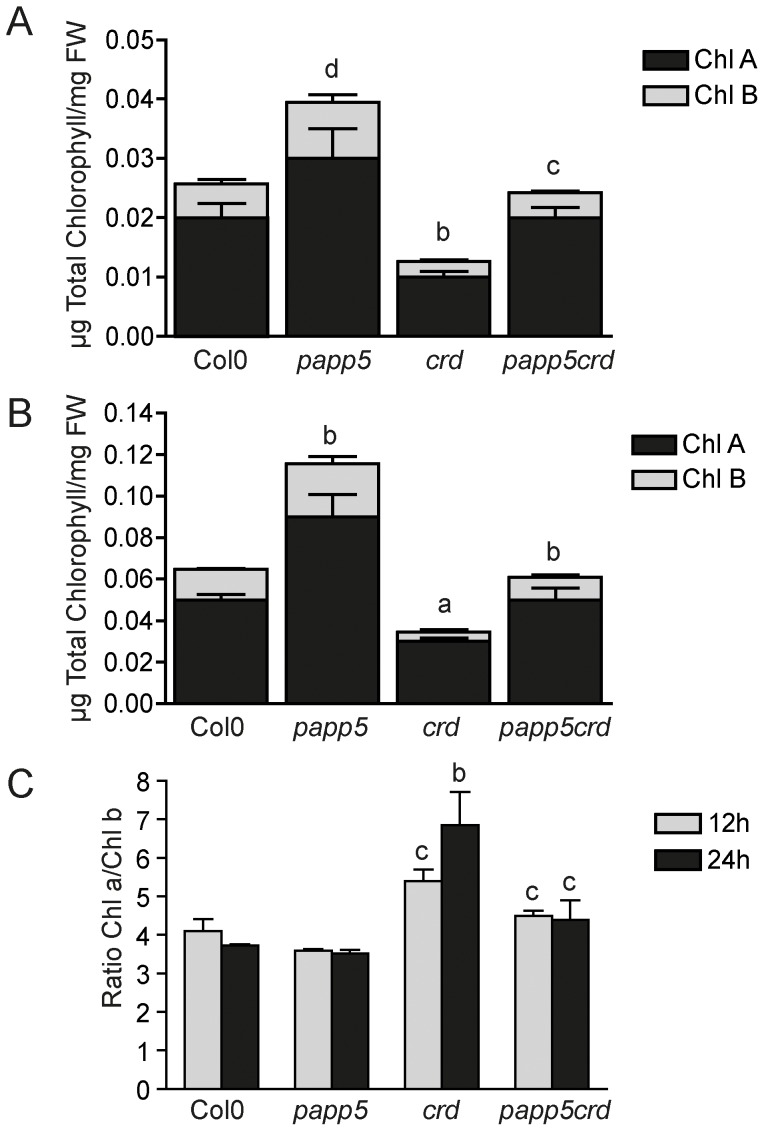
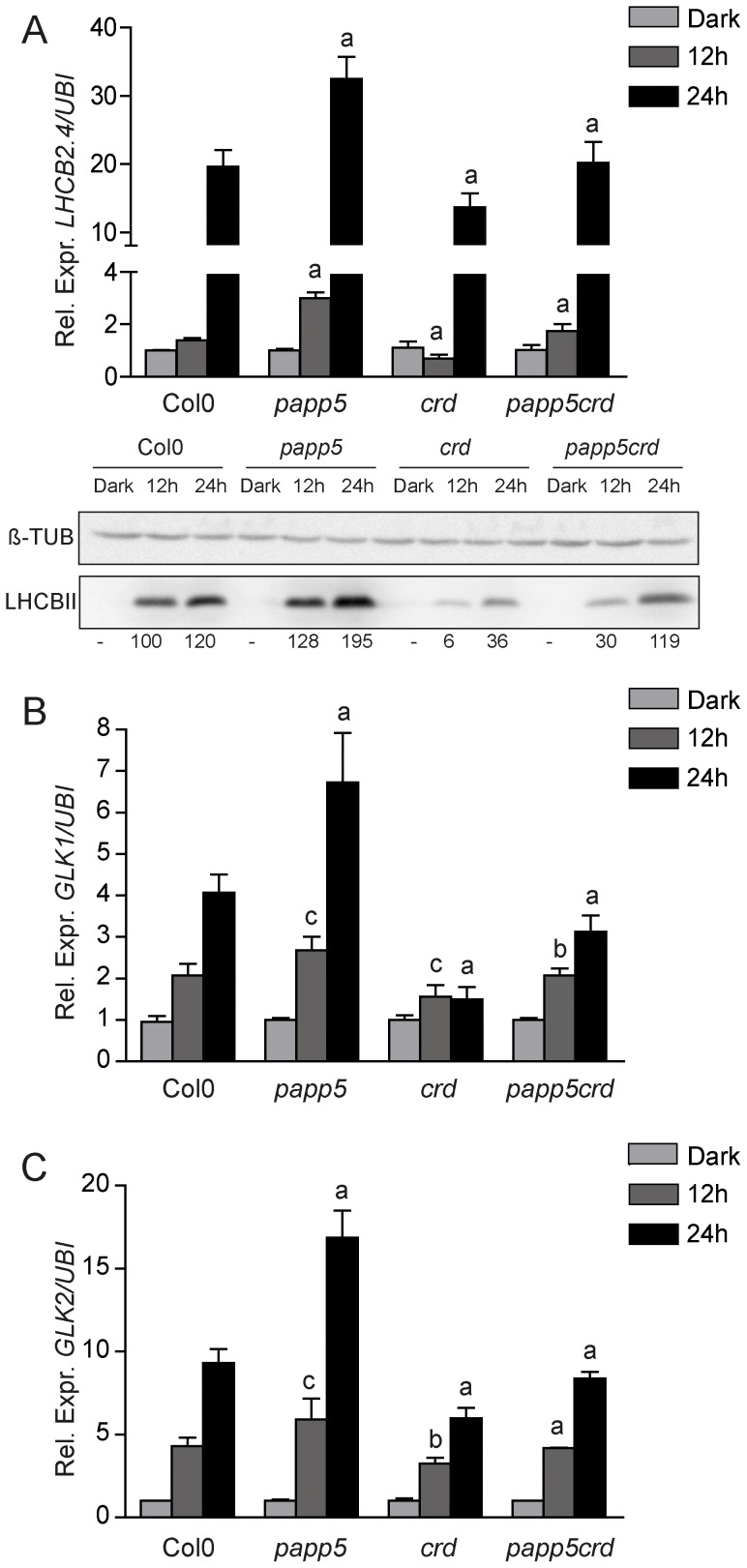
The initiation of chloroplast development in the light is dependent on nuclear encoded components. The nuclear genes encoding key components in the photosynthetic machinery are regulated by signals originating in the plastids. These plastid signals play an essential role in the regulation of photosynthesis associated nuclear genes (PhANGs) when proplastids develop into chloroplasts. One of the plastid signals is linked to the tetrapyrrole biosynthesis and accumulation of the intermediates the Mg-ProtoIX and its methyl ester Mg-ProtoIX-ME. Phytochrome-Associated Protein Phosphatase 5 (PAPP5) was isolated in a previous study as a putative Mg-ProtoIX interacting protein. In order to elucidate if there is a biological link between PAPP5 and the tetrapyrrole mediated signal we generated double mutants between the Arabidopsis papp5 and the crd mutants. The crd mutant over-accumulates Mg-ProtoIX and Mg-ProtoIX-ME and the tetrapyrrole accumulation triggers retrograde signalling. The crd mutant exhibits repression of PhANG expression, altered chloroplast morphology and a pale phenotype. However, in the papp5crd double mutant, the crd phenotype is restored and papp5crd accumulated wild type levels of chlorophyll, developed proper chloroplasts and showed normal induction of PhANG expression in response to light. Tetrapyrrole feeding experiments showed that PAPP5 is required to respond correctly to accumulation of tetrapyrroles in the cell and that PAPP5 is most likely a component in the plastid signalling pathway down stream of the tetrapyrrole Mg-ProtoIX/Mg-ProtoIX-ME. Inhibition of phosphatase activity phenocopied the papp5crd phenotype in the crd single mutant demonstrating that PAPP5 phosphatase activity is essential to mediate the retrograde signal and to suppress PhANG expression in the crd mutant. Thus, our results suggest that PAPP5 receives an inbalance in the tetrapyrrole biosynthesis through the accumulation of Mg-ProtoIX and acts as a negative regulator of PhANG expression during chloroplast biogenesis and development.
叶绿体在光下的发育起始依赖于核编码成分。编码光合机器关键成分的核基因受来自质体的信号调控。这些质体信号在原质体发育成叶绿体时,对光合作用相关核基因(PhANGs)的调节起着至关重要的作用。其中一个质体信号与四吡咯生物合成以及中间产物 Mg-ProtoIX 和其甲酯 Mg-ProtoIX-ME 的积累有关。在之前的研究中,类光敏色素相关蛋白磷酸酶 5(PAPP5)被分离出来,作为一个假定的 Mg-ProtoIX 相互作用蛋白。为了阐明 PAPP5 和四吡咯介导的信号之间是否存在生物学联系,我们在拟南芥 papp5 和 crd 突变体之间生成了双突变体。crd 突变体过度积累 Mg-ProtoIX 和 Mg-ProtoIX-ME,四吡咯的积累会引发逆行信号。crd 突变体表现出 PhANG 表达受抑制、叶绿体形态改变和表型苍白。然而,在 papp5crd 双突变体中,crd 表型得到恢复,papp5crd 积累了野生型水平的叶绿素,发育出正常的叶绿体,并对光诱导的 PhANG 表达表现出正常的诱导。四吡咯喂养实验表明,PAPP5 是细胞内四吡咯积累时正确反应所必需的,并且 PAPP5 很可能是四吡咯 Mg-ProtoIX/Mg-ProtoIX-ME 下游质体信号通路的一个组成部分。磷酸酶活性的抑制模仿了 crd 单突变体中 papp5crd 的表型,表明 PAPP5 磷酸酶活性对于介导逆行信号和抑制 crd 突变体中 PhANG 的表达是必不可少的。因此,我们的结果表明,PAPP5 通过 Mg-ProtoIX 的积累接收到四吡咯生物合成的不平衡,并在叶绿体发生和发育过程中作为 PhANG 表达的负调节剂。