EA4666, Laboratoire d'Immunologie, Université de Picardie Jules Verne, UFR de Médecine, Amiens, France.
PLoS One. 2013;8(3):e60370. doi: 10.1371/journal.pone.0060370. Epub 2013 Mar 26.
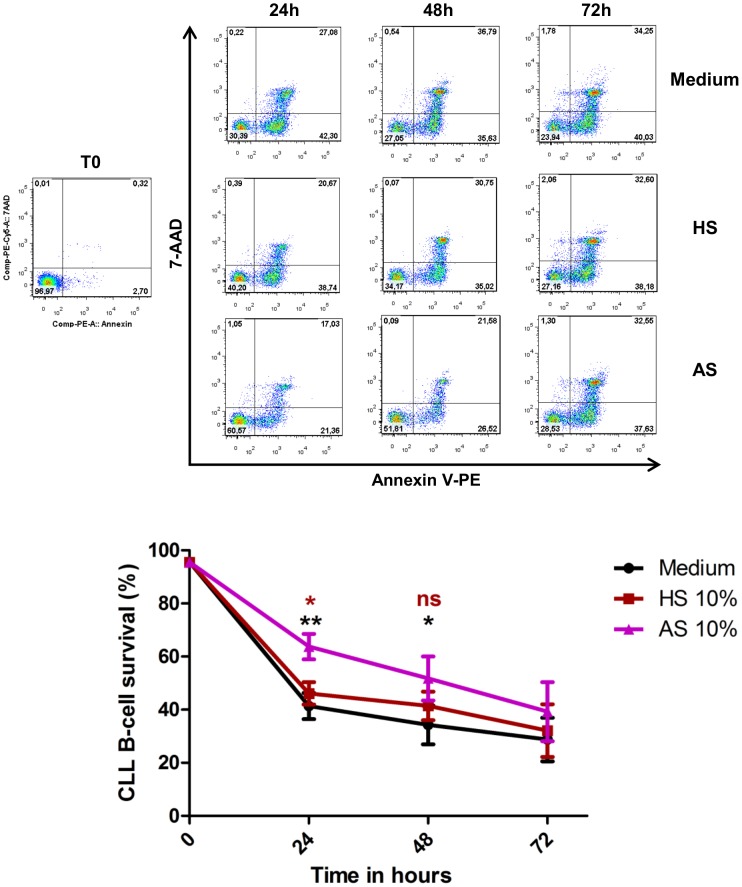
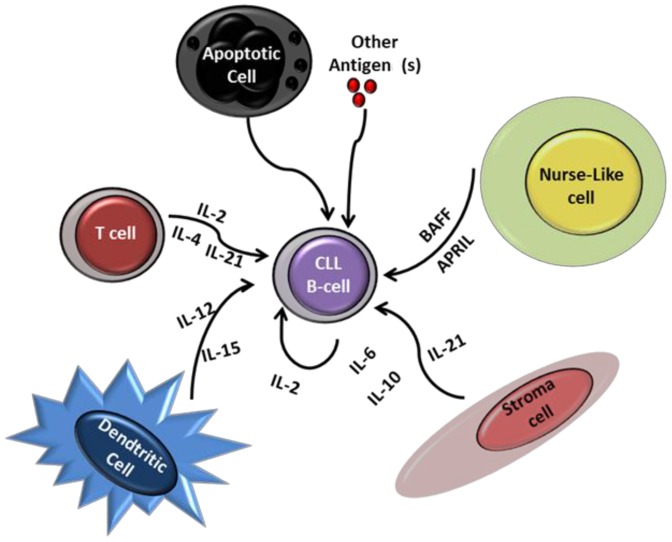
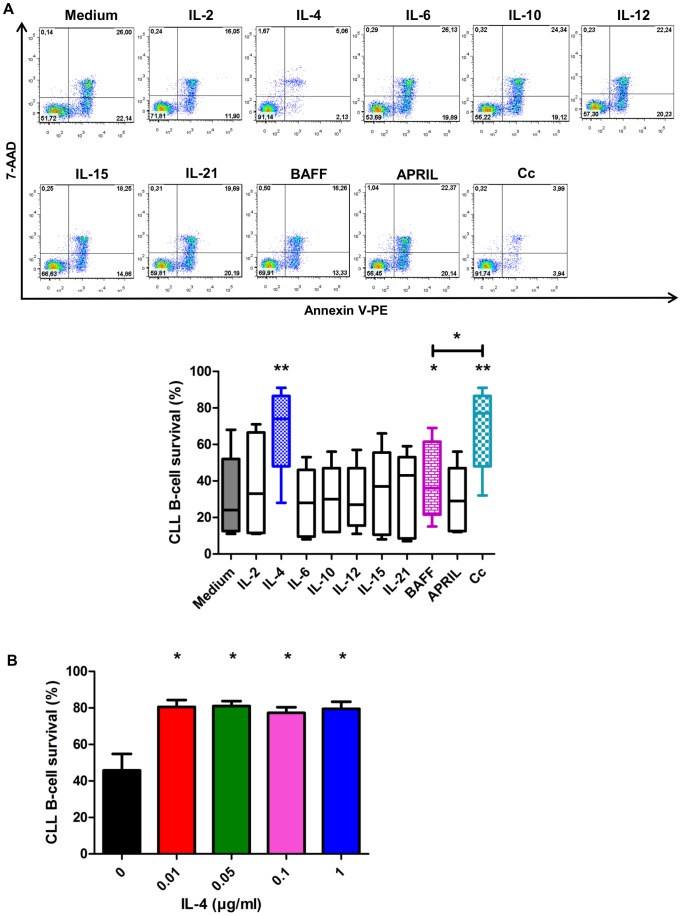
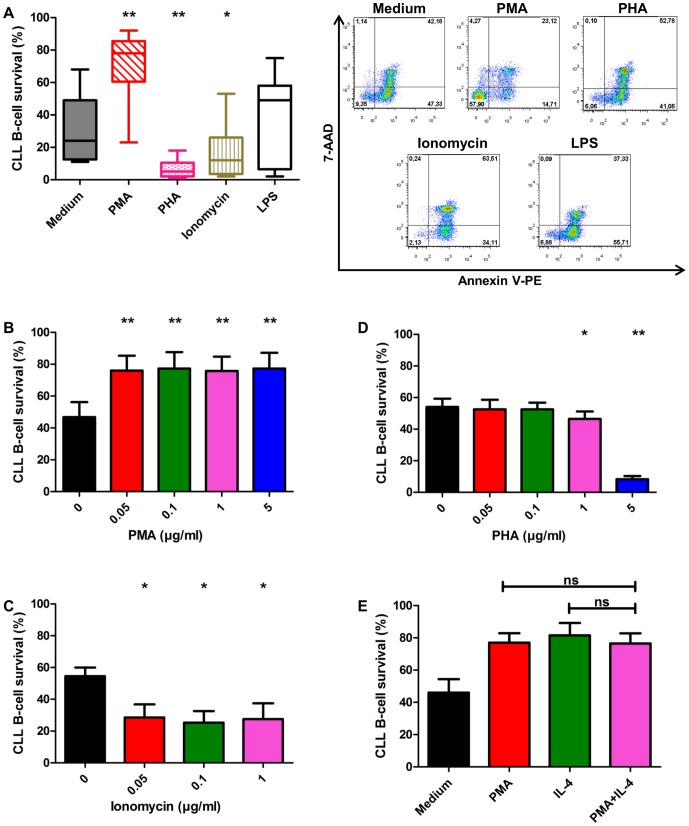
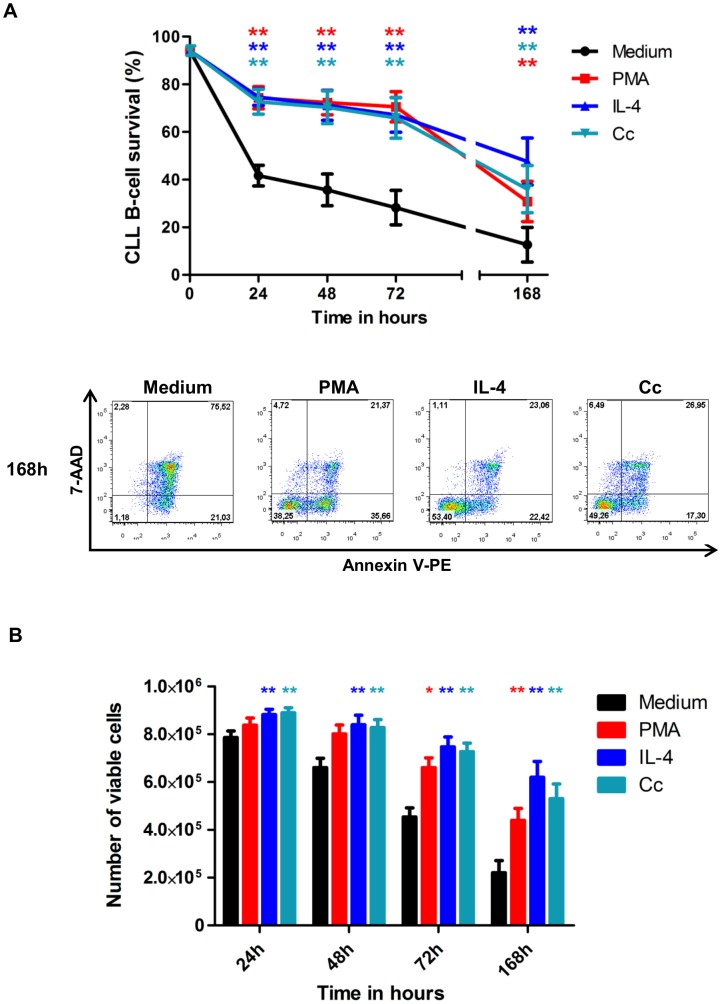
B-chronic lymphocytic leukemia (B-CLL), the most common human leukemia, is characterized by predominantly non-dividing malignant mature CD5+ B lymphocytes with an apoptosis defect. Various microenvironmental stimuli confer a growth advantage on these leukemic cells and extend their survival in vivo. Nevertheless, when cultured in vitro, CLL B-cells rapidly die from apoptosis. Certain cytokines may extend the survival capacity of CLL B-cells in vitro and individual anti-apoptotic effects of several cytokines have been reported. The potential cumulative effect of such cytokines has not been studied. We therefore investigated the effects on CLL B-cells survival in vitro of humoral factors, polyclonal lymphocyte activators and a combination of cytokines known for their anti-apoptotic effects. Purified CLL B-cells were cultured in the presence or absence of various soluble molecules and the leukemic cell response was assessed in terms of viability. Apoptotic cell death was detected by flow cytometry using annexinV and 7-amino-actinomycin. The survival of CLL B-cells in vitro was highly variable. When tested separately, cytokines (IL-2, -6, -10, -12, -15, -21, BAFF and APRIL) improved CLL B cell survival moderately; in combination, they significantly enhanced survival of these cells, even up to 7 days of culture. We also report that humoral factors from autologous serum are important for survival of these malignant cells. Our findings support the concept that the CLL microenvironment is critical and suggest that soluble factors may contribute directly to the prolonged survival of CLL B-cells. Therefore, the combination of cytokines we describe as providing strong resistance to apoptosis in vitro might be used to improve the treatment of CLL.
B 慢性淋巴细胞白血病(B-CLL)是最常见的人类白血病,其特征是主要由非分裂性恶性成熟 CD5+B 淋巴细胞组成,这些细胞存在凋亡缺陷。各种微环境刺激赋予这些白血病细胞生长优势,并延长其在体内的存活时间。然而,当在体外培养时,CLL B 细胞会迅速因凋亡而死亡。某些细胞因子可能会延长 CLL B 细胞在体外的存活能力,并且已经报道了几种细胞因子的个体抗凋亡作用。这些细胞因子的潜在累积效应尚未得到研究。因此,我们研究了体液因子、多克隆淋巴细胞激活剂以及已知具有抗凋亡作用的细胞因子组合对 CLL B 细胞体外存活的影响。在存在或不存在各种可溶性分子的情况下培养纯化的 CLL B 细胞,并根据细胞活力评估白血病细胞的反应。通过使用膜联蛋白 V 和 7-氨基放线菌素检测凋亡细胞死亡。CLL B 细胞在体外的存活具有高度可变性。当分别测试时,细胞因子(IL-2、-6、-10、-12、-15、-21、BAFF 和 APRIL)适度改善 CLL B 细胞的存活;联合使用时,这些细胞的存活显著增强,甚至在培养 7 天时也是如此。我们还报告说,来自自体血清的体液因子对这些恶性细胞的存活很重要。我们的发现支持 CLL 微环境至关重要的概念,并表明可溶性因子可能直接有助于 CLL B 细胞的长期存活。因此,我们描述的细胞因子组合可提供体外强烈的抗凋亡作用,可用于改善 CLL 的治疗。