Institute for Biomedical Aging Research, Austrian Academy of Sciences, Rennweg 10, Innsbruck 6020, Austria.
BMC Genomics. 2013 Apr 4;14:224. doi: 10.1186/1471-2164-14-224.
Cellular senescence can be induced by a variety of extrinsic stimuli, and sustained exposure to sunlight is a key factor in photoaging of the skin. Accordingly, irradiation of skin fibroblasts by UVB light triggers cellular senescence, which is thought to contribute to extrinsic skin aging, although molecular mechanisms are incompletely understood. Here, we addressed molecular mechanisms underlying UVB induced senescence of human diploid fibroblasts.
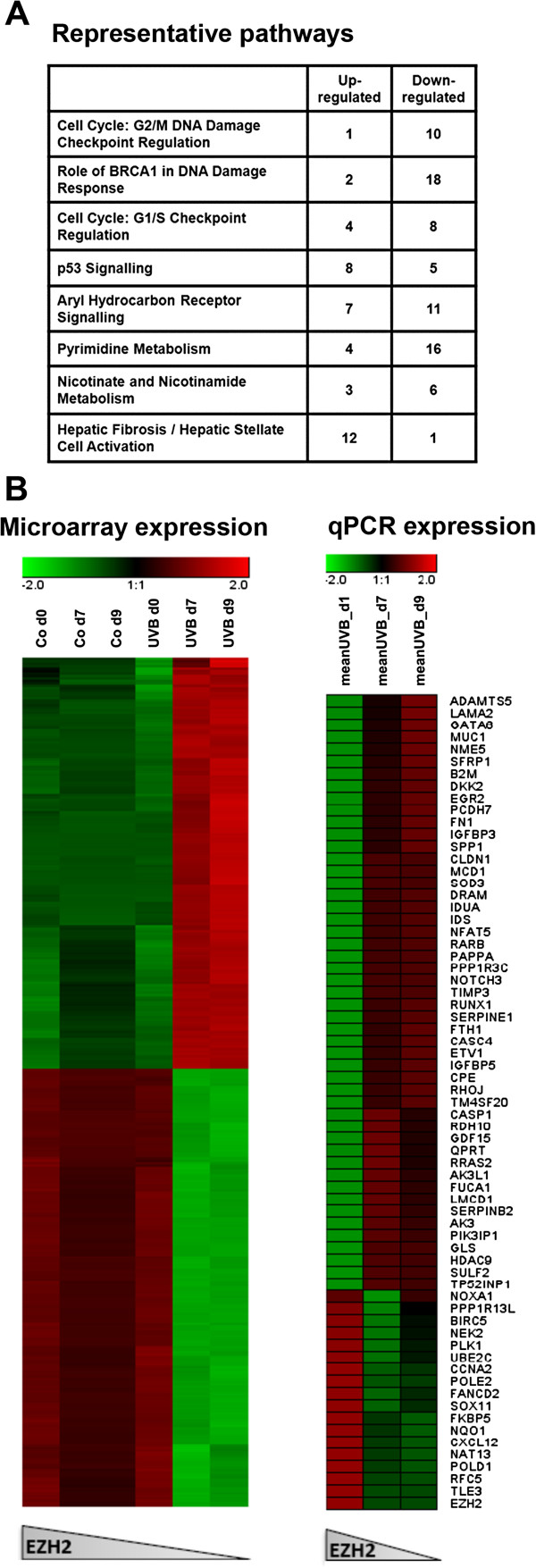
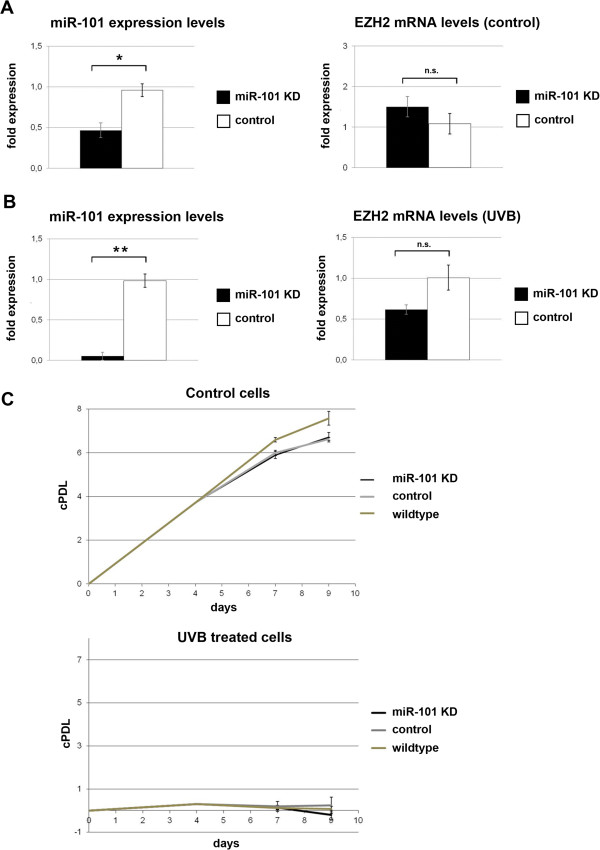
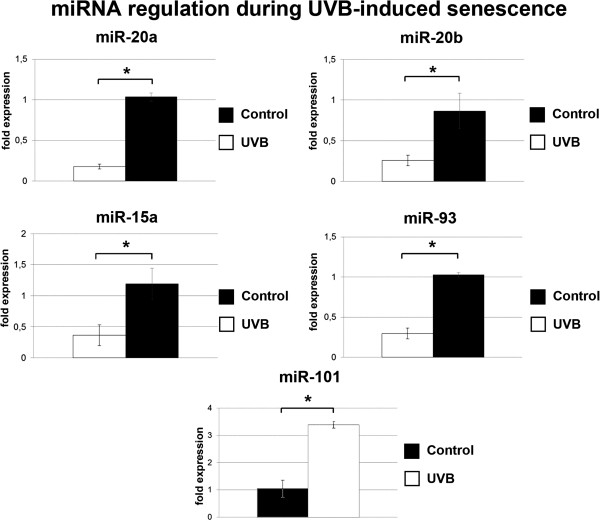
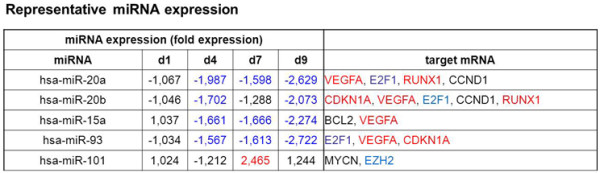
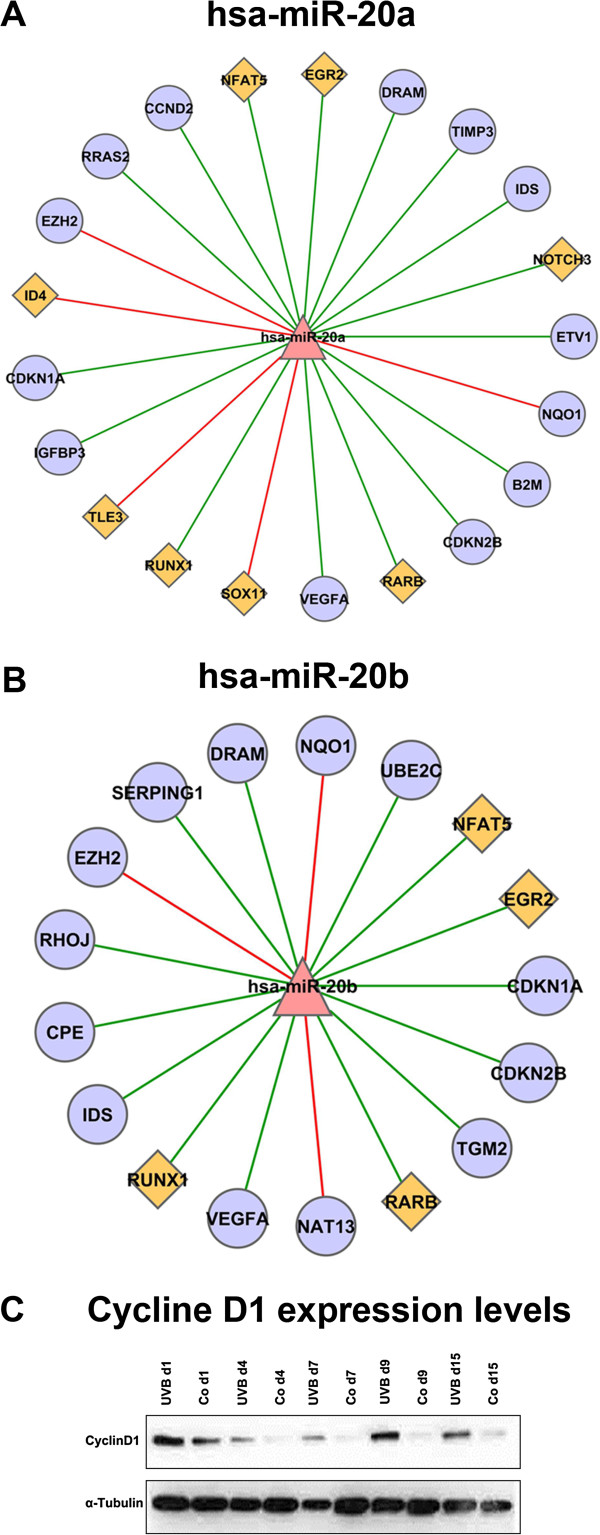
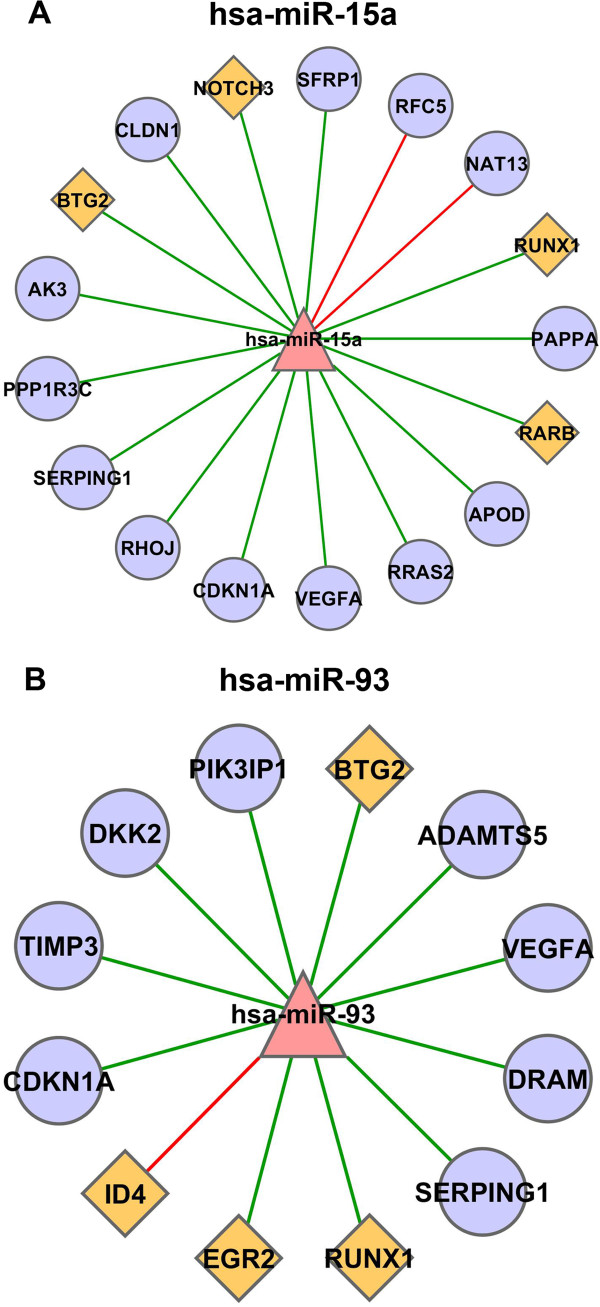
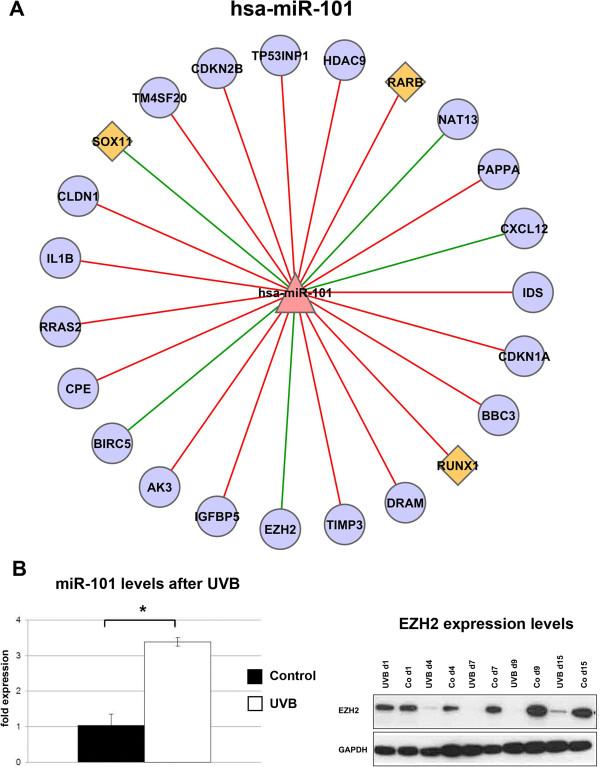
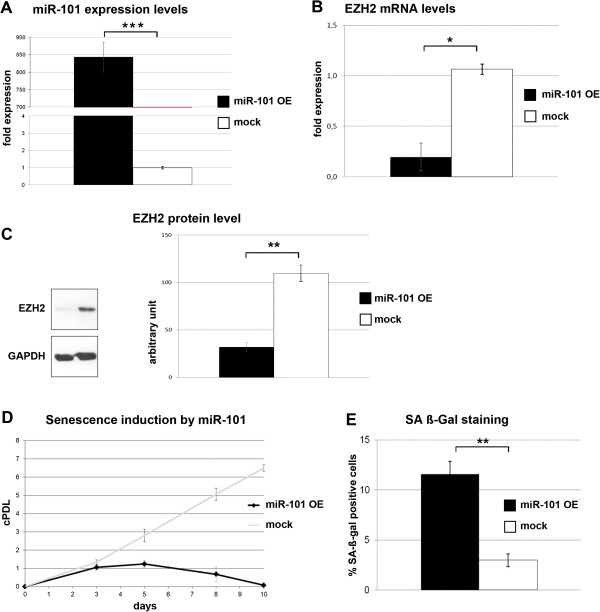
We observed a parallel activation of the p53/p21(WAF1) and p16(INK4a)/pRb pathways. Using genome-wide transcriptome analysis, we identified a transcriptional signature of UVB-induced senescence that was conserved in three independent strains of human diploid fibroblasts (HDF) from skin. In parallel, a comprehensive screen for microRNAs regulated during UVB-induced senescence was performed which identified five microRNAs that are significantly regulated during the process. Bioinformatic analysis of miRNA-mRNA networks was performed to identify new functional mRNA targets with high confidence for miR-15a, miR-20a, miR-20b, miR-93, and miR-101. Already known targets of these miRNAs were identified in each case, validating the approach. Several new targets were identified for all of these miRNAs, with the potential to provide new insight in the process of UVB-induced senescence at a genome-wide level. Subsequent analysis was focused on miR-101 and its putative target gene Ezh2. We confirmed that Ezh2 is regulated by miR-101 in human fibroblasts, and found that both overexpression of miR-101 and downregulation of Ezh2 independently induce senescence in the absence of UVB irradiation. However, the downregulation of miR-101 was not sufficient to block the phenotype of UVB-induced senescence, suggesting that other UVB-induced processes induce the senescence response in a pathway redundant with upregulation of miR-101.
We performed a comprehensive screen for UVB-regulated microRNAs in human diploid fibroblasts, and identified a network of miRNA-mRNA interactions mediating UVB-induced senescence. In addition, miR-101 and Ezh2 were identified as key players in UVB-induced senescence of HDF.
细胞衰老可由多种外在刺激诱导,而持续暴露于阳光是皮肤光老化的关键因素。因此,UVB 光对皮肤成纤维细胞的照射会引发细胞衰老,这被认为是导致外在皮肤老化的原因,尽管其分子机制尚不完全清楚。在这里,我们研究了 UVB 诱导人二倍体成纤维细胞衰老的分子机制。
我们观察到 p53/p21(WAF1) 和 p16(INK4a)/pRb 途径的平行激活。使用全基因组转录组分析,我们在来自皮肤的三种独立的人二倍体成纤维细胞(HDF)株中鉴定出了一个与 UVB 诱导的衰老相关的转录本特征。与此同时,我们进行了一个全面的筛选,以确定在 UVB 诱导的衰老过程中受调控的 microRNAs,结果鉴定出了五个在该过程中显著受调控的 microRNAs。对 miRNA-mRNA 网络的生物信息学分析,用于鉴定 miR-15a、miR-20a、miR-20b、miR-93 和 miR-101 的高可信度新功能 mRNA 靶标。在每种情况下都鉴定出了这些 miRNA 的已有靶标,验证了该方法的有效性。对于所有这些 miRNA,都鉴定出了一些新的靶标,这可能为全基因组水平的 UVB 诱导的衰老过程提供新的见解。随后的分析集中在 miR-101 和其假定的靶基因 Ezh2 上。我们证实 Ezh2 受 HDF 中的 miR-101 调控,并发现 miR-101 的过表达和 Ezh2 的下调均可在没有 UVB 照射的情况下独立诱导衰老。然而,miR-101 的下调不足以阻止 UVB 诱导的衰老表型,这表明其他 UVB 诱导的过程通过与 miR-101 上调相关的冗余途径诱导衰老反应。
我们对人二倍体成纤维细胞中的 UVB 调节 microRNAs 进行了全面筛选,并鉴定出一个介导 UVB 诱导的衰老的 miRNA-mRNA 相互作用网络。此外,miR-101 和 Ezh2 被鉴定为 HDF 中 UVB 诱导衰老的关键因素。