
利用秀丽隐杆线虫模型研究人类代谢调控。
A C. elegans model to study human metabolic regulation.
机构信息
Laboratory of Developmental Biology, Center for Vector Biology, Rutgers University, 180 Jones Avenue, New Brunswick, NJ, 08901, USA.
出版信息
Nutr Metab (Lond). 2013 Apr 4;10(1):31. doi: 10.1186/1743-7075-10-31.
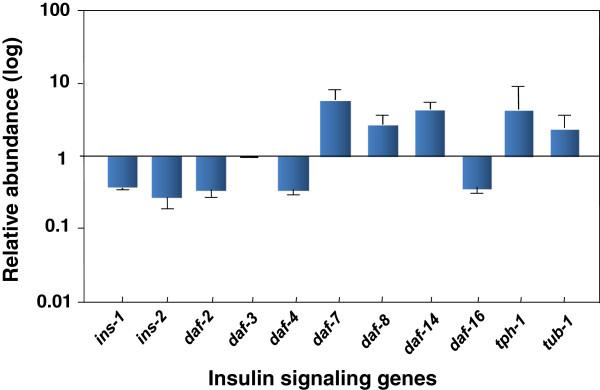
Lipid metabolic disorder is a critical risk factor for metabolic syndrome, triggering debilitating diseases like obesity and diabetes. Both obesity and diabetes are the epicenter of important medical issues, representing a major international public health threat. Accumulation of fat in adipose tissue, muscles and liver and/or the defects in their ability to metabolize fatty acids, results in insulin resistance. This triggers an early pathogenesis of type 2 diabetes (T2D). In mammals, lipid metabolism involves several organs, including the brain, adipose tissue, muscles, liver, and gut. These organs are part of complex homeostatic system and communicate through hormones, neurons and metabolites. Our study dissects the importance of mammalian Krüppel-like factors in over all energy homeostasis. Factors controlling energy metabolism are conserved between mammals and Caenorhabditis elegans providing a new and powerful strategy to delineate the molecular pathways that lead to metabolic disorder. The C. elegans intestine is our model system where genetics, molecular biology, and cell biology are used to identify and understand genes required in fat metabolism. Thus far, we have found an important role of C. elegans KLF in FA biosynthesis, mitochondrial proliferation, lipid secretion, and β-oxidation. The mechanism by which KLF controls these events in lipid metabolism is unknown. We have recently observed that C. elegans KLF-3 selectively acts on insulin components to regulate insulin pathway activity. There are many factors that control energy homeostasis and defects in this control system are implicated in the pathogenesis of human obesity and diabetes. In this review we are discussing a role of KLF in human metabolic regulation.
脂代谢紊乱是代谢综合征的一个关键风险因素,可引发肥胖症和糖尿病等使人衰弱的疾病。肥胖症和糖尿病都是重要医学问题的中心,代表着重大的国际公共卫生威胁。脂肪在脂肪组织、肌肉和肝脏中的积累和/或它们代谢脂肪酸的能力缺陷,导致胰岛素抵抗。这引发了 2 型糖尿病(T2D)的早期发病机制。在哺乳动物中,脂代谢涉及多个器官,包括大脑、脂肪组织、肌肉、肝脏和肠道。这些器官是复杂的体内平衡系统的一部分,通过激素、神经元和代谢物进行通讯。我们的研究剖析了哺乳动物 Krüppel 样因子在整体能量平衡中的重要性。控制能量代谢的因素在哺乳动物和秀丽隐杆线虫之间是保守的,为描绘导致代谢紊乱的分子途径提供了一种新的、强大的策略。秀丽隐杆线虫的肠道是我们的模型系统,在这里可以使用遗传学、分子生物学和细胞生物学来鉴定和理解脂肪代谢所需的基因。到目前为止,我们已经发现了秀丽隐杆线虫 KLF 在 FA 生物合成、线粒体增殖、脂质分泌和β-氧化中的重要作用。KLF 控制脂代谢中这些事件的机制尚不清楚。我们最近观察到,秀丽隐杆线虫 KLF-3 选择性作用于胰岛素成分,以调节胰岛素途径活性。有许多因素控制着能量平衡,而该控制系统的缺陷与人类肥胖症和糖尿病的发病机制有关。在这篇综述中,我们讨论了 KLF 在人类代谢调节中的作用。


 Zotero 插件