Holysz Hanna, Lipinska Natalia, Paszel-Jaworska Anna, Rubis Blazej
Department of Clinical Chemistry and Molecular Diagnostics, Poznan University of Medical Sciences, ul. Przybyszewskiego 49, 60-355, Poznan, Poland.
Tumour Biol. 2013 Jun;34(3):1371-80. doi: 10.1007/s13277-013-0757-4. Epub 2013 Apr 5.
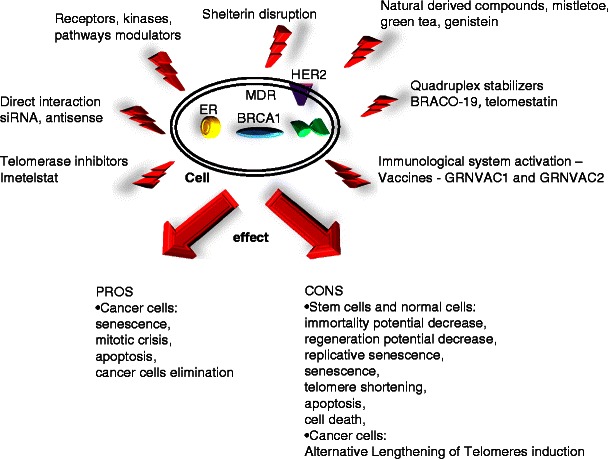
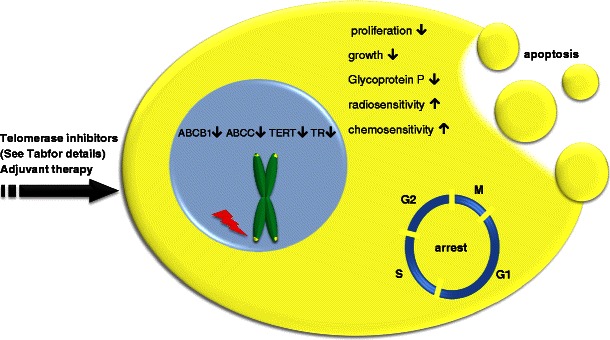
Telomerase was initially considered as a relevant factor distinguishing cancer from normal cells. During detailed studies, it appeared that its expression and activity is not only limited to cancer cells however, but in this particular cells, the telomerase is much more abundant. Thus, it has become a very promising target for an anticancer therapy. It was revealed in many studies that regulation of telomerase is a multifactorial process in mammalian cells, involving regulation of expression of telomerase subunits coding genes, post-translational protein-protein interactions, and protein phosphorylation. Numerous proto-oncogenes and tumor suppressor genes are engaged in this mechanism, and the complexity of telomerase control is studied in the context of tumor development as well as aging. Additionally, since numerous studies reveal a correlation between short telomeres and increased genome instability or cell mortality, the telomerase control appears to be one of the crucial factors to study in order to improve the cancer diagnostics and therapy or prevention. Interestingly, almost 100 % of adenocarcinoma, including breast cancer cells, expresses telomerase which makes it a good target for telomerase-related therapy. Additionally, telomerase is also supposed to be associated with drug resistance. Thus, targeting the enzyme might result in attenuation of this phenomenon. Moreover, since stem cells existence was reported, it must be considered whether targeting telomerase can bring some serious side effects and result in stem cells viability or their regenerative potential decrease. Thus, we review some molecular mechanisms engaged in therapy based on targeting telomerase in breast cancer cells.
端粒酶最初被认为是区分癌细胞与正常细胞的一个相关因素。在详细研究过程中发现,其表达和活性不仅限于癌细胞,然而在这些特定细胞中,端粒酶更为丰富。因此,它已成为抗癌治疗一个非常有前景的靶点。许多研究表明,在哺乳动物细胞中端粒酶的调控是一个多因素过程,涉及端粒酶亚基编码基因表达的调控、翻译后蛋白质 - 蛋白质相互作用以及蛋白质磷酸化。众多原癌基因和肿瘤抑制基因参与这一机制,并且在肿瘤发生发展以及衰老的背景下研究端粒酶控制的复杂性。此外,由于众多研究揭示了短端粒与基因组不稳定性增加或细胞死亡率之间的相关性,端粒酶控制似乎是为改善癌症诊断、治疗或预防而进行研究的关键因素之一。有趣的是,几乎100%的腺癌,包括乳腺癌细胞,都表达端粒酶,这使其成为端粒酶相关治疗的一个良好靶点。此外,端粒酶也被认为与耐药性有关。因此,靶向该酶可能会减弱这种现象。而且,自从报道了干细胞的存在后,必须考虑靶向端粒酶是否会带来一些严重的副作用并导致干细胞活力或其再生潜能下降。因此,我们综述了一些基于靶向乳腺癌细胞中端粒酶的治疗所涉及的分子机制。