Taheri Mohammad, Ghafouri-Fard Soudeh, Najafi Sajad, Kallenbach Julia, Keramatfar Elmira, Atri Roozbahani Golnaz, Heidari Horestani Mehdi, Hussen Bashdar Mahmud, Baniahmad Aria
Urology and Nephrology Research Center, Shahid Beheshti University of Medical Sciences, Tehran, Iran.
Institute of Human Genetics, Jena University Hospital, 07740, Jena, Germany.
Cancer Cell Int. 2022 Aug 16;22(1):258. doi: 10.1186/s12935-022-02678-9.
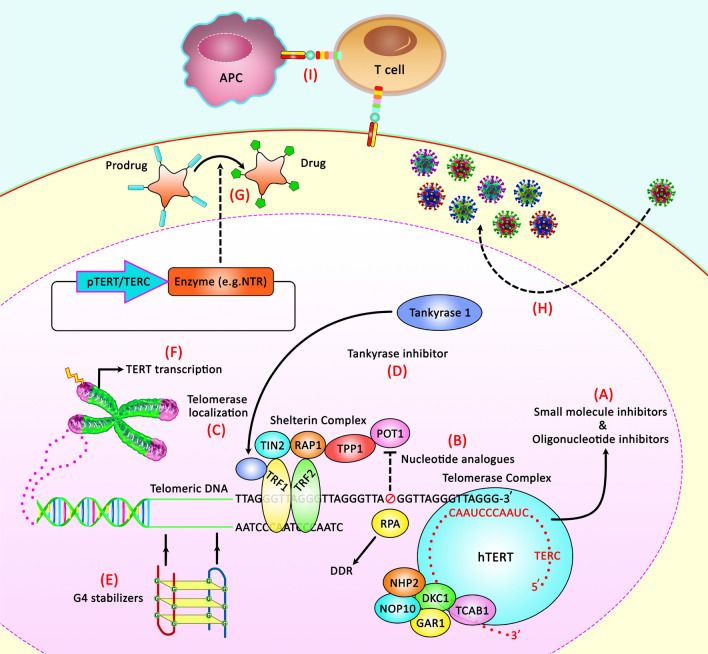
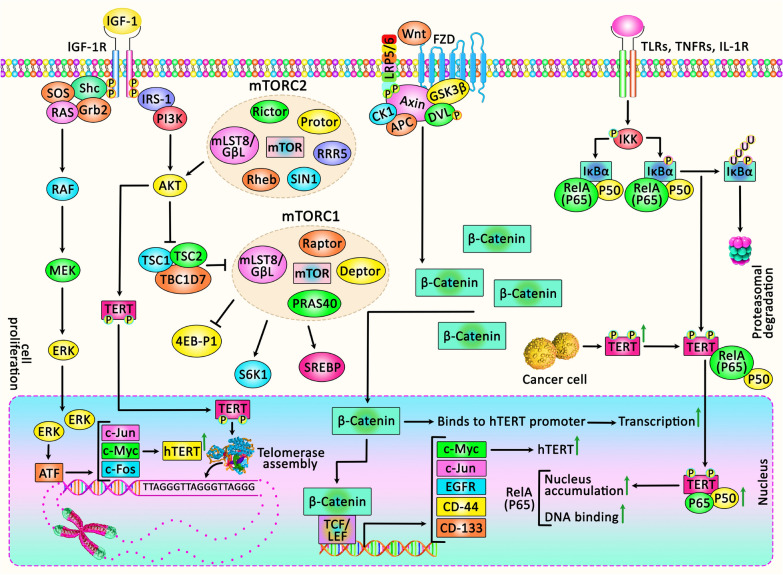
Naturally, in somatic cells chromosome ends (telomeres) shorten during each cell division. This process ensures to limit proliferation of somatic cells to avoid malignant proliferation; however, it leads to proliferative senescence. Telomerase contains the reverse transcriptase TERT, which together with the TERC component, is responsible for protection of genome integrity by preventing shortening of telomeres through adding repetitive sequences. In addition, telomerase has non-telomeric function and supports growth factor independent growth. Unlike somatic cells, telomerase is detectable in stem cells, germ line cells, and cancer cells to support self-renewal and expansion. Elevated telomerase activity is reported in almost all of human cancers. Increased expression of hTERT gene or its reactivation is required for limitless cellular proliferation in immortal malignant cells. In hormonally regulated tissues as well as in prostate, breast and endometrial cancers, telomerase activity and hTERT expression are under control of steroid sex hormones and growth factors. Also, a number of hormones and growth factors are known to play a role in the carcinogenesis via regulation of hTERT levels or telomerase activity. Understanding the role of hormones in interaction with telomerase may help finding therapeutical targets for anticancer strategies. In this review, we outline the roles and functions of several steroid hormones and growth factors in telomerase regulation, particularly in hormone regulated cancers such as prostate, breast and endometrial cancer.
自然情况下,在体细胞中,染色体末端(端粒)在每次细胞分裂过程中都会缩短。这一过程确保限制体细胞增殖以避免恶性增殖;然而,它会导致增殖性衰老。端粒酶含有逆转录酶TERT,其与TERC成分共同负责通过添加重复序列来防止端粒缩短,从而保护基因组完整性。此外,端粒酶具有非端粒功能,并支持不依赖生长因子的生长。与体细胞不同,端粒酶在干细胞、生殖系细胞和癌细胞中可检测到,以支持自我更新和扩增。几乎在所有人类癌症中都报道了端粒酶活性升高。永生化恶性细胞中无限的细胞增殖需要hTERT基因表达增加或其重新激活。在激素调节的组织以及前列腺癌、乳腺癌和子宫内膜癌中,端粒酶活性和hTERT表达受甾体性激素和生长因子的控制。此外,已知一些激素和生长因子通过调节hTERT水平或端粒酶活性在致癌过程中发挥作用。了解激素与端粒酶相互作用的作用可能有助于找到抗癌策略的治疗靶点。在这篇综述中,我们概述了几种甾体激素和生长因子在端粒酶调节中的作用和功能,特别是在激素调节的癌症如前列腺癌、乳腺癌和子宫内膜癌中的作用。