Lipinska Natalia, Romaniuk Aleksandra, Paszel-Jaworska Anna, Toton Ewa, Kopczynski Przemyslaw, Rubis Blazej
Department of Clinical Chemistry and Molecular Diagnostics, Poznan University of Medical Sciences, Poznan, Poland.
Centre for Orthodontic Mini-implants at the Department and Clinic of Maxillofacial Orthopedics and Orthodontics, Poznan University of Medical Sciences, Poznan, Poland.
Cell Mol Life Sci. 2017 Nov;74(22):4121-4132. doi: 10.1007/s00018-017-2573-2. Epub 2017 Jun 16.
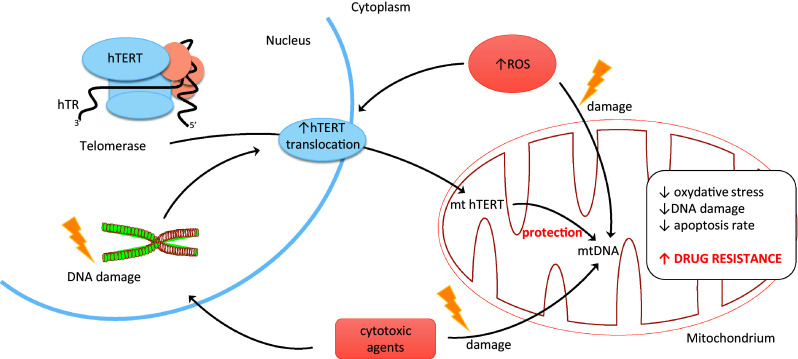
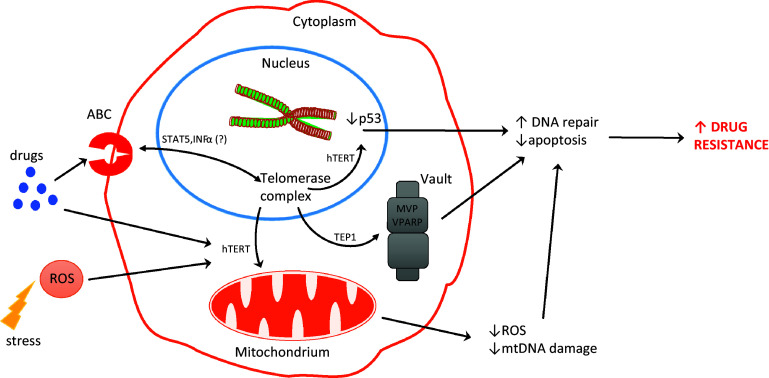
It is well known that a decreased expression or inhibited activity of telomerase in cancer cells is accompanied by an increased sensitivity to some drugs (e.g., doxorubicin, cisplatin, or 5-fluorouracil). However, the mechanism of the resistance resulting from telomerase alteration remains elusive. There are theories claiming that it might be associated with telomere shortening, genome instability, hTERT translocation, mitochondria functioning modulation, or even alterations in ABC family gene expression. However, association of those mechanisms, i.e., drug resistance and telomerase alterations, is not fully understood yet. We review the current theories on the aspect of the role of telomerase in cancer cells resistance to therapy. We believe that revealing/unravelling this correlation might significantly contribute to an increased efficiency of cancer cells elimination, especially the most difficult ones, i.e., drug resistant.
众所周知,癌细胞中端粒酶表达降低或活性受到抑制时,会对某些药物(如阿霉素、顺铂或5-氟尿嘧啶)的敏感性增加。然而,由端粒酶改变导致的耐药机制仍不清楚。有理论称,这可能与端粒缩短、基因组不稳定、hTERT易位、线粒体功能调节,甚至ABC家族基因表达改变有关。然而,这些机制(即耐药性和端粒酶改变)之间的关联尚未完全明了。我们综述了目前关于端粒酶在癌细胞对治疗耐药性方面作用的理论。我们认为,揭示这种相关性可能会显著提高癌细胞清除效率,尤其是最难清除的耐药癌细胞。