Velasco Ignacio, Soto Reinaldo
Department of Oral and Maxillofacial Surgery, Los Andes University, School of Dentistry, Santiago, Chile.
Dent Res J (Isfahan). 2012 Sep;9(5):535-40. doi: 10.4103/1735-3327.104870.
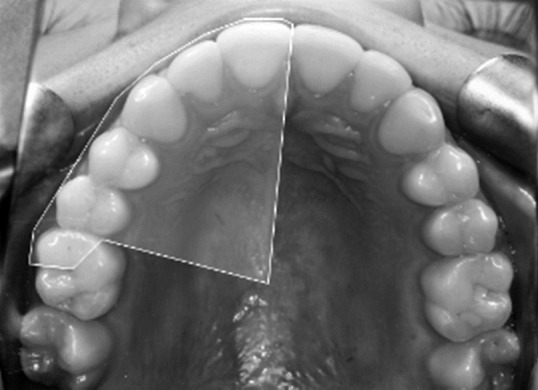
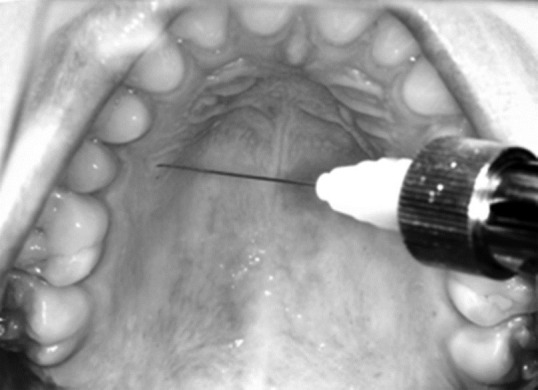
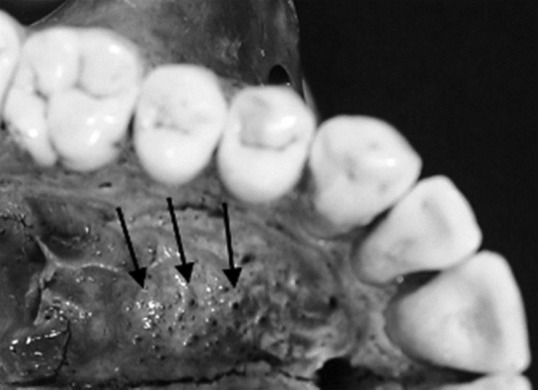
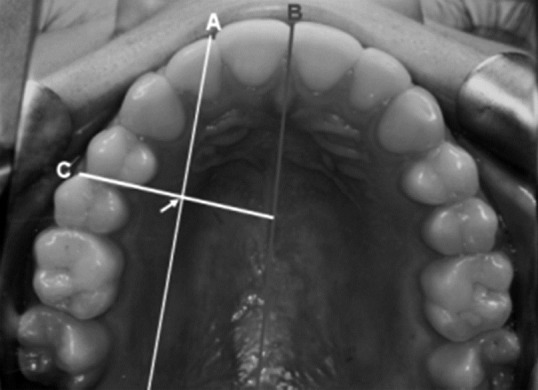
Dental procedures in the maxilla typically require multiple injections and may inadvertently anesthetize facial structures and affect the smile line. To minimize these inconveniences and reduce the number of total injections, a relatively new injection technique has been proposed for maxillary procedures, the anterior and middle superior alveolar (AMSA) nerve block, which achieves pulpal anesthesia from the central incisor to second premolar through palatal approach with a single injection. The purpose of this article is to provide background information on the anterior and middle superior alveolar nerve block and demonstrate its success rates of pulpal anesthesia using the conventional syringe.
Thirty Caucasian patients (16 men and 14 women) with an average age of 22 years-old, belonging to the School of Dentistry of Los Andes University, were selected. All the patients received an AMSA nerve block on one side of the maxilla using the conventional syringe, 1 ml of lidocaine 2% with epinephrine 1:100.000 was injected to all the patients.
The AMSA nerve block obtained a 66% anesthetic success in the second premolar, 40% in the first premolar, 60% in the canine, 23.3% in the lateral incisor, and 16.7% in the central incisor.
Because of the unpredictable anesthetic success of the experimental teeth and variable anesthesia duration, the technique is disadvantageous for clinical application as the first choice, counting with other techniques that have greater efficacy in the maxilla. Although, anesthetizing the teeth without numbing the facial muscles may be useful in restorative dentistry.
上颌部的牙科手术通常需要多次注射,可能会意外麻醉面部结构并影响微笑线。为了尽量减少这些不便并减少总注射次数,有人提出了一种用于上颌手术的相对较新的注射技术,即前中牙槽(AMSA)神经阻滞,该技术通过单次经腭部注射实现从中央门牙到第二前磨牙的牙髓麻醉。本文的目的是提供有关前中牙槽神经阻滞的背景信息,并展示使用传统注射器进行牙髓麻醉的成功率。
选取了30名平均年龄22岁的高加索患者(16名男性和14名女性),他们均来自洛斯安第斯大学牙科学院。所有患者均使用传统注射器在一侧上颌进行AMSA神经阻滞,向所有患者注射1毫升2%利多卡因加1:100000肾上腺素。
AMSA神经阻滞在第二前磨牙的麻醉成功率为66%,第一前磨牙为40%,尖牙为60%,侧切牙为23.3%,中切牙为16.7%。
由于实验牙齿的麻醉成功率不可预测且麻醉持续时间可变,与上颌部其他疗效更佳的技术相比,该技术作为首选在临床应用中存在劣势。不过,在修复牙科中,在不麻醉面部肌肉的情况下麻醉牙齿可能会有用。