European Molecular Biology Laboratory, Grenoble Outstation, Grenoble, France.
Nat Struct Mol Biol. 2013 May;20(5):604-10. doi: 10.1038/nsmb.2546. Epub 2013 Apr 7.
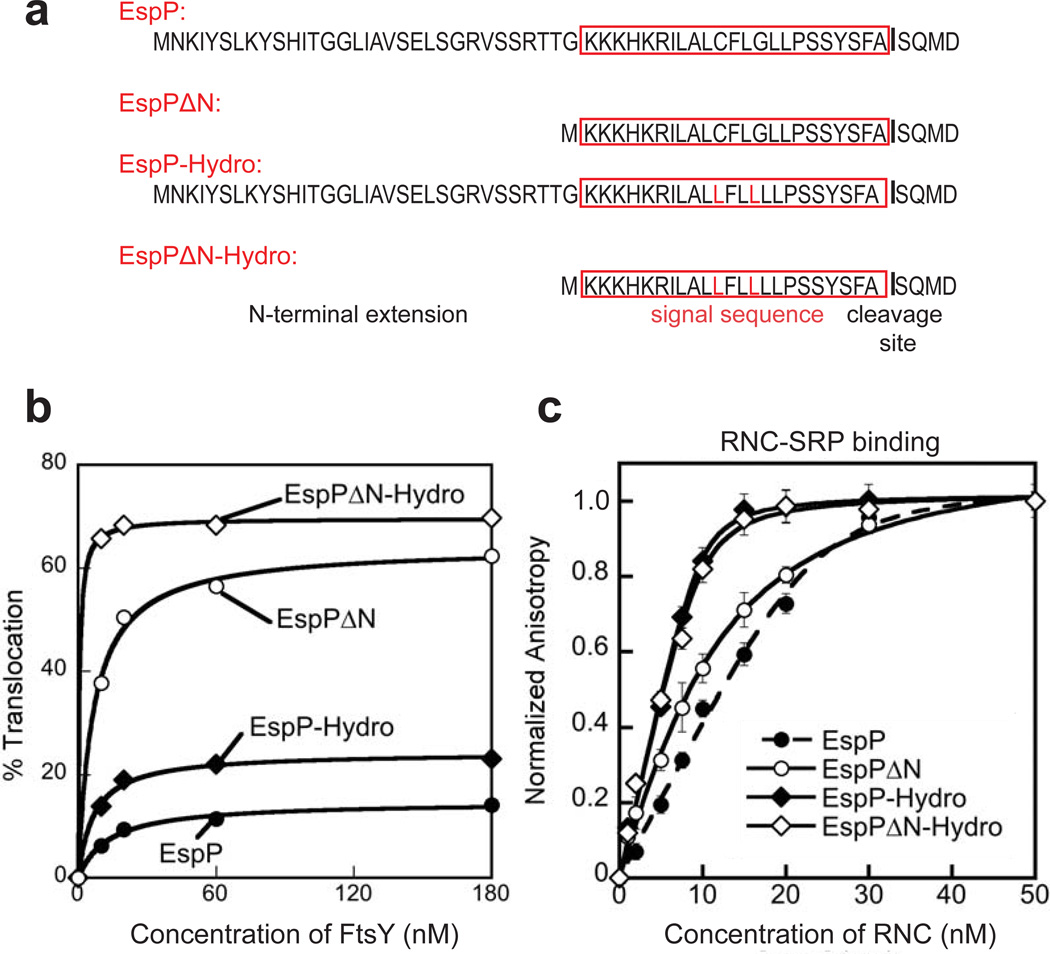
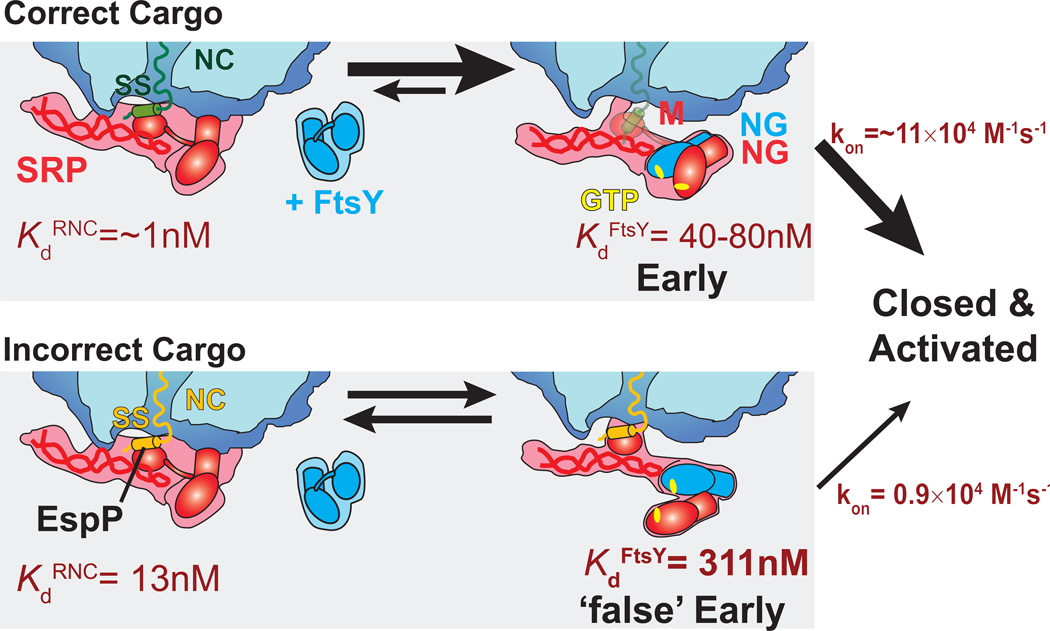
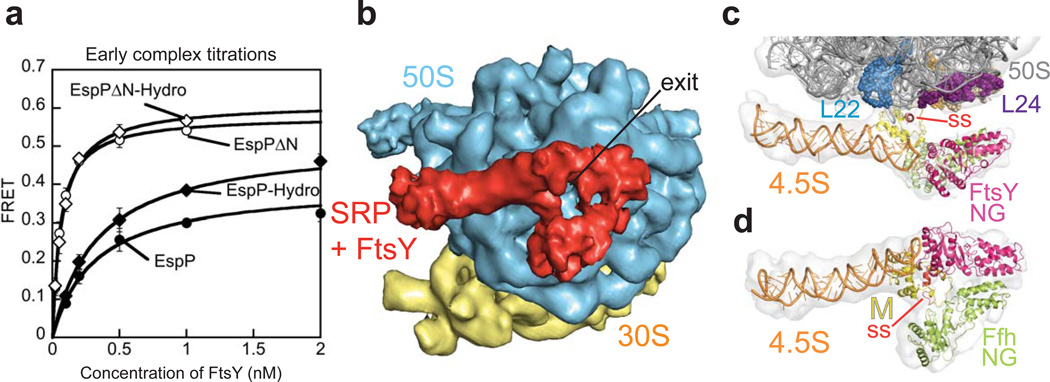
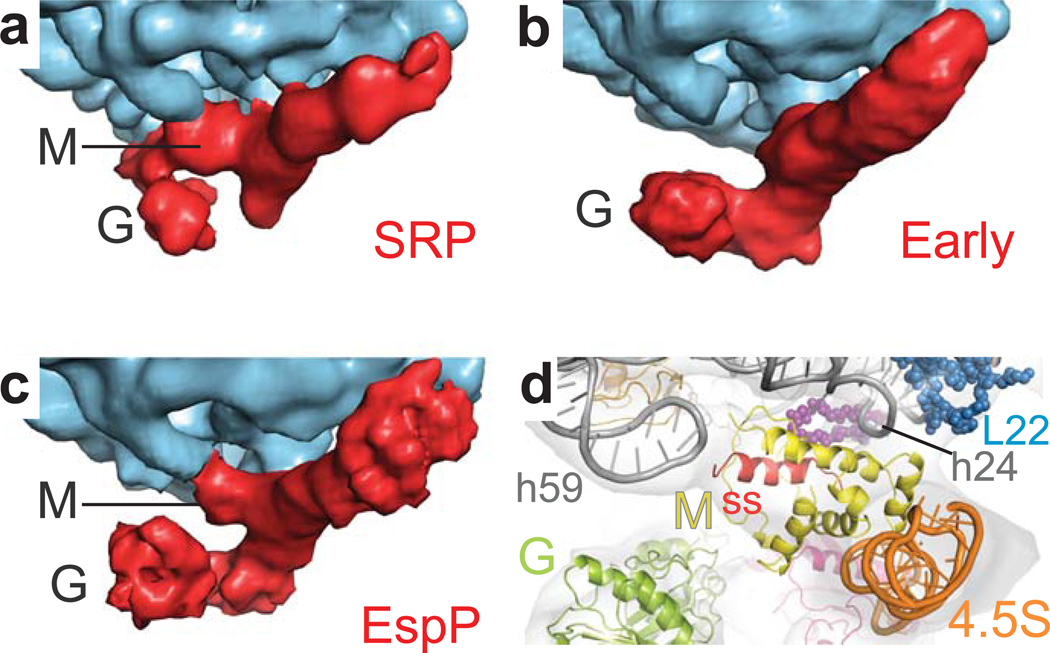
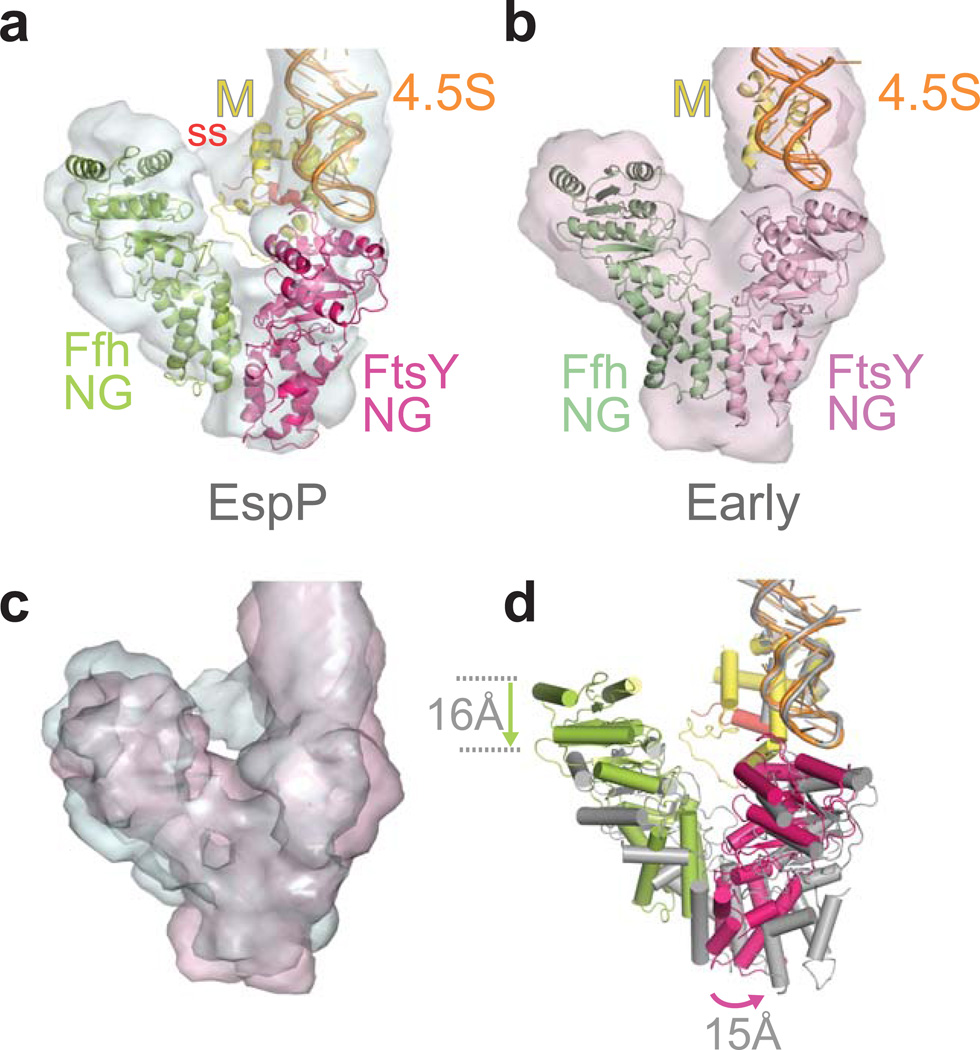
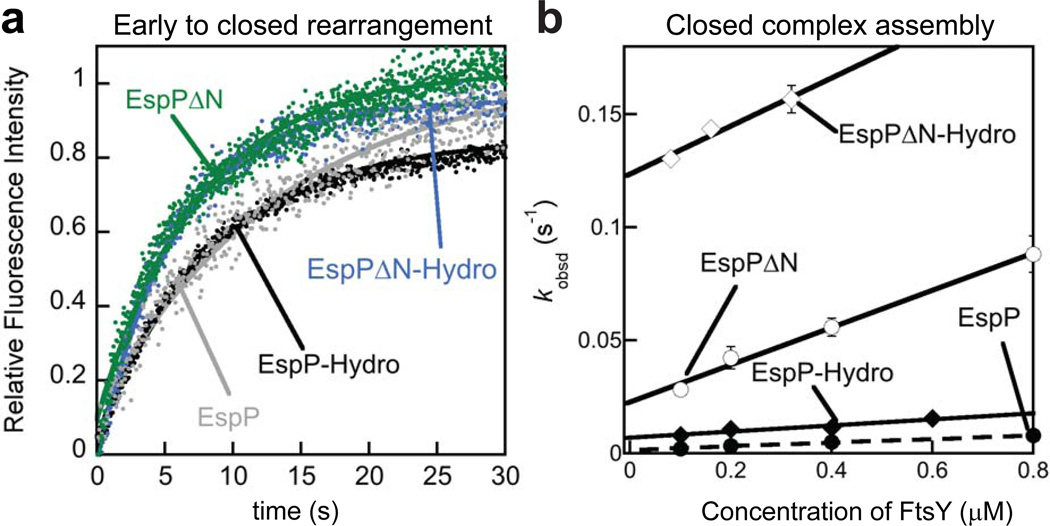
Signal-recognition particle (SRP)-dependent targeting of translating ribosomes to membranes is a multistep quality-control process. Ribosomes that are translating weakly hydrophobic signal sequences can be rejected from the targeting reaction even after they are bound to the SRP. Here we show that the early complex, formed by Escherichia coli SRP and its receptor FtsY with ribosomes translating the incorrect cargo EspP, is unstable and rearranges inefficiently into subsequent conformational states, such that FtsY dissociation is favored over successful targeting. The N-terminal extension of EspP is responsible for these defects in the early targeting complex. The cryo-electron microscopy structure of this 'false' early complex with EspP revealed an ordered M domain of SRP protein Ffh making two ribosomal contacts, and the NG domains of Ffh and FtsY forming a distorted, flexible heterodimer. Our results provide a structural basis for SRP-mediated signal-sequence selection during recruitment of the SRP receptor.
信号识别颗粒(SRP)依赖性翻译核糖体靶向到膜是一个多步骤的质量控制过程。即使在与 SRP 结合后,翻译弱疏水性信号序列的核糖体也可以被靶向反应排斥。在这里,我们表明,由大肠杆菌 SRP 和其受体 FtsY 与正在翻译错误货物 EspP 的核糖体形成的早期复合物是不稳定的,并且不能有效地重新排列成后续构象状态,使得 FtsY 解离有利于成功的靶向。EspP 的 N 端延伸负责该早期靶向复合物的这些缺陷。带有 EspP 的这个“错误”早期复合物的冷冻电子显微镜结构显示了 SRP 蛋白 Ffh 的有序 M 结构域与两个核糖体接触,并且 Ffh 和 FtsY 的 NG 结构域形成了一个扭曲的、灵活的杂二聚体。我们的结果为 SRP 介导的在招募 SRP 受体期间的信号序列选择提供了结构基础。