Department of Bioengineering, Imperial College, London, United Kingdom.
ACS Chem Neurosci. 2013 May 15;4(5):799-807. doi: 10.1021/cn400047x. Epub 2013 May 1.
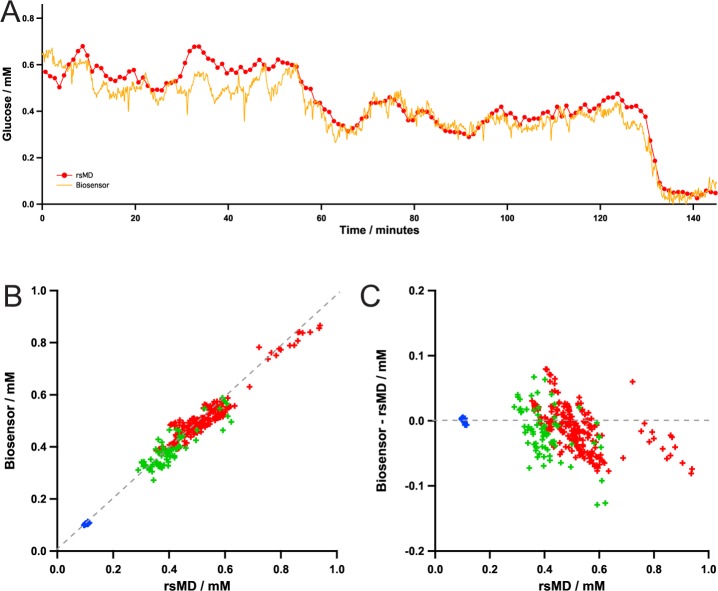
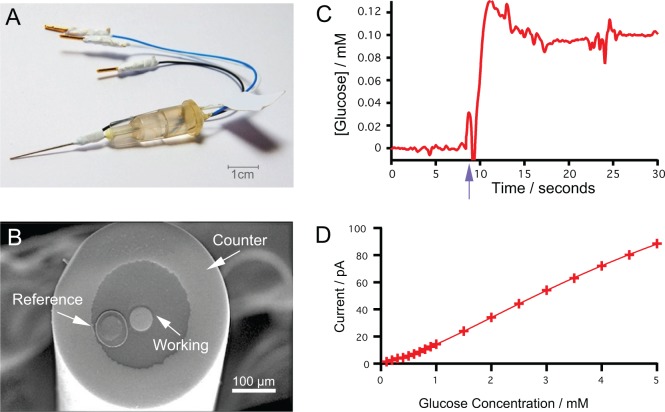
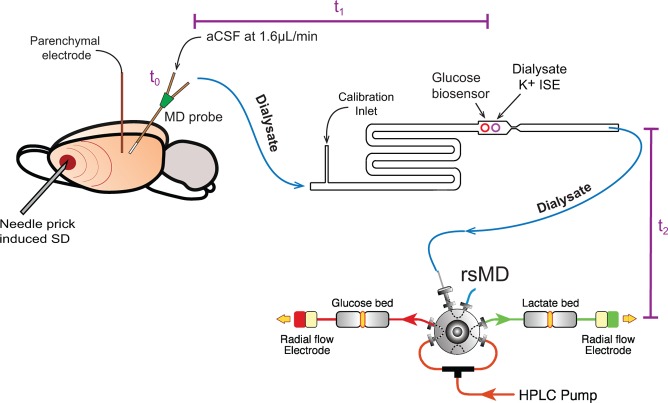
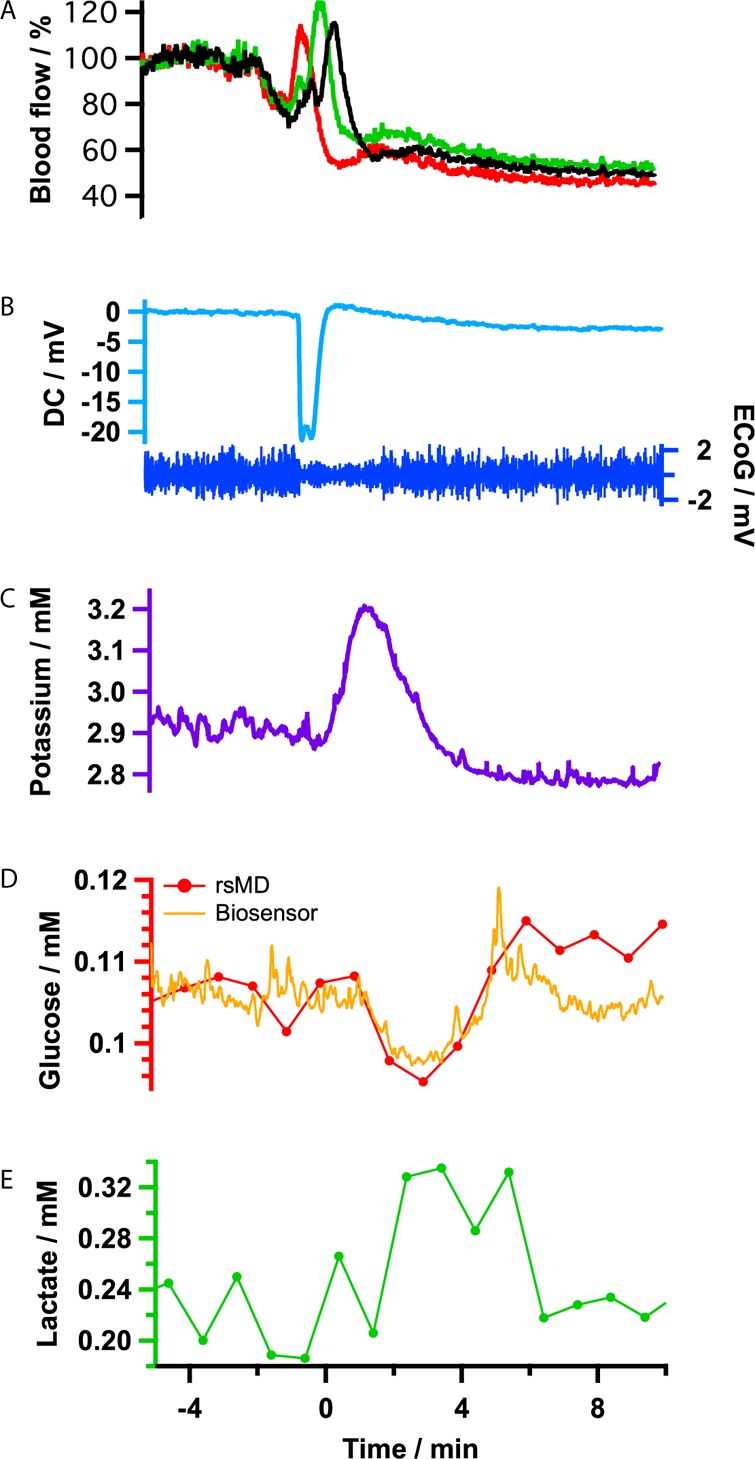
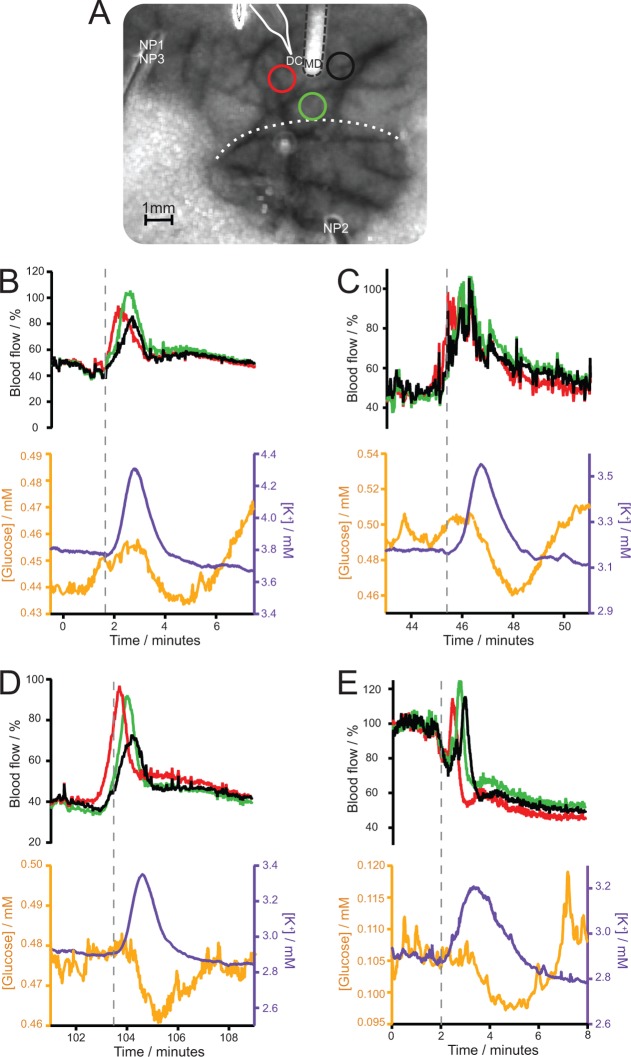
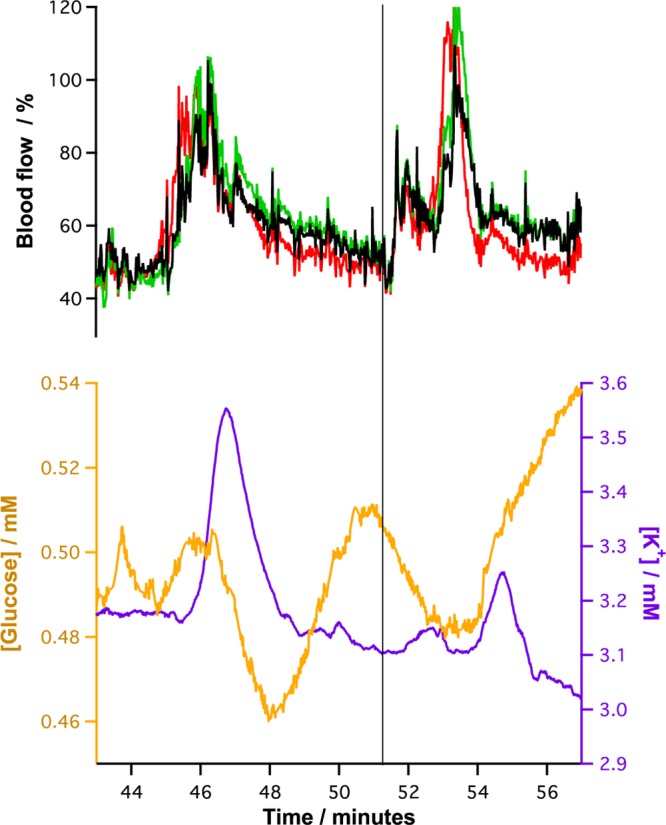
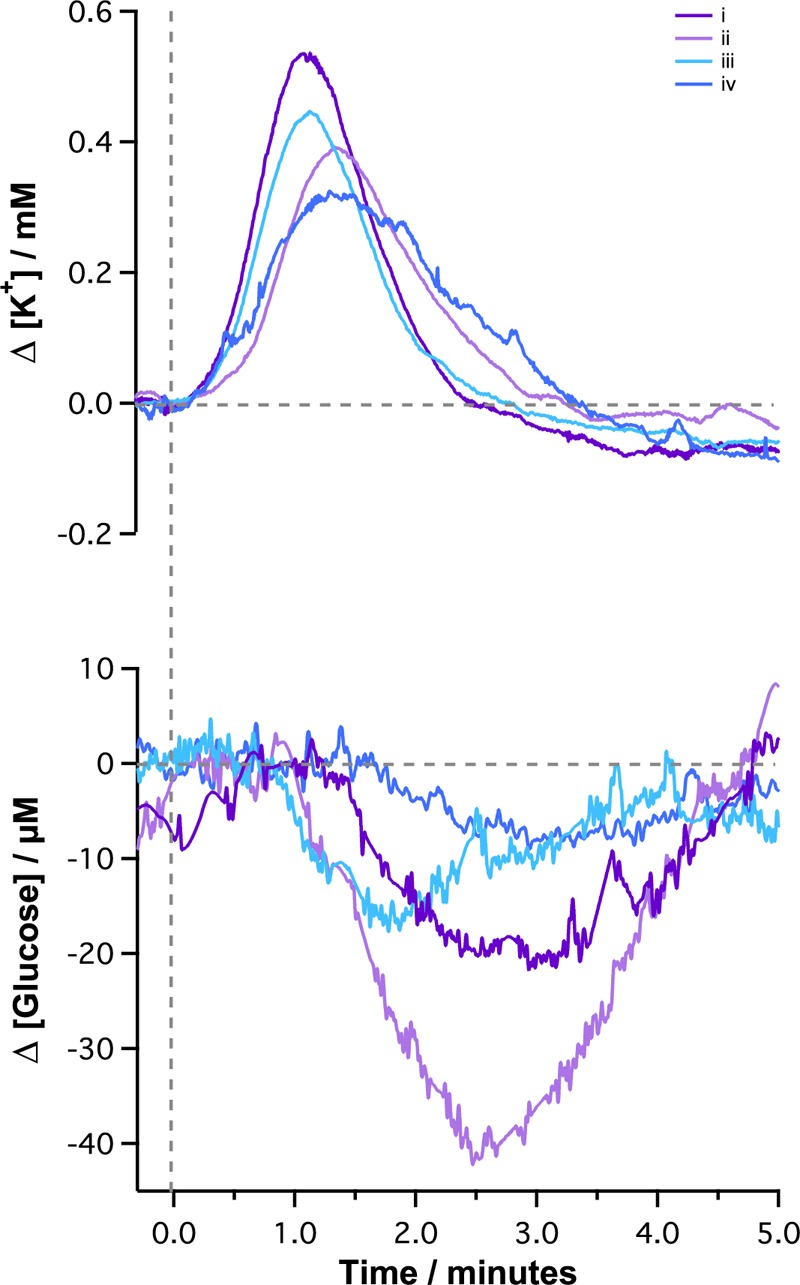
Microfluidic glucose biosensors and potassium ion selective electrodes were used in an in vivo study to measure the neurochemical effects of spreading depolarizations (SD), which have been shown to be detrimental to the injured human brain. A microdialysis probe implanted in the cortex of rats was connected to a microfluidic PDMS chip containing the sensors. The dialysate was also analyzed using our gold standard, rapid sampling microdialysis (rsMD). The glucose biosensor performance was validated against rsMD with excellent results. The glucose biosensors successfully monitored concentration changes, in response to SD wave induction, in the range of 10-400 μM with a second time-resolution. The data show that during a SD wave, there is a time delay of 62 ± 24.8 s (n = 4) between the onset of the increase in potassium and the decrease in glucose. This delay can be for the first time demonstrated, thanks to the high-temporal resolution of the microfluidic sensors sampling from a single tissue site (the microdialysis probe), and it indicates that the decrease in glucose is due to the high demand of energy required for repolarization.
微流控葡萄糖生物传感器和钾离子选择性电极被用于一项体内研究,以测量展布性去极化(SD)的神经化学效应,展布性去极化已被证明对受损的人脑有害。一个植入大鼠皮层的微透析探针与包含传感器的 PDMS 微流控芯片相连。用我们的金标准,即快速采样微透析(rsMD),对透析液也进行了分析。葡萄糖生物传感器的性能通过与 rsMD 的对比得到了验证,结果非常出色。葡萄糖生物传感器成功地监测了响应 SD 波诱导的浓度变化,范围在 10-400 μM 之间,具有 2 秒的时间分辨率。数据表明,在 SD 波期间,钾离子增加和葡萄糖减少之间存在 62±24.8 秒(n=4)的时间延迟。由于微流控传感器从单个组织部位(微透析探针)进行高时间分辨率采样,因此可以首次证明这种延迟,这表明葡萄糖的减少是由于去极化所需的高能量需求所致。