Department of Cancer Prevention, Institute for Cancer Research, Oslo University Hospital, N-0310 Oslo, Norway.
Endocr Rev. 2013 Jun;34(3):339-76. doi: 10.1210/er.2012-1045. Epub 2013 Apr 10.
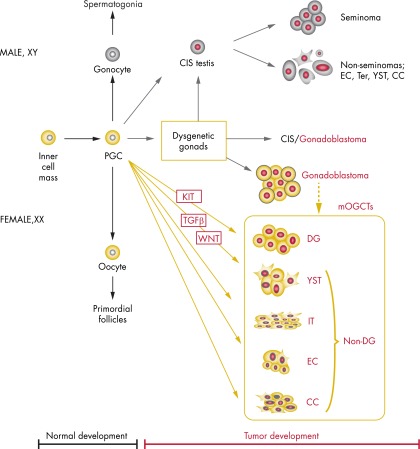
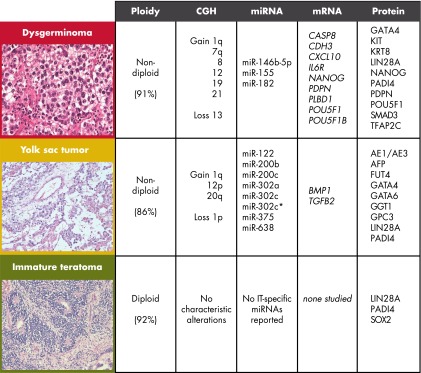
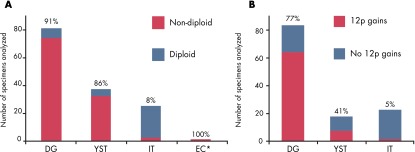
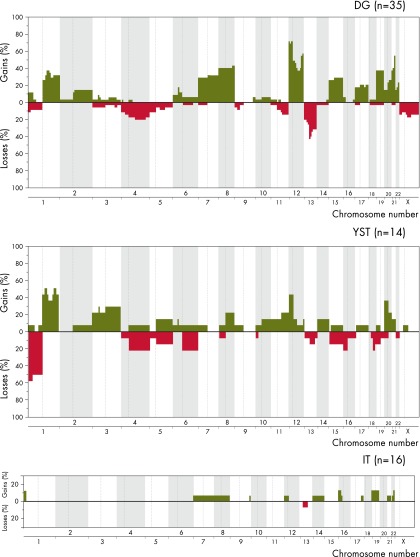
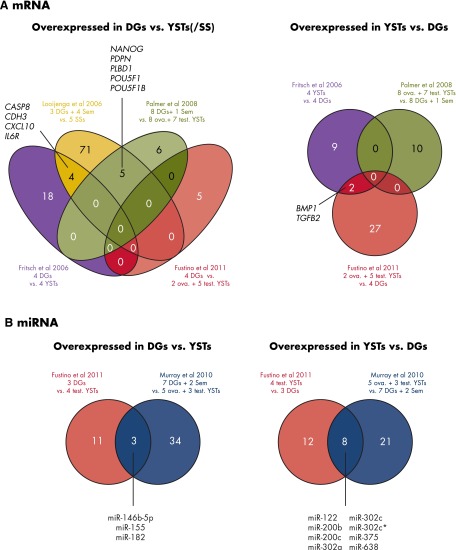
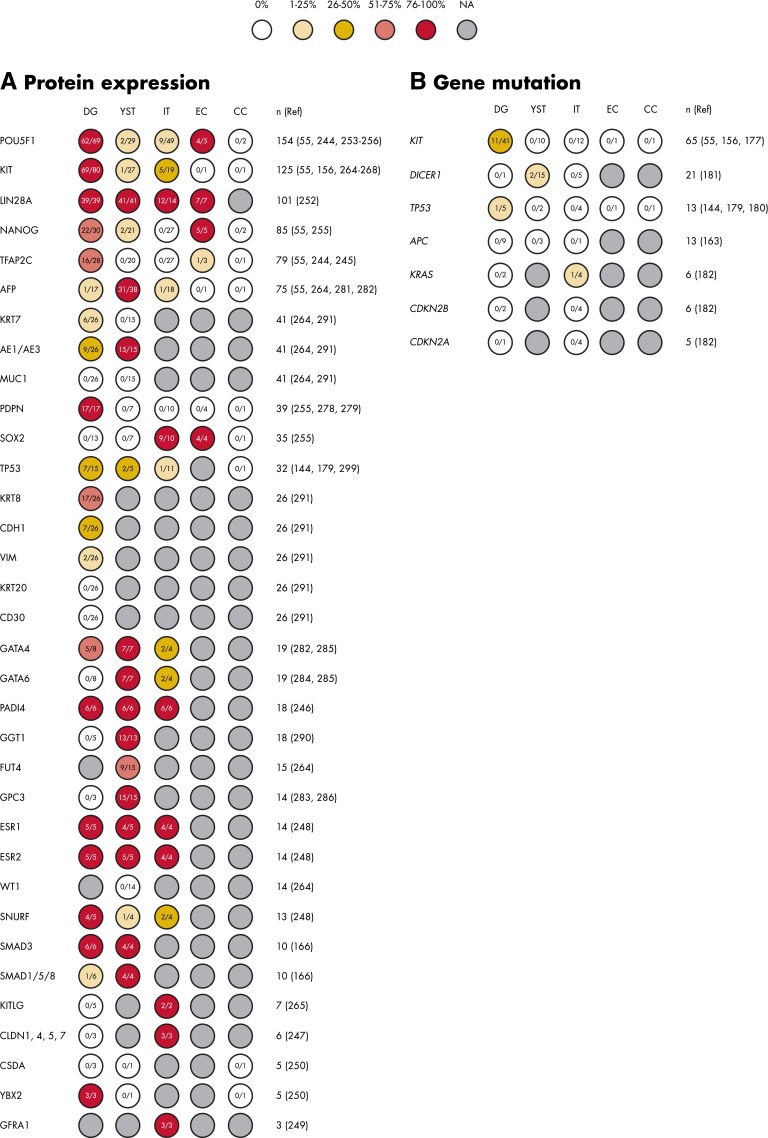
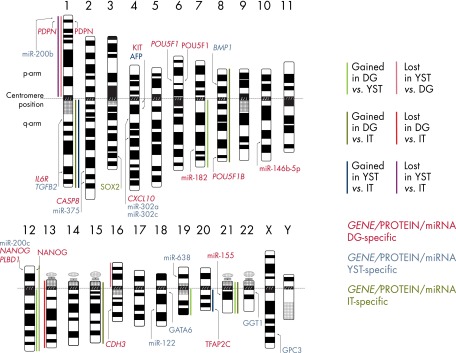
This review focuses on the molecular characteristics and development of rare malignant ovarian germ cell tumors (mOGCTs). We provide an overview of the genomic aberrations assessed by ploidy, cytogenetic banding, and comparative genomic hybridization. We summarize and discuss the transcriptome profiles of mRNA and microRNA (miRNA), and biomarkers (DNA methylation, gene mutation, individual protein expression) for each mOGCT histological subtype. Parallels between the origin of mOGCT and their male counterpart testicular GCT (TGCT) are discussed from the perspective of germ cell development, endocrinological influences, and pathogenesis, as is the GCT origin in patients with disorders of sex development. Integrated molecular profiles of the 3 main histological subtypes, dysgerminoma (DG), yolk sac tumor (YST), and immature teratoma (IT), are presented. DGs show genomic aberrations comparable to TGCT. In contrast, the genome profiles of YST and IT are different both from each other and from DG/TGCT. Differences between DG and YST are underlined by their miRNA/mRNA expression patterns, suggesting preferential involvement of the WNT/β-catenin and TGF-β/bone morphogenetic protein signaling pathways among YSTs. Characteristic protein expression patterns are observed in DG, YST and IT. We propose that mOGCT develop through different developmental pathways, including one that is likely shared with TGCT and involves insufficient sexual differentiation of the germ cell niche. The molecular features of the mOGCTs underline their similarity to pluripotent precursor cells (primordial germ cells, PGCs) and other stem cells. This similarity combined with the process of ovary development, explain why mOGCTs present so early in life, and with greater histological complexity, than most somatic solid tumors.
这篇综述重点介绍了罕见的恶性卵巢生殖细胞肿瘤(mOGCT)的分子特征和发生发展。我们概述了通过ploidy、细胞遗传学带型和比较基因组杂交评估的基因组畸变。我们总结并讨论了每种 mOGCT 组织学亚型的 mRNA 和 microRNA(miRNA)以及生物标志物(DNA 甲基化、基因突变、个体蛋白表达)的转录组谱。从生殖细胞发育、内分泌影响和发病机制的角度讨论了 mOGCT 与其男性对应物睾丸生殖细胞肿瘤(TGCT)的起源之间的相似性,以及患有性发育障碍患者的 GCT 起源。提出了 3 种主要组织学亚型,即生殖细胞瘤(DG)、卵黄囊瘤(YST)和未成熟畸胎瘤(IT)的综合分子谱。DG 显示与 TGCT 相当的基因组畸变。相比之下,YST 和 IT 的基因组谱彼此不同,也与 DG/TGCT 不同。DG 和 YST 之间的差异由它们的 miRNA/mRNA 表达模式突出显示,表明 YST 中优先涉及 WNT/β-catenin 和 TGF-β/骨形态发生蛋白信号通路。在 DG、YST 和 IT 中观察到特征性的蛋白表达模式。我们提出,mOGCT 通过不同的发育途径发展,包括一种可能与 TGCT 共享的途径,涉及生殖细胞巢的性分化不足。mOGCT 的分子特征强调了它们与多能前体细胞(原始生殖细胞,PGCs)和其他干细胞的相似性。这种相似性结合卵巢发育过程,解释了为什么 mOGCT 比大多数体腔实体瘤更早出现,并且具有更大的组织学复杂性。