Transgenic Oncogenesis and Genomics Section, Laboratory of Cancer Biology and Genetics, Center for Cancer Research, National Cancer Institute, National Institutes of Health, Bethesda, MD, USA.
PLoS One. 2013;8(4):e61125. doi: 10.1371/journal.pone.0061125. Epub 2013 Apr 8.
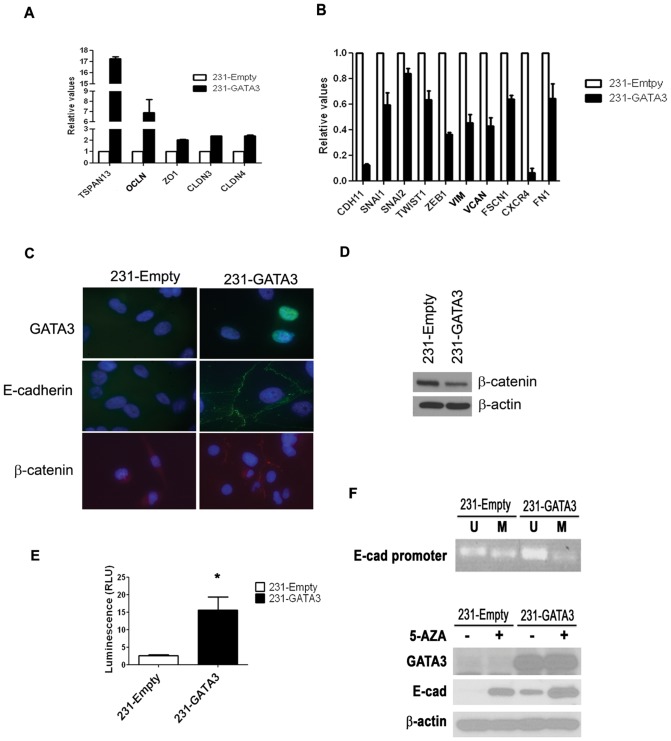
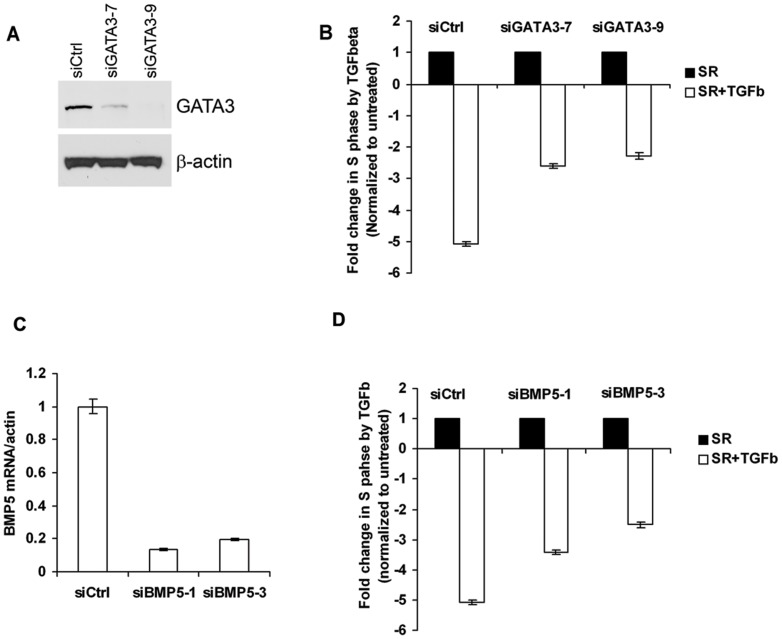
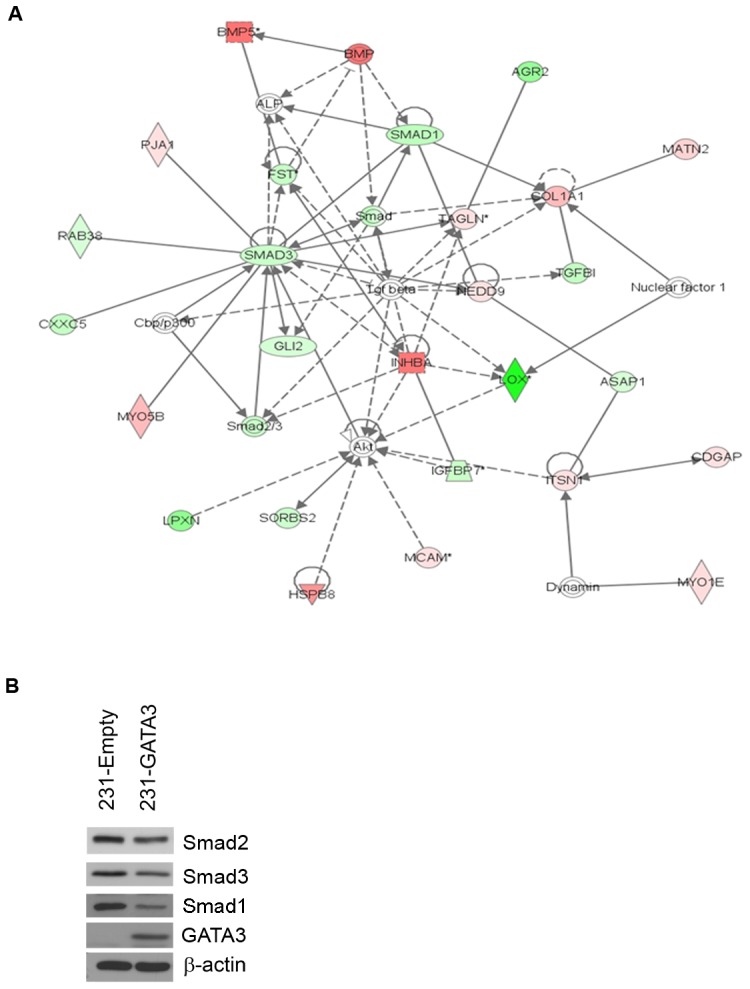
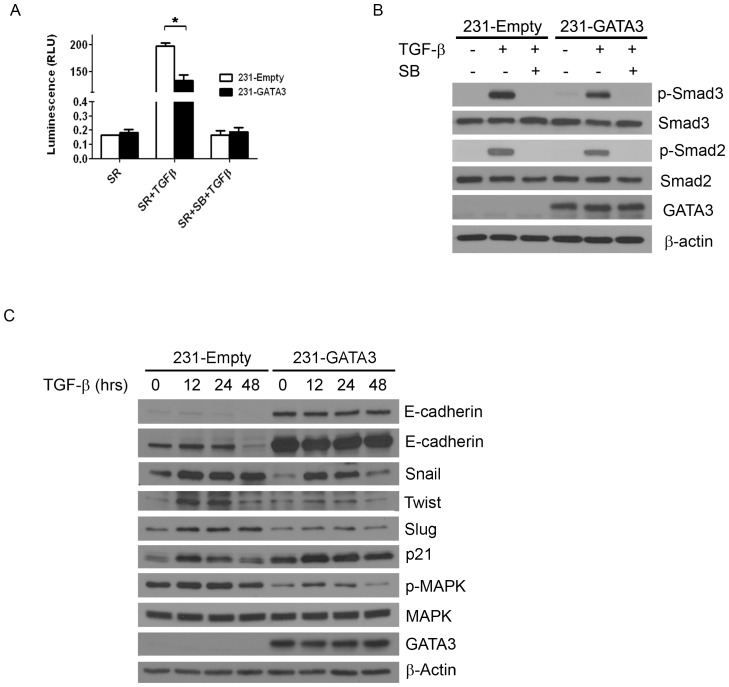
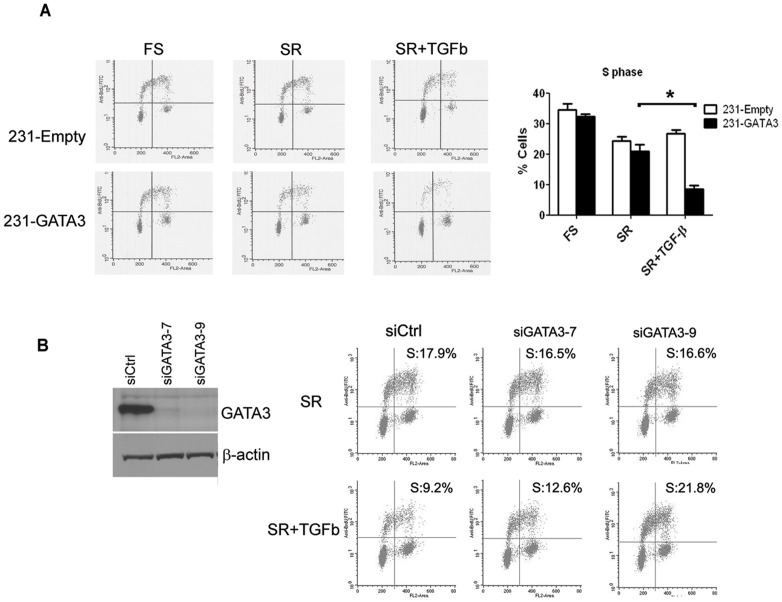
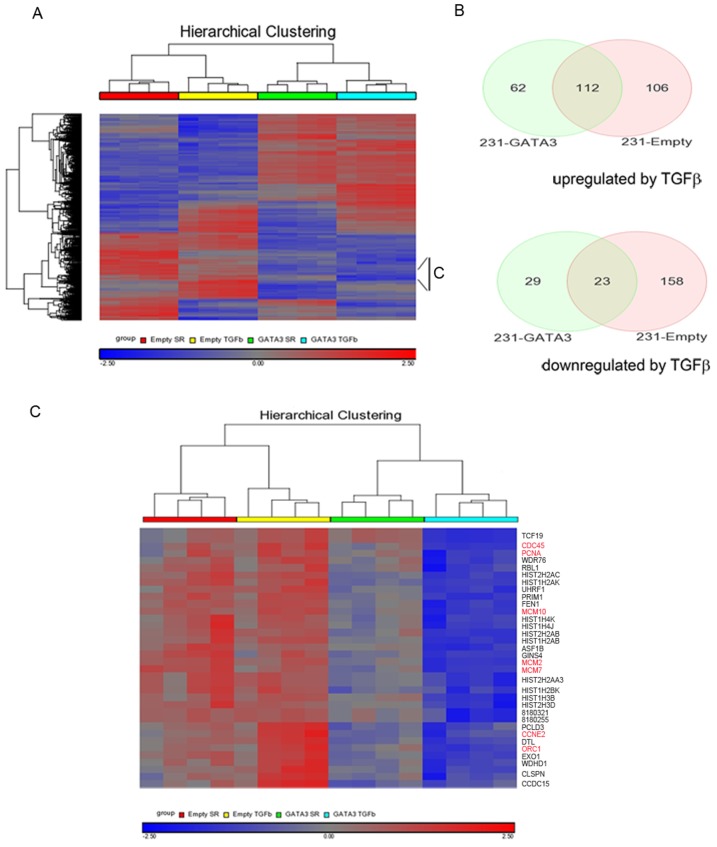
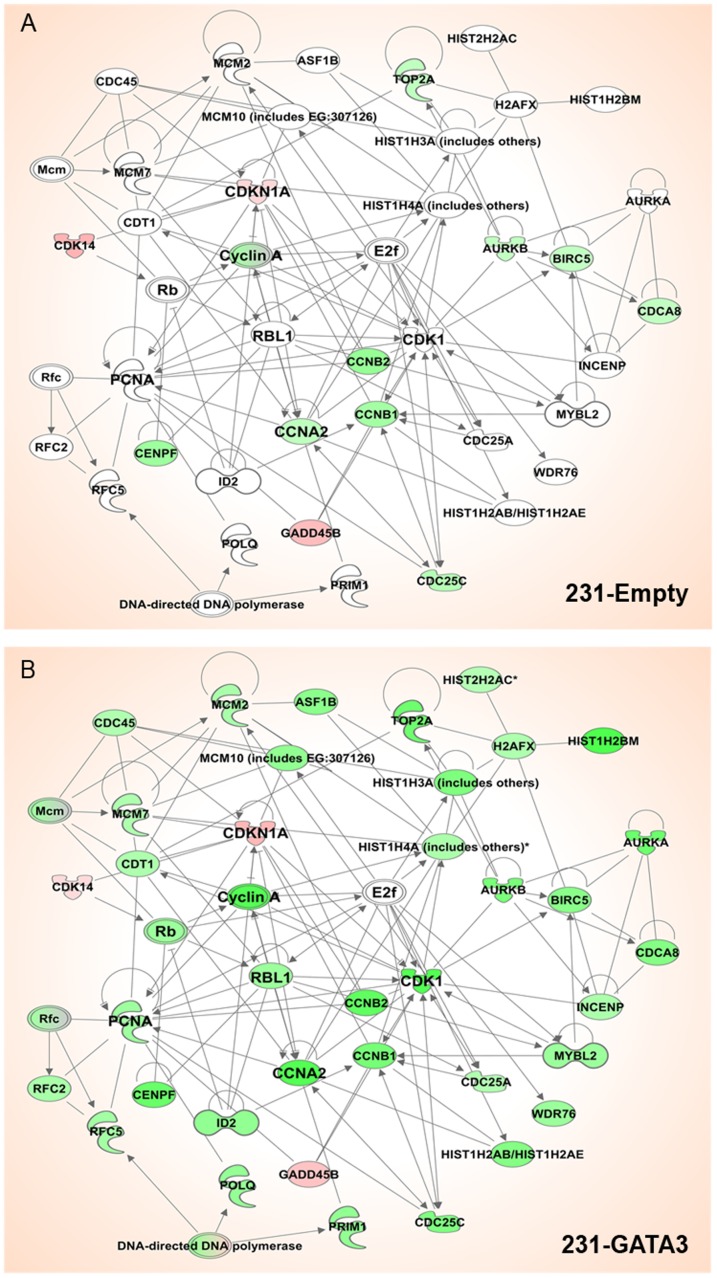
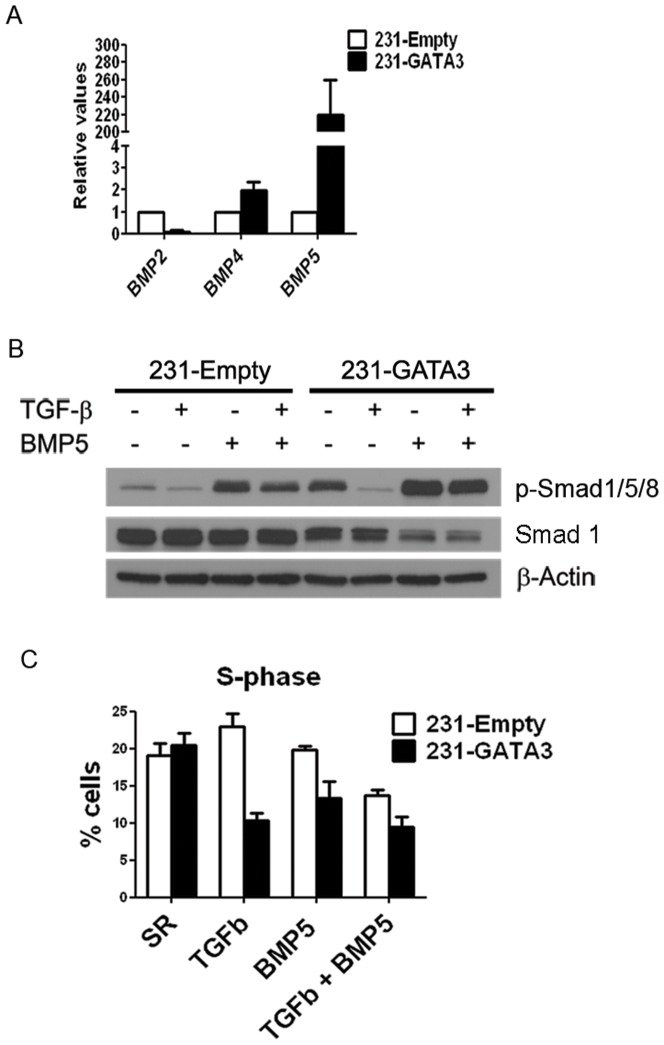
Transforming growth factor (ß1TGFß1) can promote proliferation in late stage cancers but acts as a tumor suppressor in normal epithelial cells and in early stage cancers. Although, the TGFß pathway has been shown to play a key role in tumorigenesis and metastasis, only a limited number of models have been developed to understand this process. Here, we present a novel model system to discern this paradoxical role of TGFß1 using the MDA-MB-231 (MB-231) cell line. The MB-231 triple-negative breast cancer cell line has been extensively characterized and has been shown to continue to proliferate and undergo epithelial-to-mesenchymal transition (EMT) upon TGFß1 stimulation. We have previously shown by microarray analysis that expression of GATA3 in MB-231 cells results in reprogramming of these cells from a basal to a luminal subtype associated with a reduction of metastasis and tumorigenesis when implanted as xenografts. We now demonstrate that GATA3 overexpression in these cells results in a reduction of TGFß1 response, reversal of EMT, and most importantly, restoration of sensitivity to the inhibitory effects on proliferation of TGFß1. Microarray analysis revealed that TGFß1 treatment resulted in reduction of several cell cycle effectors in 231-GATA3 cells but not in control cells. Furthermore, our microarray analysis revealed a significant increase of BMP5 in 231-GATA3 cells. We demonstrate that combined treatment of MB-231 control cells with TGFß1 and BMP5 results in a significant reduction of cellular proliferation. Thus, this model offers a means to further investigate potentially novel mechanisms involved in the switch in response to TGFß1 from tumor promoter to tumor suppressor through the reprogramming of a triple-negative breast cancer cell line by the GATA3 transcription factor.
转化生长因子(ß1TGFß1)可以促进晚期癌症的增殖,但在正常上皮细胞和早期癌症中作为肿瘤抑制因子发挥作用。尽管 TGFß 途径已被证明在肿瘤发生和转移中发挥关键作用,但仅开发了有限数量的模型来理解这一过程。在这里,我们使用 MDA-MB-231(MB-231)细胞系提出了一种新的模型系统来辨别 TGFß1 的这种矛盾作用。MB-231 三阴性乳腺癌细胞系已被广泛表征,并已被证明在 TGFß1 刺激下继续增殖并经历上皮-间质转化(EMT)。我们之前通过微阵列分析表明,MB-231 细胞中 GATA3 的表达导致这些细胞从基底型重编程为与侵袭性降低和肿瘤发生相关的腔型,当作为异种移植物植入时。我们现在证明,这些细胞中 GATA3 的过表达导致 TGFß1 反应减少、EMT 逆转,最重要的是,恢复对 TGFß1 增殖抑制作用的敏感性。微阵列分析显示,TGFß1 处理导致 231-GATA3 细胞中几种细胞周期效应物减少,但对照细胞中没有减少。此外,我们的微阵列分析显示 231-GATA3 细胞中 BMP5 显著增加。我们证明,MB-231 对照细胞与 TGFß1 和 BMP5 联合治疗导致细胞增殖显著减少。因此,该模型提供了一种方法,可以通过 GATA3 转录因子对三阴性乳腺癌细胞系的重编程,进一步研究潜在的新型机制,这些机制涉及 TGFß1 从肿瘤促进因子到肿瘤抑制因子的反应转换。