Koob George F
Skaggs School of Pharmacy and Pharmaceutical Sciences at the University of California, San Diego, San Diego, California.
Alcohol Res Health. 2010;33(1-2):144-51.
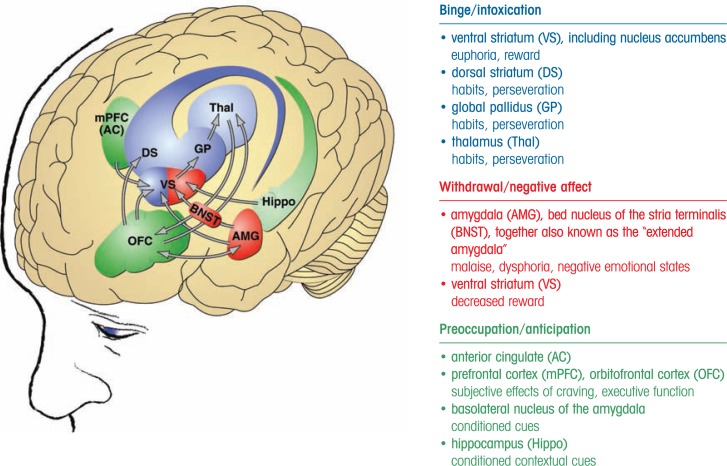
In the 40 years since the founding of the National Institute on Alcohol Abuse and Alcoholism (NIAAA), researchers have gained a better understanding of the brain circuits and brain chemical (i.e., neurotransmitter) systems involved in the development and maintenance of alcoholism and other drug dependence. This understanding has led to the identification of numerous potential targets for pharmacotherapy of addiction. For example, insight into the roles of signaling molecules called endogenous opioids and the neurotransmitter glutamate were fundamental for developing two medications--naltrexone and acamprosate--now used in the treatment of alcoholism. However, the processes of dependence development (e.g., reinforcement, sensitization, and withdrawal) are highly complex and involve a plethora of contributing influences, which also may differ from patient to patient. Therefore, existing pharmacotherapies still are effective only for some but not all alcoholic patients. Accordingly, researchers are continuing to explore the processes involved in addiction development to identify new targets for treatment and develop new medications that can address different aspects of the dependence syndrome, thereby increasing the likelihood of successful treatment. NIAAA continues to play a pivotal role in funding and conducting this research in order to provide effective treatment options to millions of alcohol-dependent patients.
自美国国立酒精滥用与酒精中毒研究所(NIAAA)成立40年来,研究人员对与酒精中毒及其他药物依赖的发展和维持相关的脑回路及脑化学物质(即神经递质)系统有了更深入的了解。这种了解促使人们确定了众多成瘾药物治疗的潜在靶点。例如,对称为内源性阿片类物质的信号分子和神经递质谷氨酸作用的深入了解,是开发两种目前用于治疗酒精中毒的药物——纳曲酮和阿坎酸——的基础。然而,依赖发展过程(如强化、敏化和戒断)非常复杂,涉及众多促成因素,而且这些因素在不同患者之间可能也存在差异。因此,现有的药物疗法对部分但并非所有酒精中毒患者仍然有效。相应地,研究人员继续探索成瘾发展过程,以确定新的治疗靶点,并开发能够解决依赖综合征不同方面问题的新药物,从而提高成功治疗的可能性。NIAAA在资助和开展这项研究方面继续发挥关键作用,以便为数百万酒精依赖患者提供有效的治疗选择。