Department of Bioscience, Tokyo University of Agriculture, Setagaya-ku, Tokyo 156-8502, Japan.
Reproduction. 2013 Mar 1;145(3):277-88. doi: 10.1530/rep-12-0435.
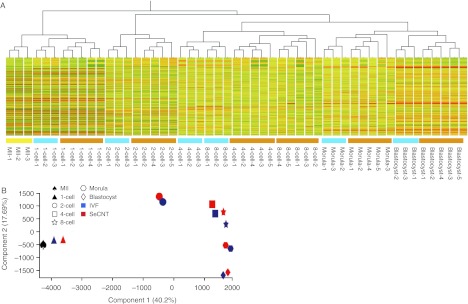
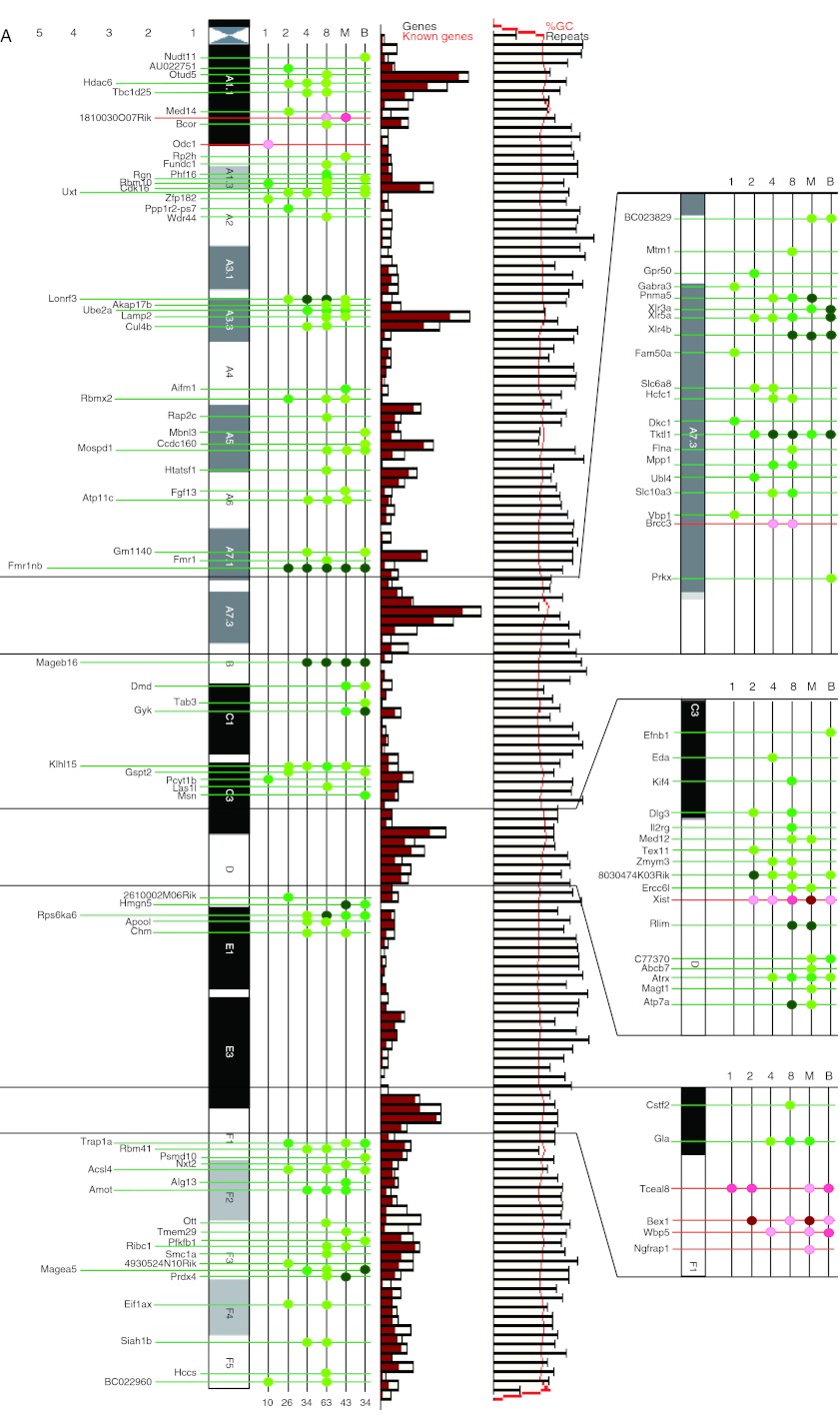
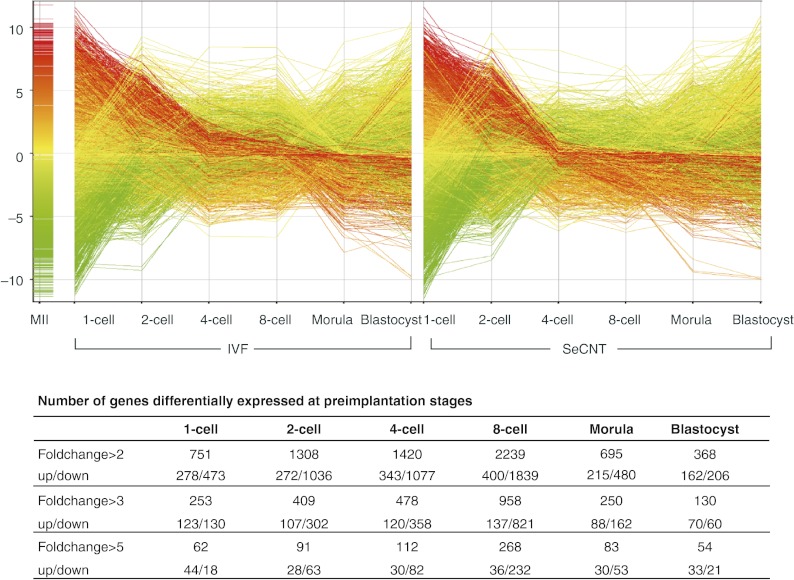
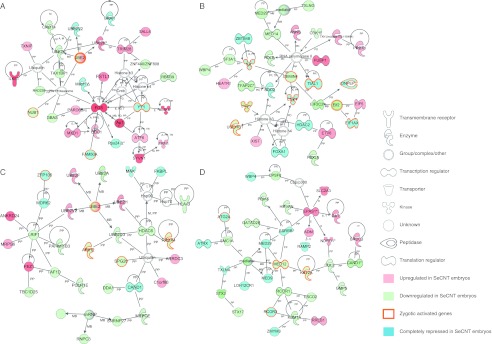
Somatic cell nuclear transfer, a technique used to generate clone embryos by transferring the nucleus of a somatic cell into an enucleated oocyte, is an excellent approach to study the reprogramming of the nuclei of differentiated cells. Here, we conducted a transcriptomic study by performing microarray analysis on single Sertoli cell nuclear transfer (SeCNT) embryos throughout preimplantation development. The extensive data collected from the oocyte to the blastocyst stage helped to identify specific genes that were incorrectly reprogrammed at each stage, thereby providing a novel perspective for understanding reprogramming progression in SeCNT embryos.This attempt provided an opportunity to discuss the possibility that ectopic gene expression could be involved in the developmental failure of SeCNT embryos. Network analysis at each stage suggested that in total, 127 networks were involved in developmental and functional disorders in SeCNT embryos. Furthermore, chromosome mapping using our time-lapse expression data highlighted temporal–spatial changes of the abnormal expression, showing the characteristic distribution of the genes on each chromosome.Thus, the present study revealed that the preimplantation development of SeCNT embryos appears normal; however, the progression of incorrect reprogramming is concealed throughout development.
体细胞核移植技术,是通过将体细胞的细胞核转移到去核卵母细胞中产生克隆胚胎的一种技术,是研究分化细胞细胞核重编程的极佳方法。在这里,我们通过对单个支持细胞核移植(SeCNT)胚胎进行微阵列分析,对整个植入前发育过程进行了转录组学研究。从卵母细胞到囊胚阶段收集的大量数据有助于鉴定每个阶段错误重编程的特定基因,从而为理解 SeCNT 胚胎的重编程进程提供了新的视角。这一尝试提供了一个机会来讨论异位基因表达可能参与 SeCNT 胚胎发育失败的可能性。每个阶段的网络分析表明,总共涉及 127 个网络,这些网络参与了 SeCNT 胚胎的发育和功能障碍。此外,使用我们的时程表达数据进行染色体作图突出了异常表达的时空变化,显示了每个染色体上基因的特征分布。因此,本研究表明,SeCNT 胚胎的植入前发育似乎正常;然而,在整个发育过程中,错误重编程的进展是隐藏的。