Key Laboratory of Embryo Development and Reproductive Regulation of Anhui Province, Fuyang Normal University, Fuyang, 236041, Anhui Province, China.
Clinical and Translation Research Center of Shanghai First Maternity & Infant Hospital, Shanghai Key Laboratory of Signaling and Disease Research, School of Life Sciences and Technology, Tongji University, Shanghai, 200092, China.
BMC Genomics. 2018 Oct 10;19(1):734. doi: 10.1186/s12864-018-5091-1.
Nuclear reprogramming reinstates totipotency or pluripotency in somatic cells by changing their gene transcription profile. This technology is widely used in medicine, animal husbandry and other industries. However, certain deficiencies severely restrict the applications of this technology.
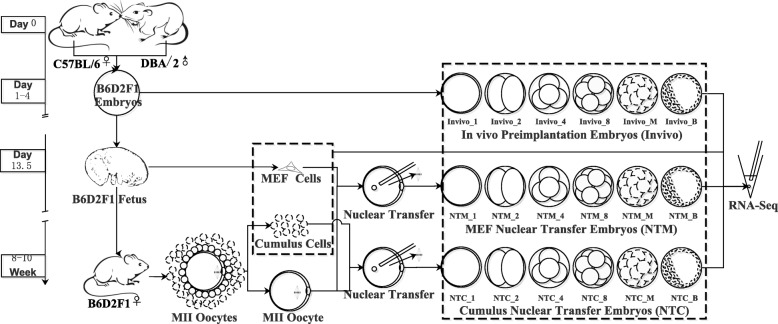
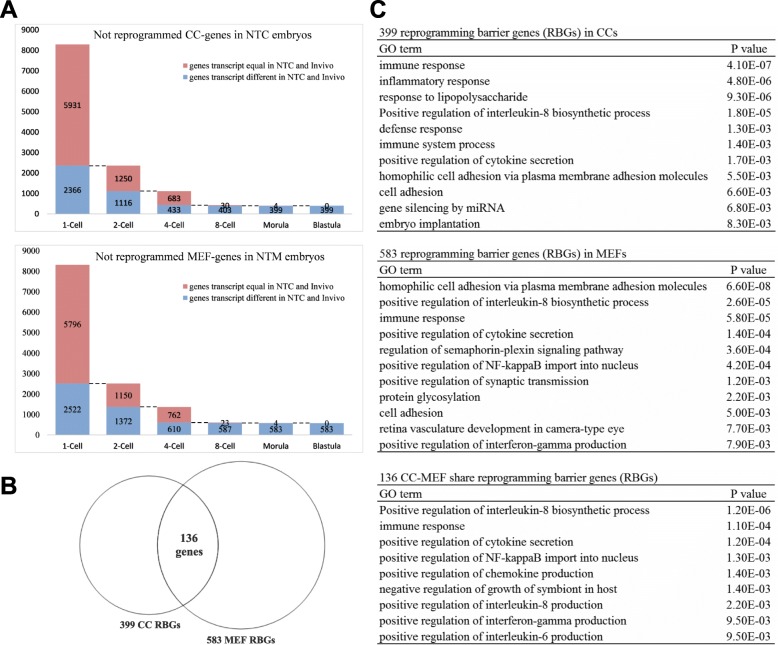
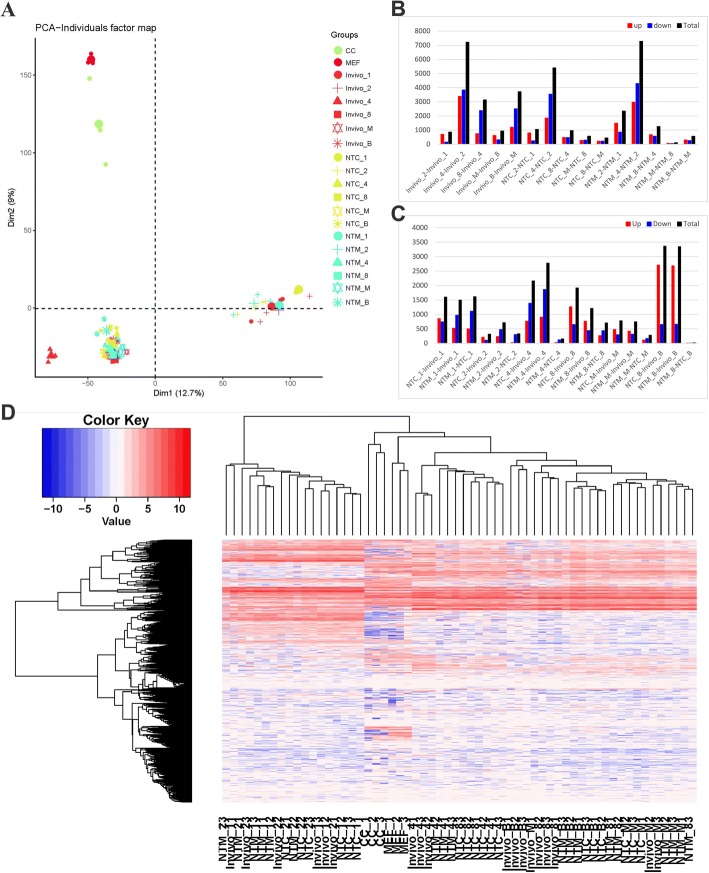
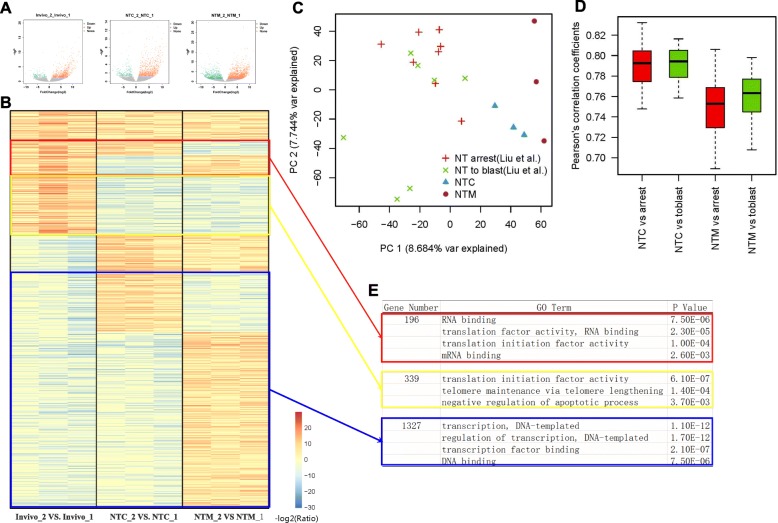
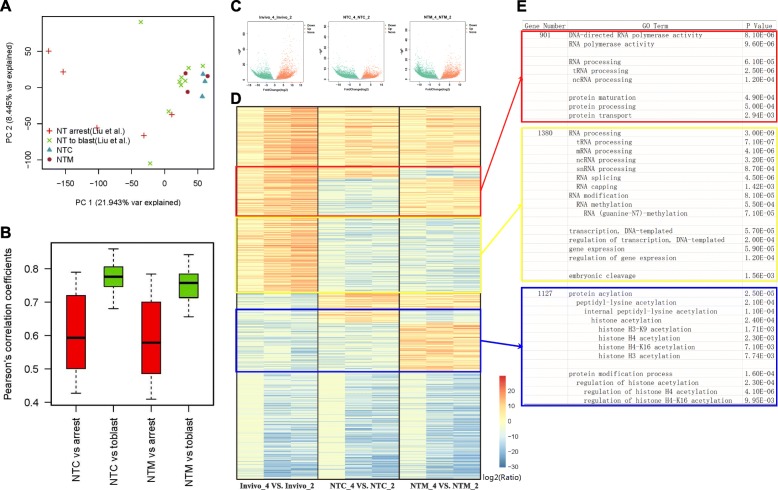
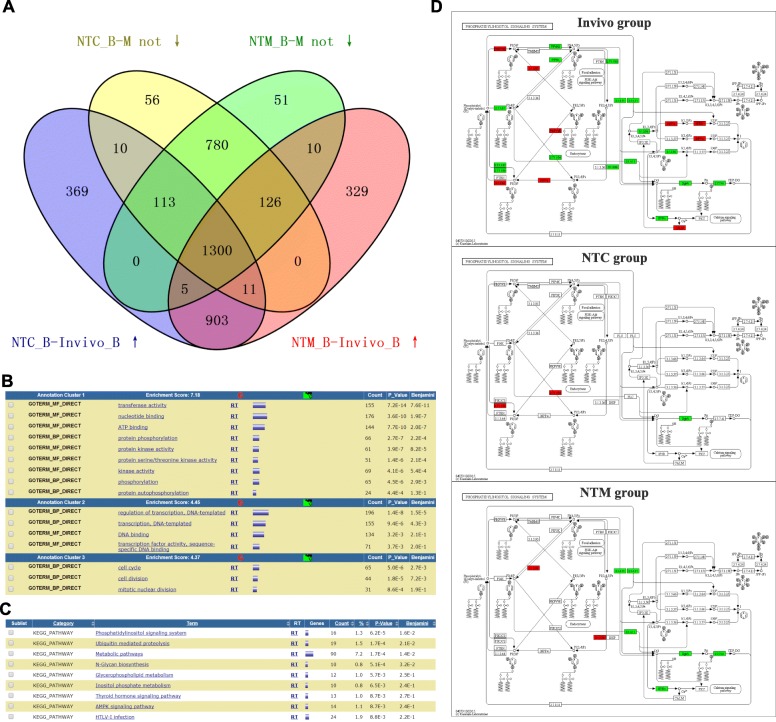
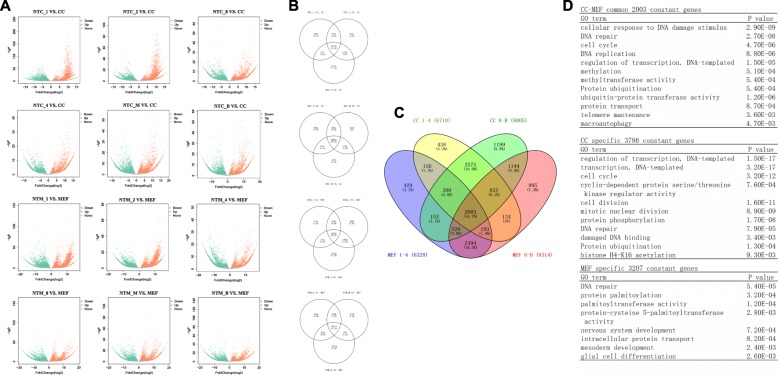
Using single-embryo RNA-seq, our study provides complete transcriptome blueprints of embryos generated by cumulus cell (CC) donor nuclear transfer (NT), embryos generated by mouse embryonic fibroblast (MEF) donor NT and in vivo embryos at each stage (zygote, 2-cell, 4-cell, 8-cell, morula, and blastocyst). According to the results from further analyses, NT embryos exhibit RNA processing and translation initiation defects during the zygotic genome activation (ZGA) period, and protein kinase activity and protein phosphorylation are defective during blastocyst formation. Two thousand three constant genes are not able to be reprogrammed in CCs and MEFs. Among these constant genes, 136 genes are continuously mis-transcribed throughout all developmental stages. These 136 differential genes may be reprogramming barrier genes (RBGs) and more studies are needed to identify.
These embryonic transcriptome blueprints provide new data for further mechanistic studies of somatic nuclear reprogramming. These findings may improve the efficiency of somatic cell nuclear transfer.
核重编程通过改变体细胞的基因转录谱来恢复全能性或多能性。这项技术在医学、畜牧业和其他行业得到了广泛应用。然而,某些缺陷严重限制了这项技术的应用。
本研究通过单细胞 RNA-seq 技术,提供了卵丘细胞(CC)供体核移植(NT)、小鼠胚胎成纤维细胞(MEF)供体 NT 以及体内胚胎在各个阶段(受精卵、2 细胞、4 细胞、8 细胞、桑椹胚和囊胚)生成的胚胎的完整转录组蓝图。进一步的分析结果表明,NT 胚胎在合子基因组激活(ZGA)期间存在 RNA 处理和翻译起始缺陷,在囊胚形成过程中蛋白激酶活性和蛋白磷酸化存在缺陷。2300 个恒常基因在 CC 和 MEF 中无法被重新编程。在这些恒常基因中,有 136 个基因在所有发育阶段持续转录错误。这些 136 个差异基因可能是重编程障碍基因(RBGs),需要进一步研究来鉴定。
这些胚胎转录组蓝图为进一步研究体细胞核重编程的机制提供了新的数据。这些发现可能提高体细胞核移植的效率。