Laboratory of Evolutionary Genetics, Ruđer Bošković Institute, Bijenička cesta 54, Zagreb, Croatia.
Front Zool. 2013 Apr 12;10(1):18. doi: 10.1186/1742-9994-10-18.
The vertebrate head is a highly derived trait with a heavy concentration of sophisticated sensory organs that allow complex behaviour in this lineage. The head sensory structures arise during vertebrate development from cranial placodes and the neural crest. It is generally thought that derivatives of these ectodermal embryonic tissues played a central role in the evolutionary transition at the onset of vertebrates. Despite the obvious importance of head sensory organs for vertebrate biology, their evolutionary history is still uncertain.
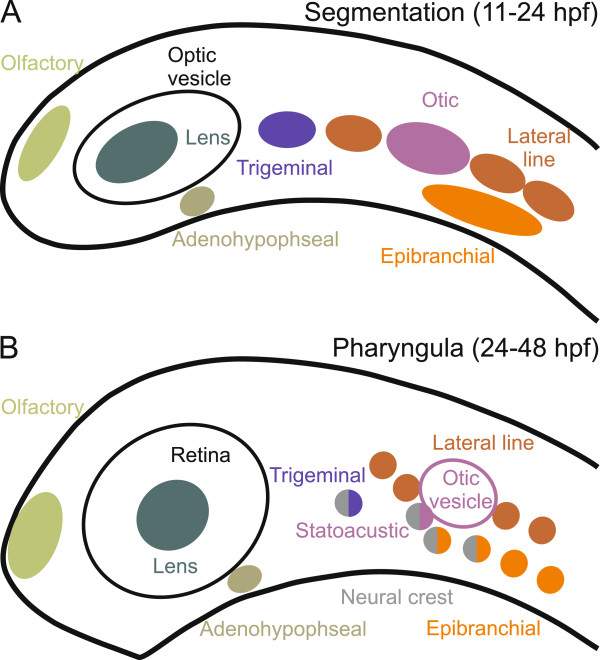
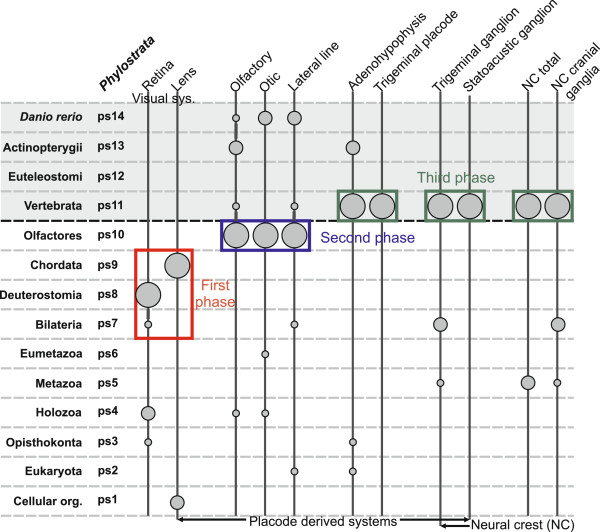
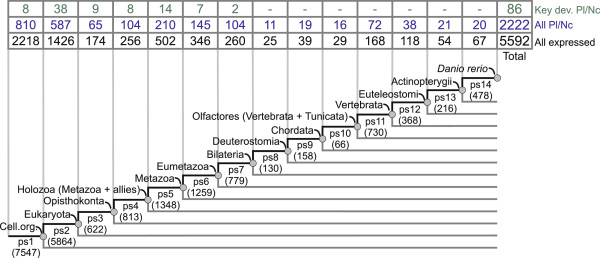
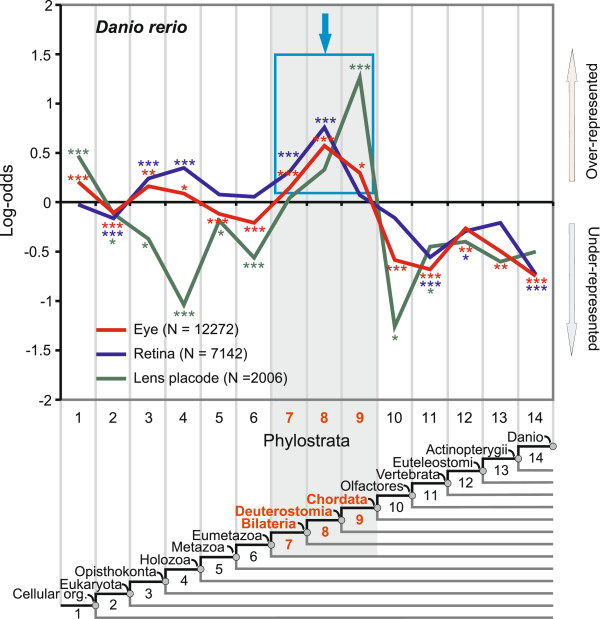
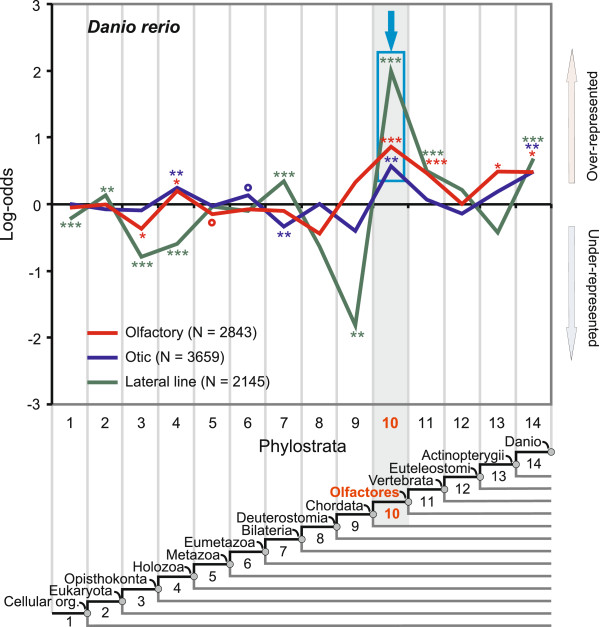
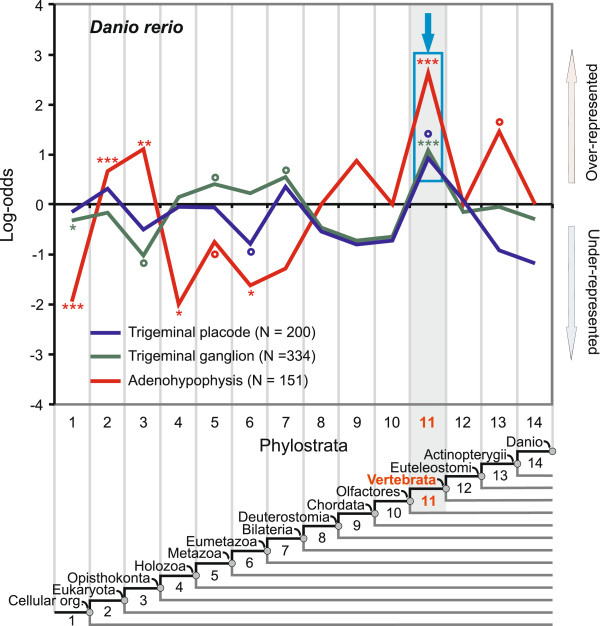
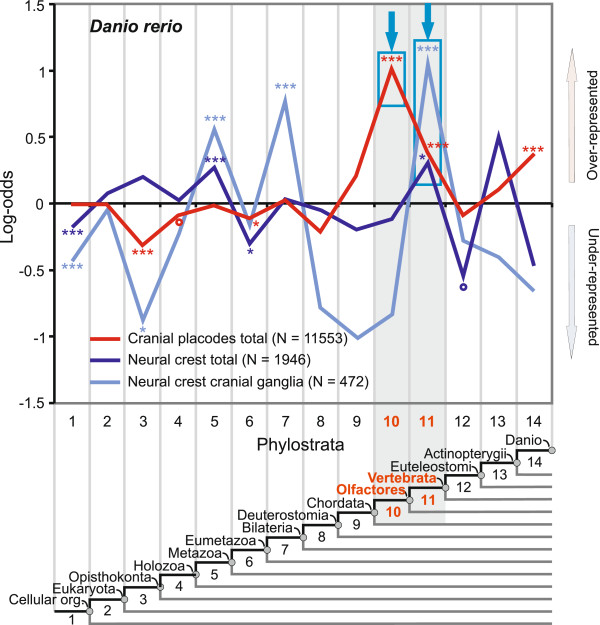
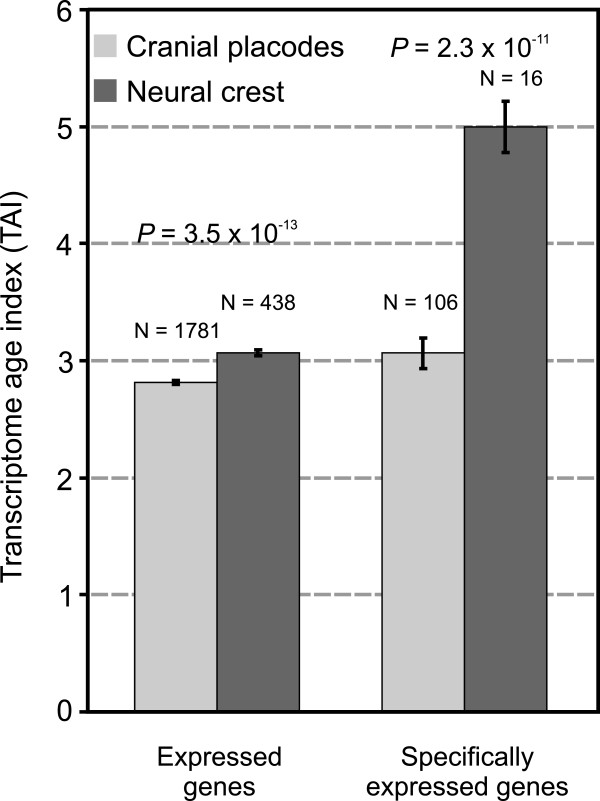
To give a fresh perspective on the adaptive history of the vertebrate head sensory organs, we applied genomic phylostratigraphy to large-scale in situ expression data of the developing zebrafish Danio rerio. Contrary to traditional predictions, we found that dominant adaptive signals in the analyzed sensory structures largely precede the evolutionary advent of vertebrates. The leading adaptive signals at the bilaterian-chordate transition suggested that the visual system was the first sensory structure to evolve. The olfactory, vestibuloauditory, and lateral line sensory organs displayed a strong link with the urochordate-vertebrate ancestor. The only structures that qualified as genuine vertebrate innovations were the neural crest derivatives, trigeminal ganglion and adenohypophysis. We also found evidence that the cranial placodes evolved before the neural crest despite their proposed embryological relatedness.
Taken together, our findings reveal pre-vertebrate roots and a stepwise adaptive history of the vertebrate sensory systems. This study also underscores that large genomic and expression datasets are rich sources of macroevolutionary information that can be recovered by phylostratigraphic mining.
脊椎动物的头部是一个高度特化的特征,集中了许多复杂的感觉器官,使这一支系能够进行复杂的行为。头部的感觉结构是在脊椎动物发育过程中由颅嵴和神经嵴产生的。人们普遍认为,这些外胚层胚胎组织的衍生物在脊椎动物起源时的进化转变中发挥了核心作用。尽管头部感觉器官对脊椎动物生物学具有明显的重要性,但它们的进化历史仍然不确定。
为了从新的角度了解脊椎动物头部感觉器官的适应历史,我们将基因组系统发生地层学应用于大规模的斑马鱼 Danio rerio 发育中的原位表达数据。与传统预测相反,我们发现,在分析的感觉结构中,主要的适应性信号在很大程度上早于脊椎动物的进化出现。在两侧对称动物-脊索动物的过渡中主要的适应性信号表明,视觉系统是第一个进化的感觉结构。嗅觉、前庭听觉和侧线感觉器官与尾索动物-脊椎动物的祖先有很强的联系。唯一被认为是真正的脊椎动物创新的结构是神经嵴衍生物、三叉神经节和腺垂体。我们还发现了颅嵴在神经嵴之前进化的证据,尽管它们在胚胎学上被认为是相关的。
总的来说,我们的发现揭示了脊椎动物感觉系统的前脊椎动物根源和逐步适应的历史。这项研究还强调了大型基因组和表达数据集是可以通过系统发生地层学挖掘恢复的宏观进化信息的丰富来源。