Key Laboratory for Advanced Materials & Department of Chemistry, East China University of Science and Technology, Shanghai 200237, P R China.
Sci Rep. 2013;3:1662. doi: 10.1038/srep01662.
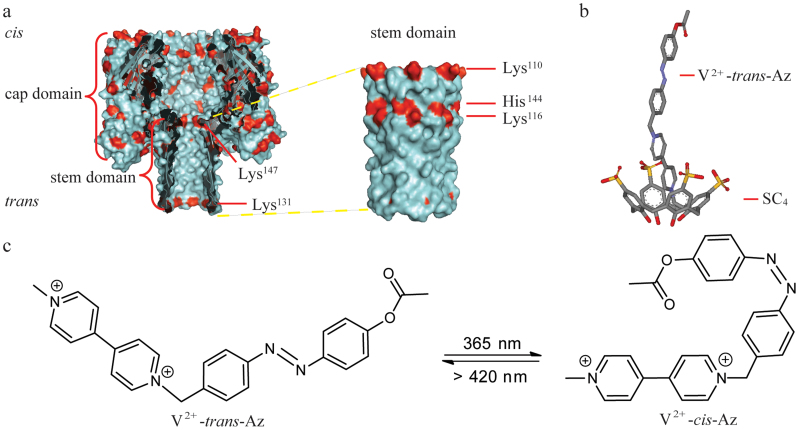
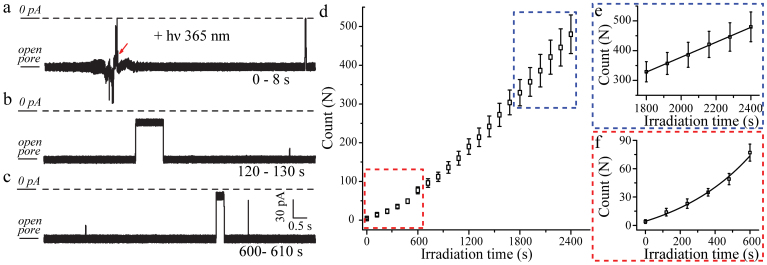
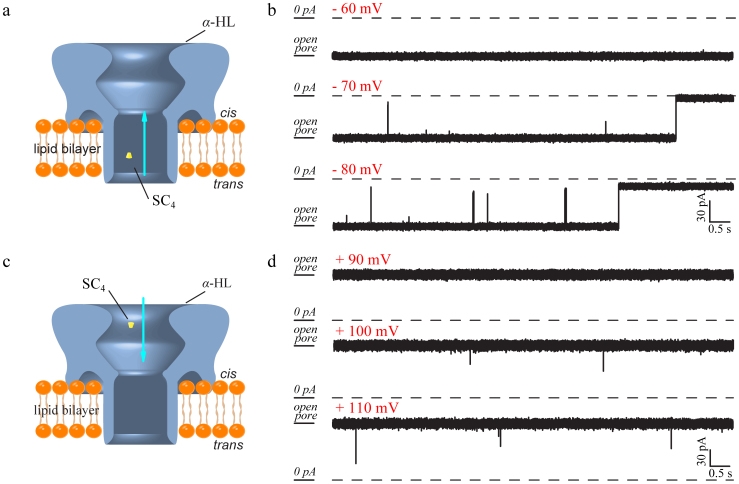
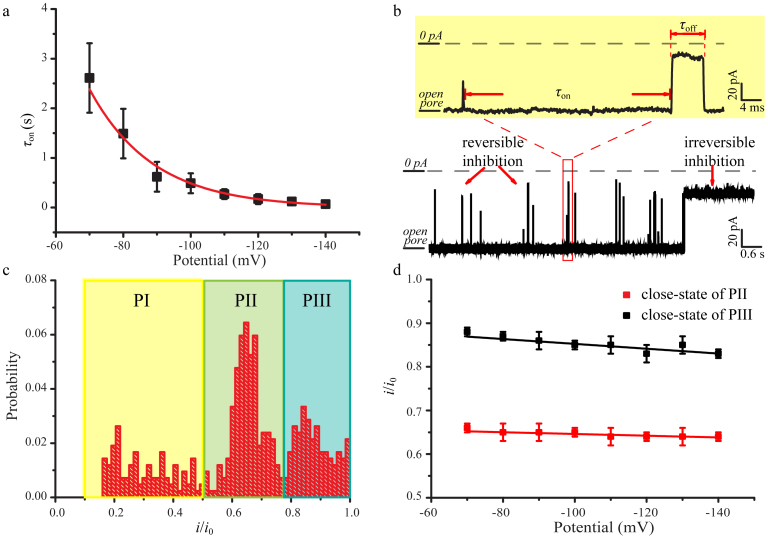
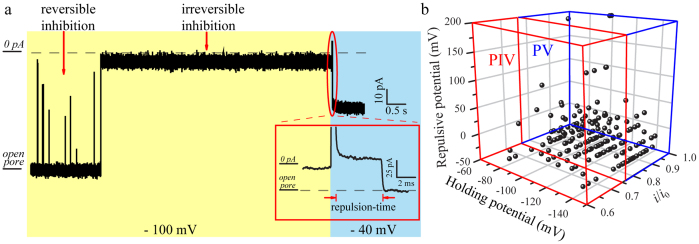
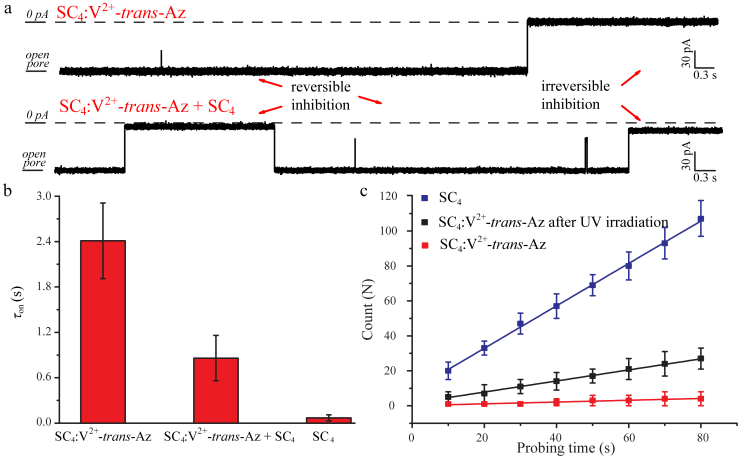
The open-close states of the ion channels in a living system are regulated by multiple stimuli such as ligand, pH, potential and light. Functionalizing natural channels by using synthetic chemistry would provide biological nanopores with novel properties and applications. Here we use para-sulfonato-calix[4]arene-based host-guest supramolecular system to develop artificial gating mechanisms aiming at regulating wild-type α-HL commanded by both ligand and light stimuli. Using the gating property of α-hemolysin, we studied the host-guest interactions between para-sulfonato-calix[4]arene and 4, 4'-dipyridinium-azobenzene at the single-molecule level. Subsequently, we have extended the application of this gating system to the real-time study of light-induced molecular shuttle based on para-sulfonato-calix[4]arene and 4, 4'-dipyridinium-azobenzene at the single-molecule level. These experiments provide a more efficient method to develop a general tool to analyze the individual motions of supramolecular systems by using commercially available α-HL nanopores.
在活体细胞中,离子通道的开闭状态受多种刺激因素的调控,如配体、pH 值、电势和光等。通过合成化学对天然通道进行功能化,可以为生物纳米孔赋予新的特性和应用。在这里,我们使用对磺酸钠杯[4]芳烃为主体的主客体超分子体系,开发出一种人工门控机制,旨在调节受配体和光刺激双重控制的野生型α-HL。利用α-溶血素的门控特性,我们在单分子水平上研究了对磺酸钠杯[4]芳烃与 4,4'-联吡啶偶氮苯之间的主体-客体相互作用。随后,我们将该门控体系的应用扩展到基于对磺酸钠杯[4]芳烃和 4,4'-联吡啶偶氮苯的光诱导分子梭的实时研究。这些实验为开发一种通用工具提供了更有效的方法,通过使用商业上可用的α-HL 纳米孔来分析超分子体系的单个运动。