Department of Chemical and Biochemical Engineering, College of Chemistry and Chemical Engineering, and The Key Laboratory for Synthetic Biotechnology of Xiamen City, Xiamen University, Xiamen, China.
PLoS One. 2013 Apr 4;8(4):e60318. doi: 10.1371/journal.pone.0060318. Print 2013.
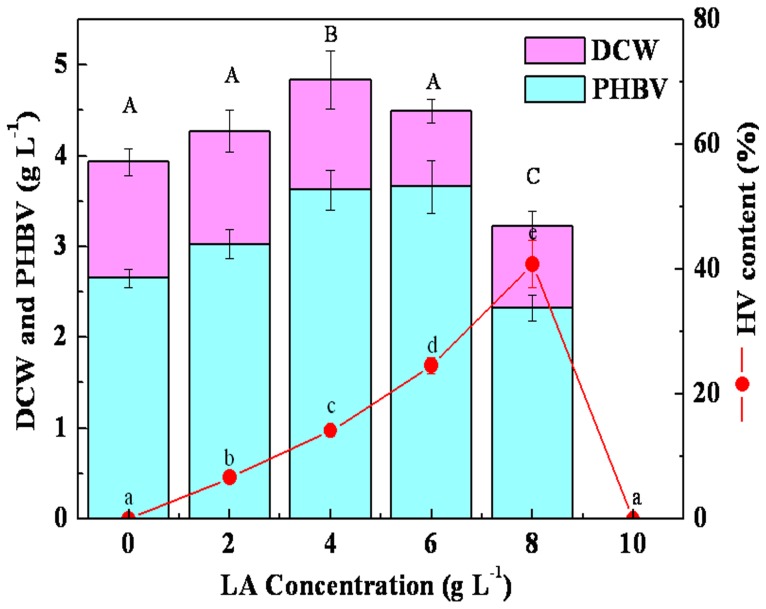
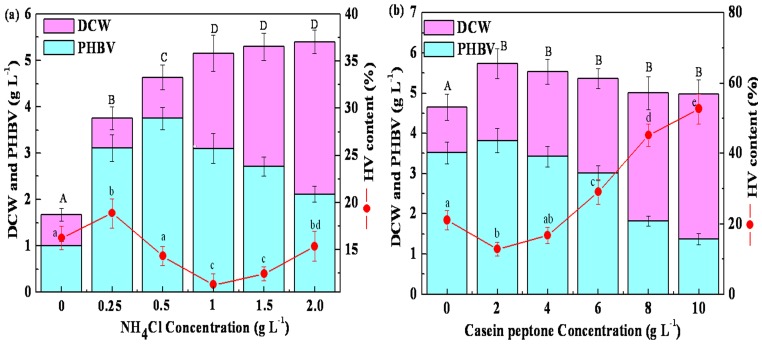
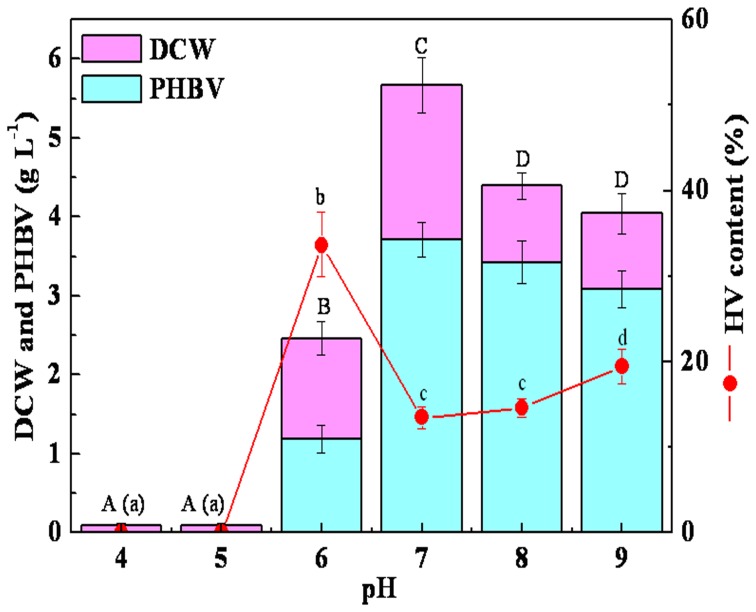
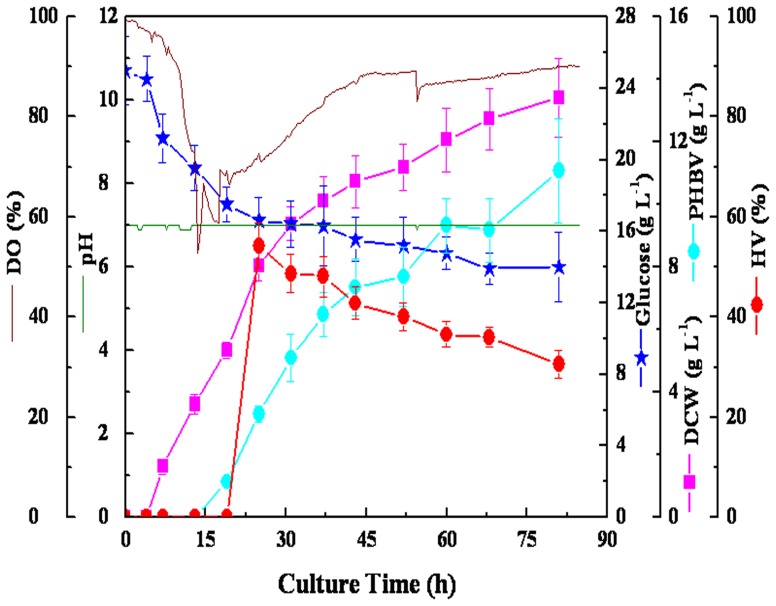
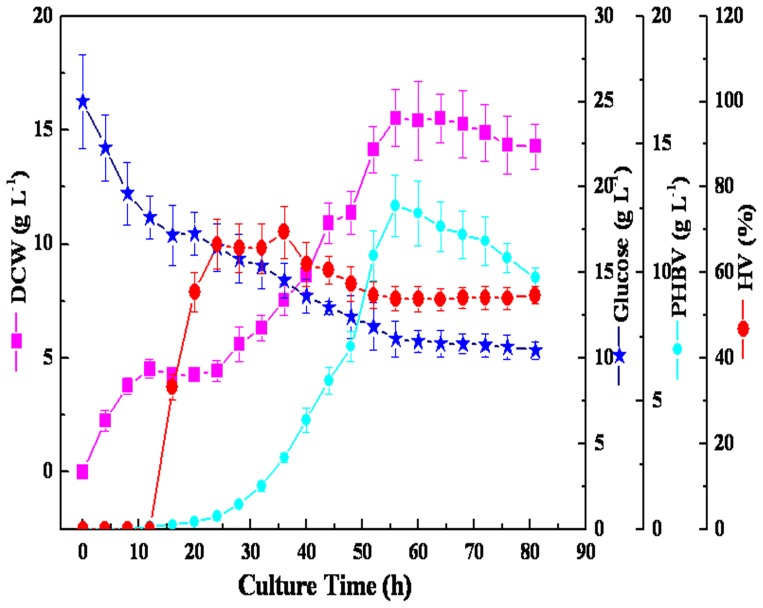
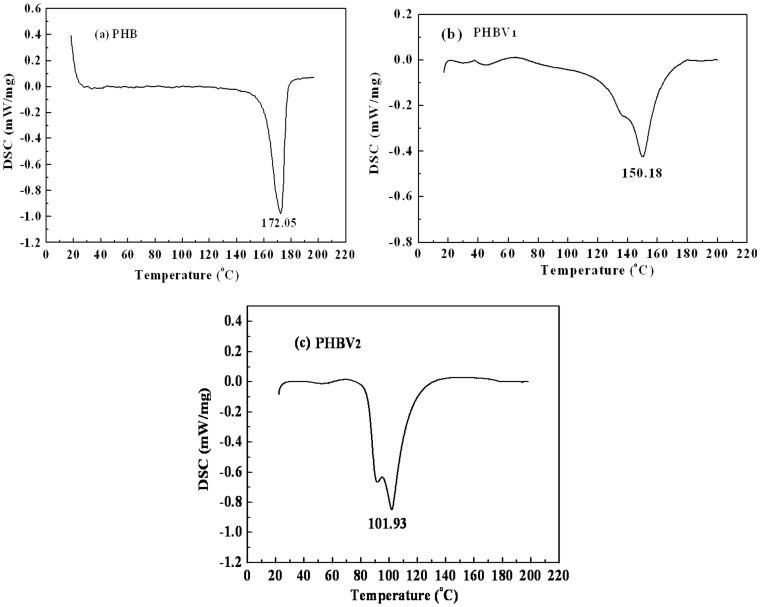
Levulinic acid (LA) can be cost-effectively produced from a vast array of renewable carbohydrate-containing biomaterials. LA could facilitate the commercialization of the polymer poly(hydroxybutyrate-co-hydroxyvalerate) (PHBV) and PHBV-based products as carbon substrates. Therefore, this paper focused on the production of PHBV by Ralstonia eutropha with LA for hydroxyvalerate (HV) production, which plays an important role in enhancing the thermal properties of PHBV. Accordingly, the HV content of PHBV varied from 0-40.9% at different concentrations of LA. Stimulation of cell growth and PHBV accumulation were observed when 2-6 g L(-1) LA was supplied to the culture. The optimal nitrogen sources were determined to be 0.5 g L(-1) ammonium chloride and 2 g L(-1) casein peptone. It was determined that the optimal pH for cell growth and PHBV accumulation was 7.0. When the cultivation was performed in large scale (2 L fermenter) with a low DO concentration of 30% and a pH of 7.0, a high maximum dry cell weight of 15.53 g L(-1) with a PHBV concentration of 12.61 g L(-1) (53.9% HV), up to 81.2% of the dry cell weight, was obtained. The melting point of PHBV found to be decreased as the fraction of HV present in the polymer increased, which resulted in an improvement in the ductility and flexibility of the polymer. The results of this study will improve the understanding of the PHBV accumulation and production by R. eutropha and will be valuable for the industrial production of biosynthesized polymers.
乙酰丙酸(LA)可以从大量可再生的含碳水化合物的生物材料中经济有效地生产。LA 可以促进聚合物聚(羟基丁酸-co-羟基戊酸)(PHBV)和 PHBV 基产品作为碳底物的商业化。因此,本文专注于利用 LA 生产 Ralstonia eutropha 的 PHBV,用于生产羟基戊酸(HV),这对于增强 PHBV 的热性能起着重要作用。因此,在不同 LA 浓度下,PHBV 中的 HV 含量从 0 到 40.9%不等。当向培养物中提供 2-6 g/L 的 LA 时,观察到细胞生长和 PHBV 积累的刺激。确定最佳氮源为 0.5 g/L 氯化铵和 2 g/L 酪蛋白胨。确定细胞生长和 PHBV 积累的最佳 pH 值为 7.0。当在低 DO 浓度为 30%和 pH 值为 7.0 的 2 L 发酵罐中进行大规模培养时,获得了高达 15.53 g/L 的最大干细胞重量,PHBV 浓度为 12.61 g/L(53.9%HV),占干细胞重量的 81.2%。发现随着聚合物中 HV 含量的增加,PHBV 的熔点降低,从而导致聚合物的延展性和柔韧性提高。这项研究的结果将提高对 R. eutropha 积累和生产 PHBV 的理解,并将对生物合成聚合物的工业生产具有重要价值。