Department of Molecular Biology, Princeton University, Princeton, NJ 08544, USA.
Cell Host Microbe. 2013 Apr 17;13(4):379-93. doi: 10.1016/j.chom.2013.03.010.
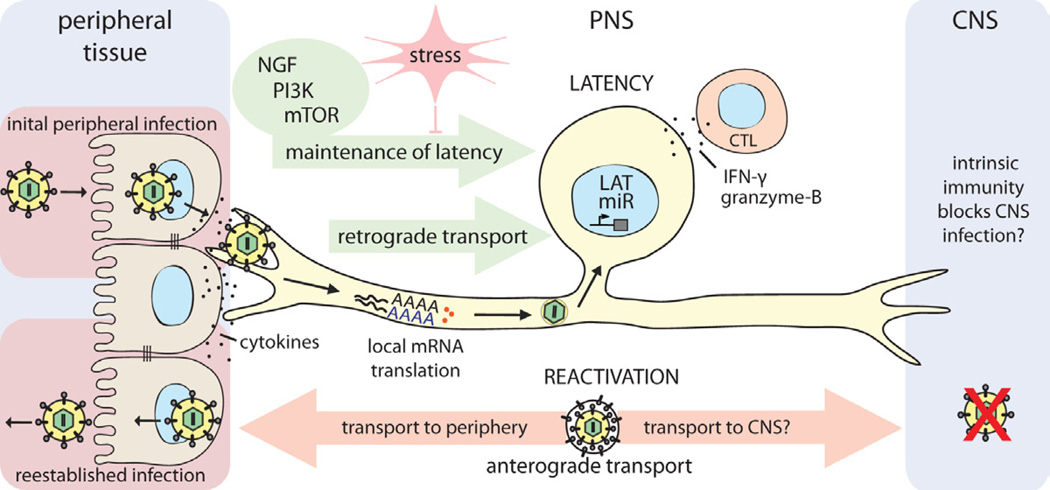
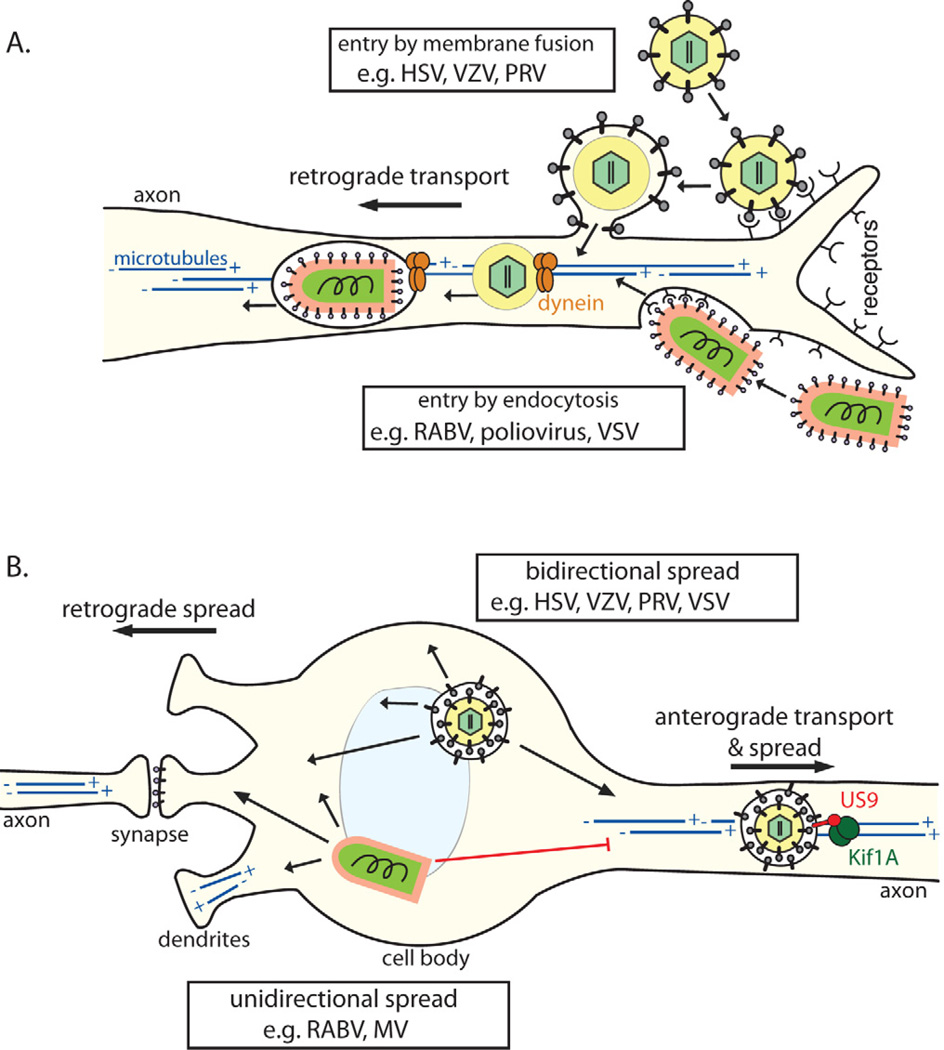
Virus infections usually begin in peripheral tissues and can invade the mammalian nervous system (NS), spreading into the peripheral (PNS) and more rarely the central (CNS) nervous systems. The CNS is protected from most virus infections by effective immune responses and multilayer barriers. However, some viruses enter the NS with high efficiency via the bloodstream or by directly infecting nerves that innervate peripheral tissues, resulting in debilitating direct and immune-mediated pathology. Most viruses in the NS are opportunistic or accidental pathogens, but a few, most notably the alpha herpesviruses and rabies virus, have evolved to enter the NS efficiently and exploit neuronal cell biology. Remarkably, the alpha herpesviruses can establish quiescent infections in the PNS, with rare but often fatal CNS pathology. Here we review how viruses gain access to and spread in the well-protected CNS, with particular emphasis on alpha herpesviruses, which establish and maintain persistent NS infections.
病毒感染通常始于外周组织,并可侵入哺乳动物神经系统(NS),扩散至外周神经系统(PNS),更罕见地扩散至中枢神经系统(CNS)。由于有效的免疫反应和多层屏障,CNS 可免受大多数病毒感染。然而,一些病毒通过血液或直接感染支配外周组织的神经,以高效率进入 NS,导致严重的直接和免疫介导的病理学。NS 中的大多数病毒是机会性或偶发性病原体,但少数病毒,尤其是α疱疹病毒和狂犬病病毒,已进化为高效率进入 NS 并利用神经元细胞生物学。值得注意的是,α疱疹病毒可在外周神经系统中建立静止感染,偶尔会出现但通常致命的中枢神经系统病理学。在这里,我们回顾了病毒如何进入和在保护良好的 CNS 中传播,特别强调了可建立和维持持续 NS 感染的α疱疹病毒。