Department of Biology, University of Maryland, College Park, Maryland, United States of America.
PLoS One. 2013 Apr 16;8(4):e61617. doi: 10.1371/journal.pone.0061617. Print 2013.
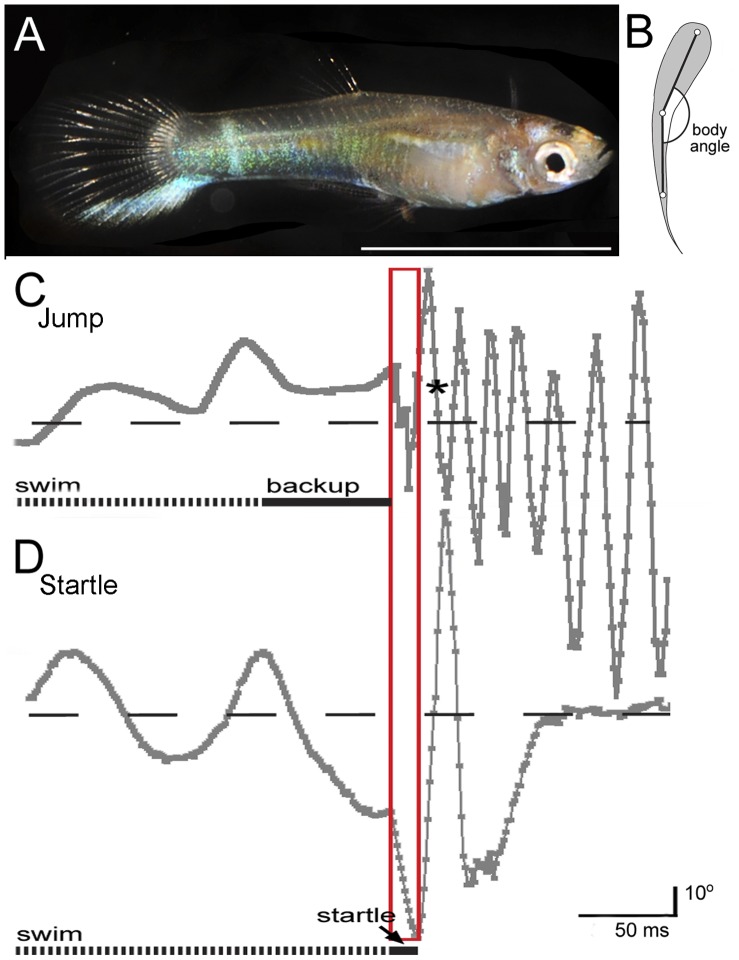
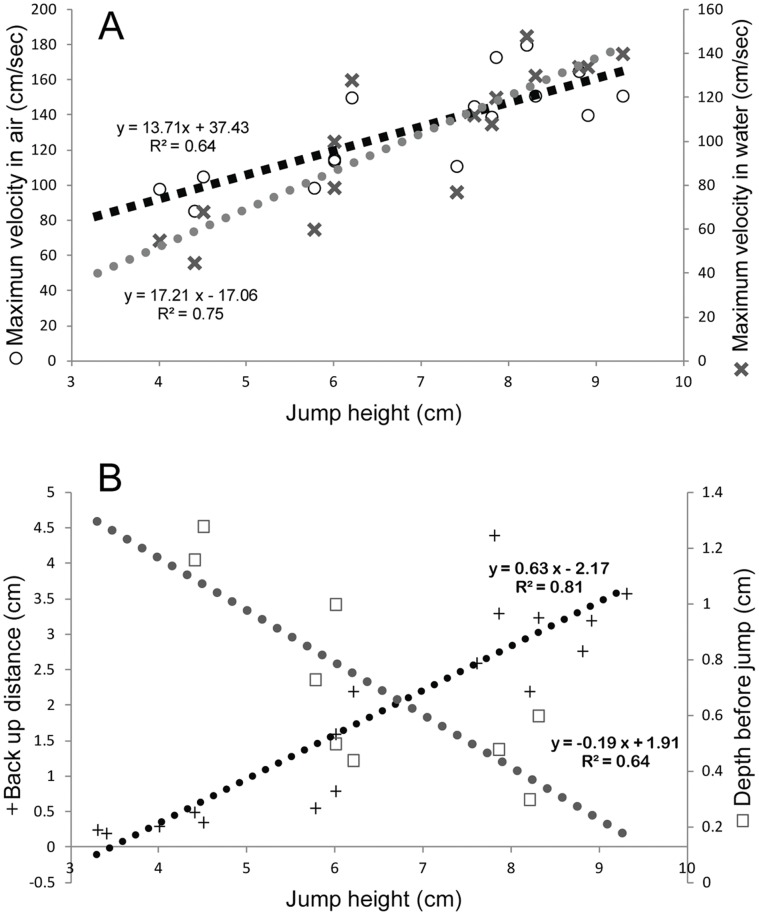
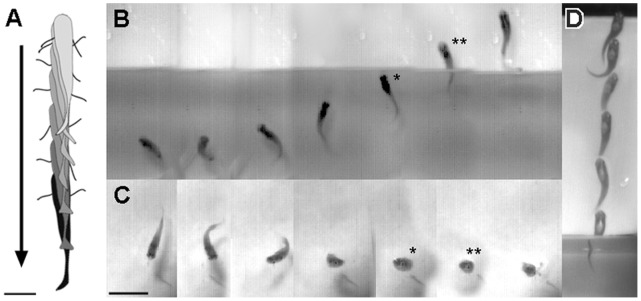
Many fishes are able to jump out of the water and launch themselves into the air. Such behavior has been connected with prey capture, migration and predator avoidance. We found that jumping behavior of the guppy Poecilia reticulata is not associated with any of the above. The fish jump spontaneously, without being triggered by overt sensory cues, is not migratory and does not attempt to capture aerial food items. Here, we use high speed video imaging to analyze the kinematics of the jumping behavior P. reticulata. Fish jump from a still position by slowly backing up while using its pectoral fins, followed by strong body trusts which lead to launching into the air several body lengths. The liftoff phase of the jump is fast and fish will continue with whole body thrusts and tail beats, even when out of the water. This behavior occurs when fish are in a group or in isolation. Geography has had substantial effects on guppy evolution, with waterfalls reducing gene flow and constraining dispersal. We suggest that jumping has evolved in guppies as a behavioral phenotype for dispersal.
许多鱼类能够跳出水面并跃入空中。这种行为与捕食、迁徙和躲避捕食者有关。我们发现,孔雀鱼的跳跃行为与上述任何一种都没有关系。这种鱼会自发地跳跃,不会被明显的感官线索触发,也不会迁徙,也不会试图捕捉空中的食物。在这里,我们使用高速视频成像来分析孔雀鱼跳跃行为的运动学。鱼从静止状态开始,慢慢地用胸鳍向后退,然后进行强烈的身体扭曲,导致鱼跃出数个体长的距离进入空中。跳跃的起飞阶段很快,鱼会继续全身推力和尾巴拍打,即使在水面之外。这种行为发生在鱼群或孤立的情况下。地理环境对孔雀鱼的进化产生了巨大的影响,瀑布减少了基因流动并限制了扩散。我们认为,跳跃已经进化为孔雀鱼的一种扩散行为表型。