Department of Pharmacology and Laboratory of Aging and Nervous Diseases, Soochow University School of Pharmaceutical Science, Suzhou, China.
PLoS One. 2013 Apr 16;8(4):e61641. doi: 10.1371/journal.pone.0061641. Print 2013.
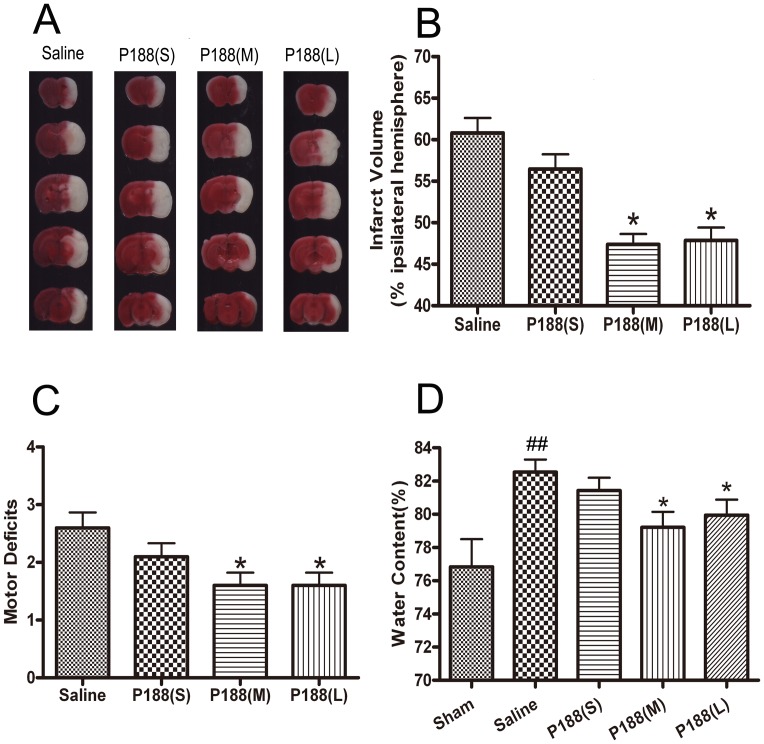
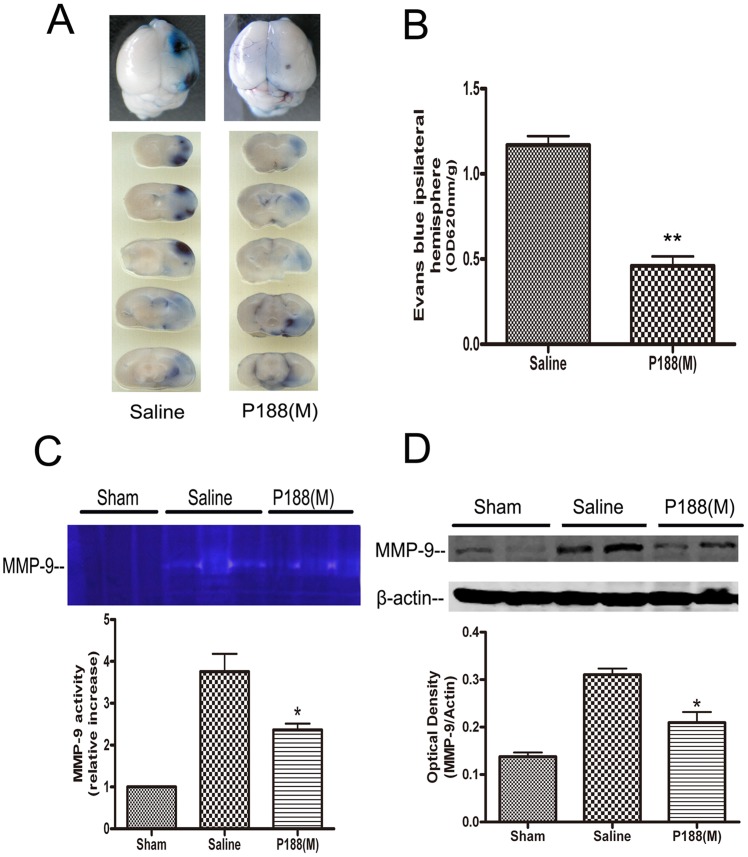
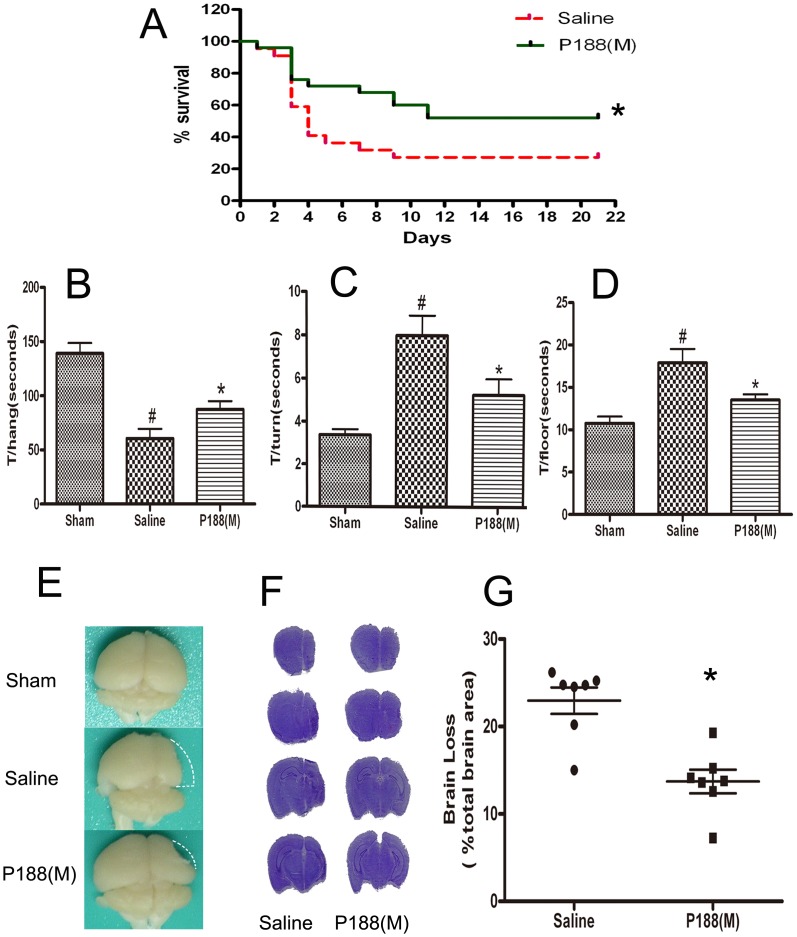
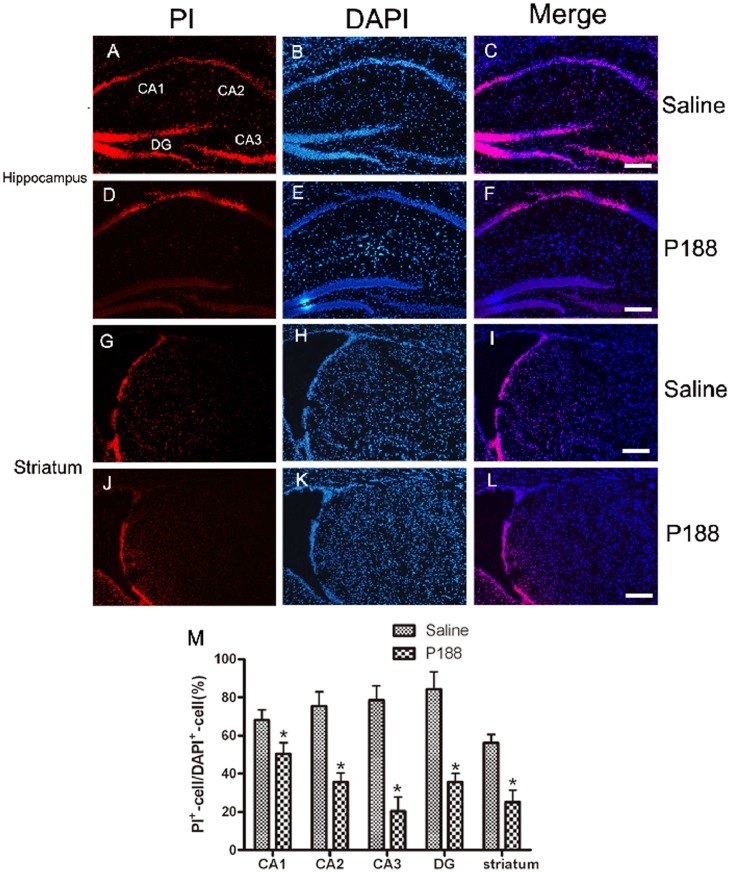
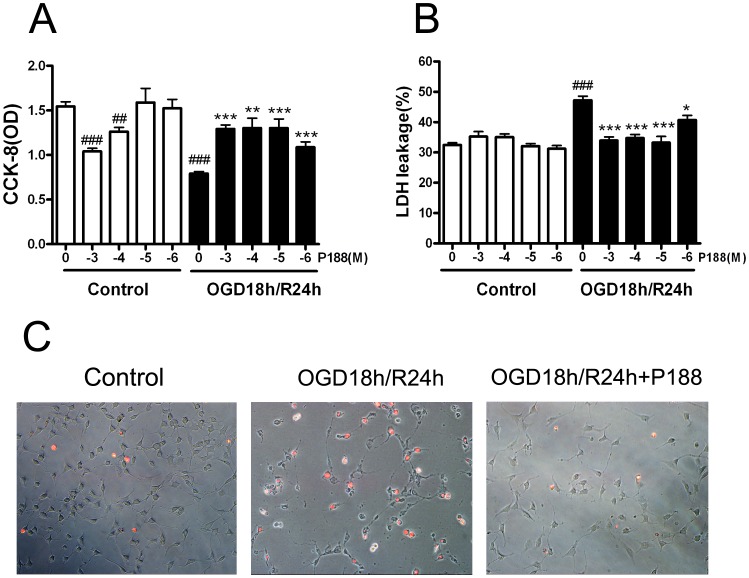
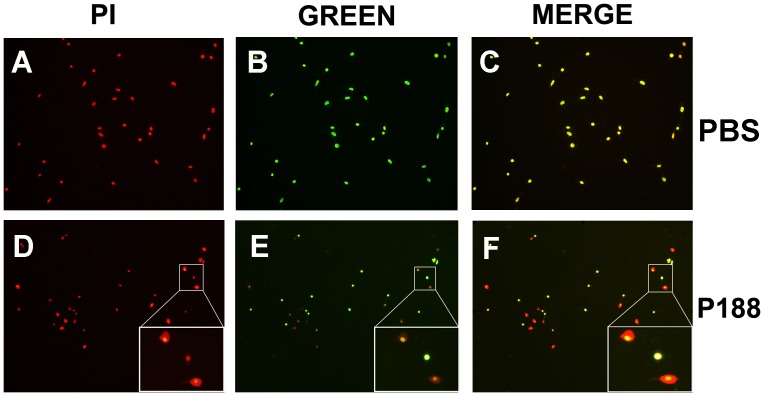
Poloxamer 188 (P188), a multiblock copolymer surfactant, has been shown to protect against ischemic tissue injury of cardiac muscle, testes and skeletal muscle, but the mechanisms have not been fully understood. In this study, we explored whether P188 had a protective effect against cerebral ischemia/reperfusion injury and its underlying mechanisms. The in vivo results showed that P188 significantly reduced the infarct volume, ameliorated the brain edema and neurological symptoms 24 h after ischemia/reperfusion. In the long-term outcome study, P188 markedly alleviated brain atrophy and motor impairments and increased survival rate in 3 weeks of post stroke period. Additionally, P188 protected cultured hippucampal HT22 cells against oxygen-glucose deprivation and reoxygenation (OGD/R) injury. The ability in membrane sealing was assessed with two fluorescent membrane-impermeant dyes. The results showed that P188 treatment significantly reduced the PI-positive cells following ischemia/reperfusion injury and repaired the HT22 cell membrane rupture induced by Triton X-100. In addition, P188 inhibited ischemia/reperfusion-induced activation of matrix metalloproteinase (MMP)-9 and leakage of Evans blue. Therefore, the present study concludes that P188 can protect against cerebral ischemia/reperfusion injury, and the protection involves multi-mechanisms in addition to the membrane resealing.
泊洛沙姆 188(P188)是一种多嵌段共聚物表面活性剂,已被证明可防止心肌、睾丸和骨骼肌的缺血性组织损伤,但机制尚未完全阐明。在这项研究中,我们探讨了 P188 是否对脑缺血/再灌注损伤具有保护作用及其潜在机制。体内结果表明,P188 可显著减少梗死体积,改善缺血/再灌注 24 小时后的脑水肿和神经症状。在长期结果研究中,P188 明显减轻脑萎缩和运动障碍,并在中风后 3 周内提高存活率。此外,P188 可保护培养的海马 HT22 细胞免受氧葡萄糖剥夺和复氧(OGD/R)损伤。用两种荧光膜不可渗透染料评估膜密封能力。结果表明,P188 处理可显著减少缺血/再灌注损伤后 PI 阳性细胞,并修复 Triton X-100 诱导的 HT22 细胞膜破裂。此外,P188 抑制了缺血/再灌注诱导的基质金属蛋白酶(MMP)-9 的激活和 Evans 蓝的渗漏。因此,本研究得出结论,P188 可预防脑缺血/再灌注损伤,其保护作用除了膜封闭外还涉及多种机制。