Faculty of Electronic Information and Electrical Engineering, Dalian University of Technology, No. 2 Linggong Road, Ganjingzi District, Dalian 116024, China.
Sensors (Basel). 2013 Apr 24;13(5):5406-47. doi: 10.3390/s130505406.
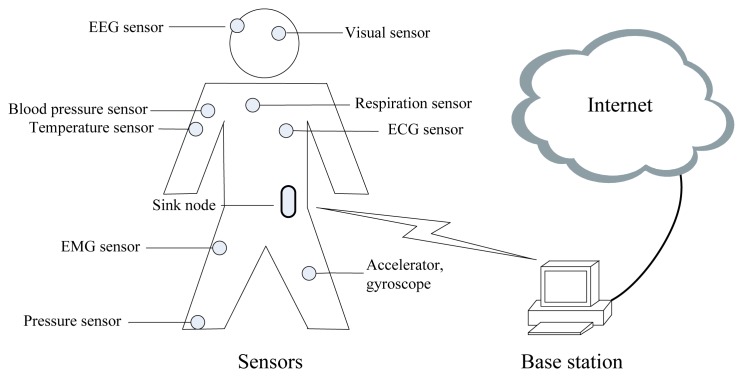
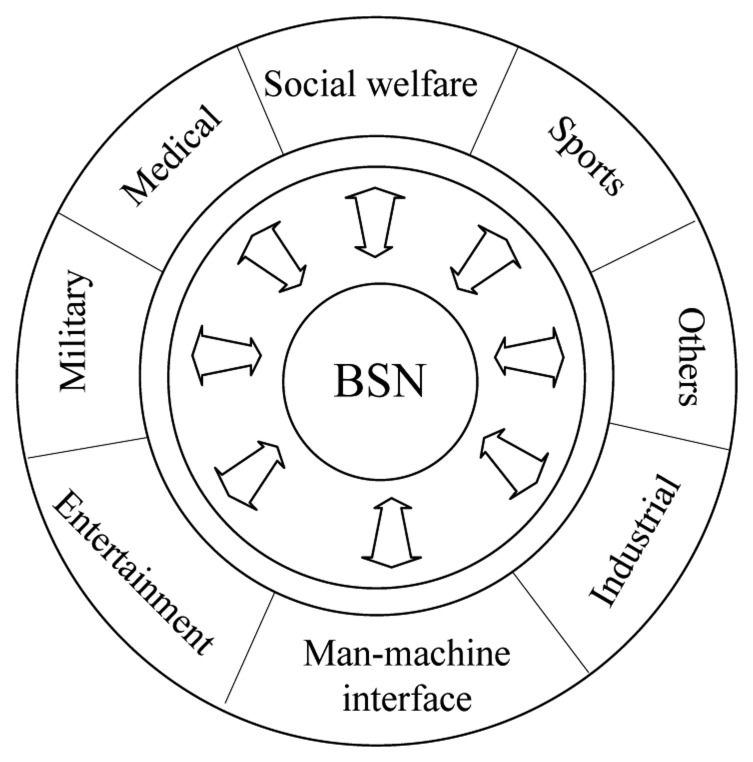
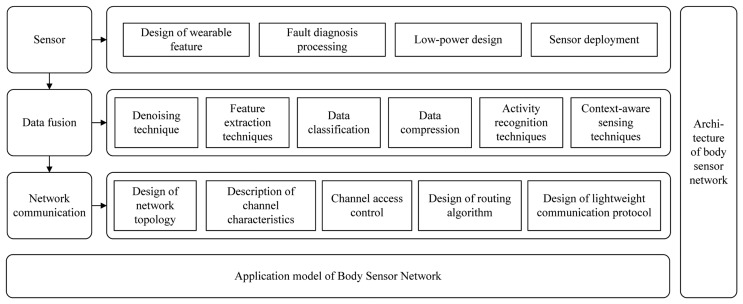
The technology of sensor, pervasive computing, and intelligent information processing is widely used in Body Sensor Networks (BSNs), which are a branch of wireless sensor networks (WSNs). BSNs are playing an increasingly important role in the fields of medical treatment, social welfare and sports, and are changing the way humans use computers. Existing surveys have placed emphasis on the concept and architecture of BSNs, signal acquisition, context-aware sensing, and system technology, while this paper will focus on sensor, data fusion, and network communication. And we will introduce the research status of BSNs, the analysis of hotspots, and future development trends, the discussion of major challenges and technical problems facing currently. The typical research projects and practical application of BSNs are introduced as well. BSNs are progressing along the direction of multi-technology integration and intelligence. Although there are still many problems, the future of BSNs is fundamentally promising, profoundly changing the human-machine relationships and improving the quality of people's lives.
传感器技术、普适计算和智能信息处理技术广泛应用于体域网(BSN),它是无线传感器网络(WSN)的一个分支。BSN 在医疗、社会福利和体育等领域发挥着越来越重要的作用,正在改变人类使用计算机的方式。现有的调查侧重于 BSN 的概念和体系结构、信号采集、情境感知传感和系统技术,而本文将重点介绍传感器、数据融合和网络通信。我们将介绍 BSN 的研究现状、热点分析和未来发展趋势,讨论当前面临的主要挑战和技术问题。还介绍了 BSN 的典型研究项目和实际应用。BSN 正朝着多技术融合和智能化的方向发展。尽管仍存在许多问题,但 BSN 的未来从根本上是有希望的,将深刻改变人机关系,提高人们的生活质量。